Casa TA in Quito, Ecuador
8 June 2026
Architects: Estudio Felipe Escudero
Location: Quito, Ecuador, South America
Photos: Vicer
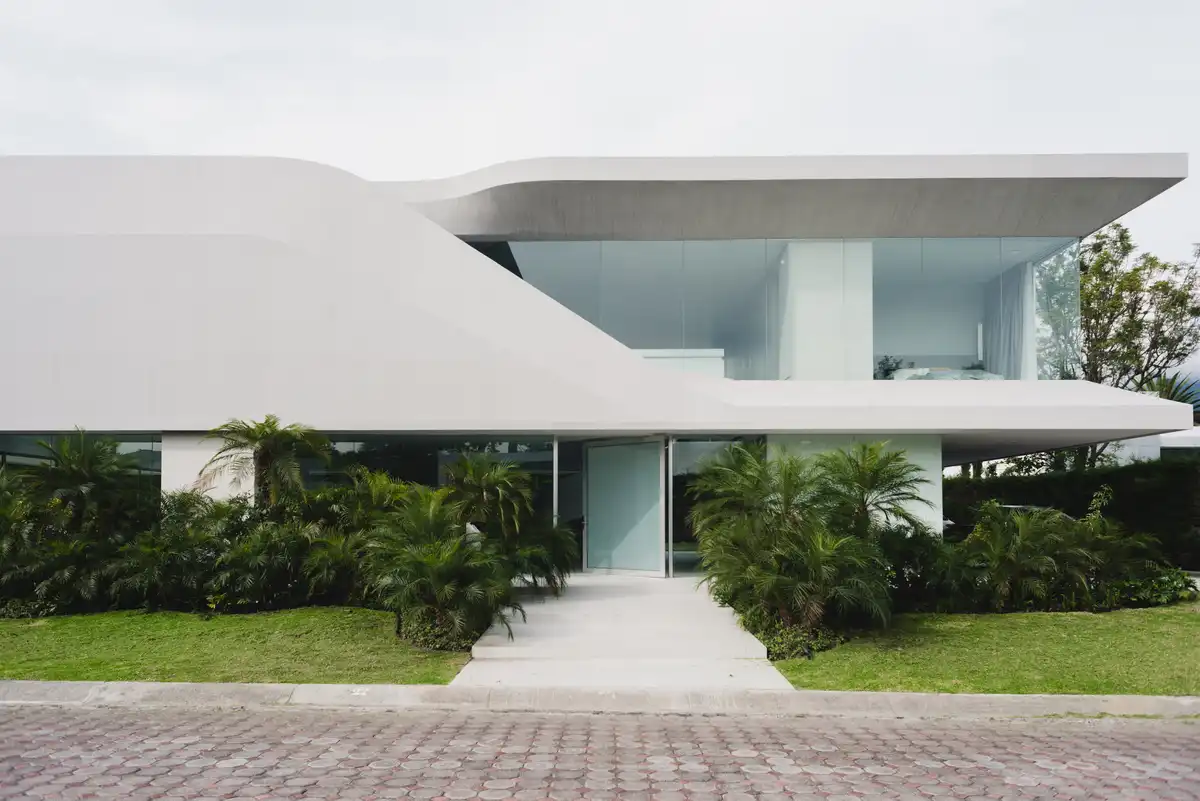
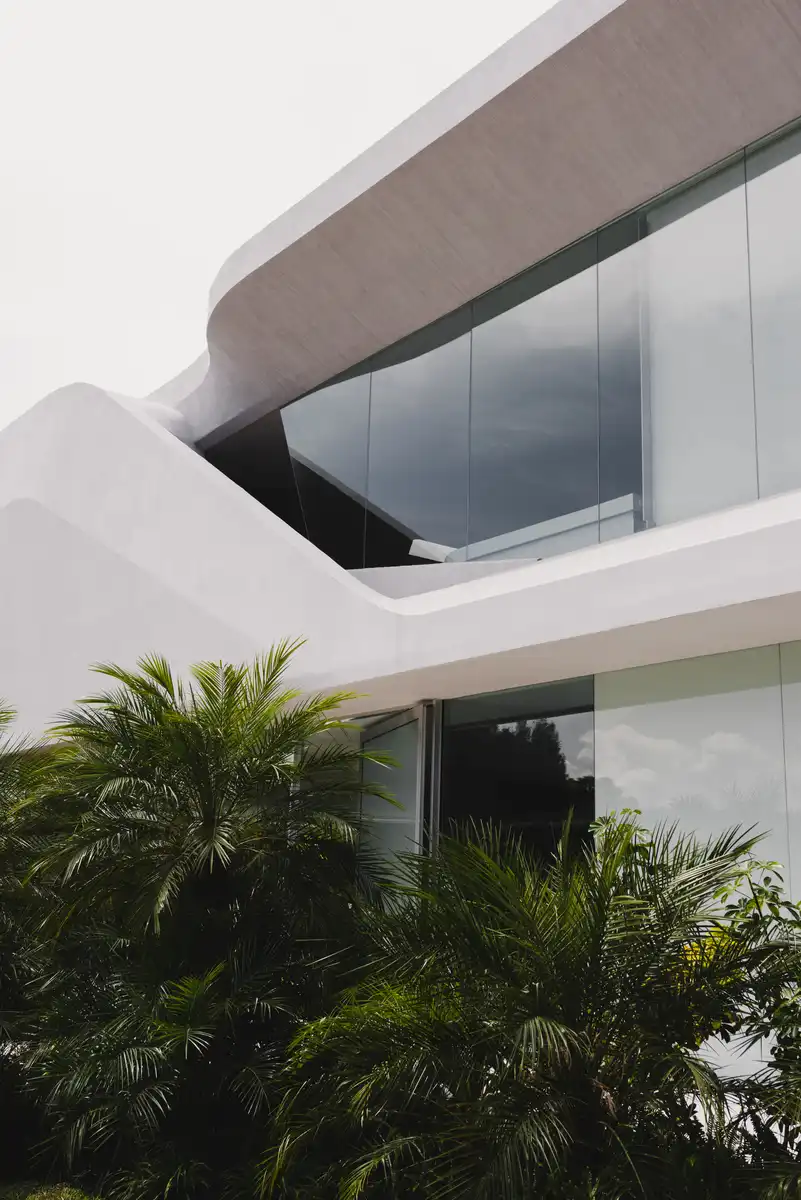
The facade is conceived as a process of subtraction, much like a sculptor carving marble until only the essential form remains.
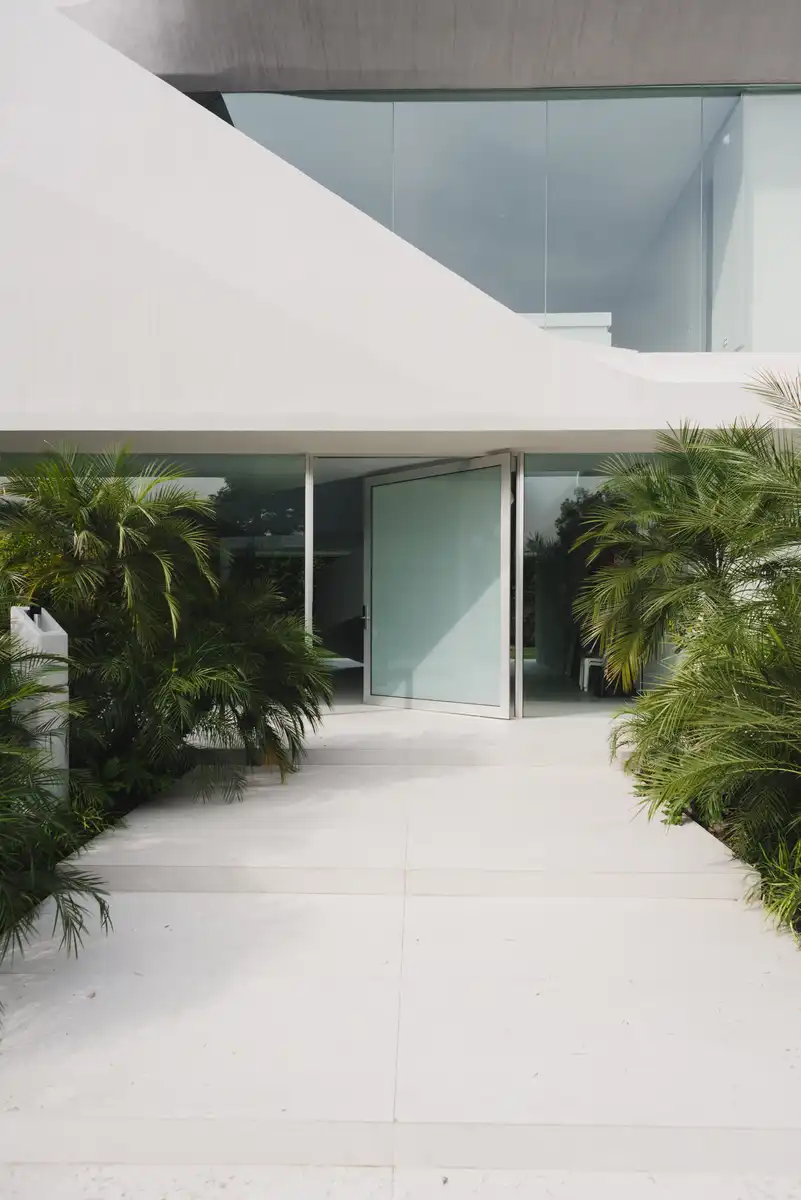
The first element that captures attention from the street is the roof: a ribbon of white concrete that bends, narrows, and folds over itself in a way that feels closer to origami than to conventional construction.
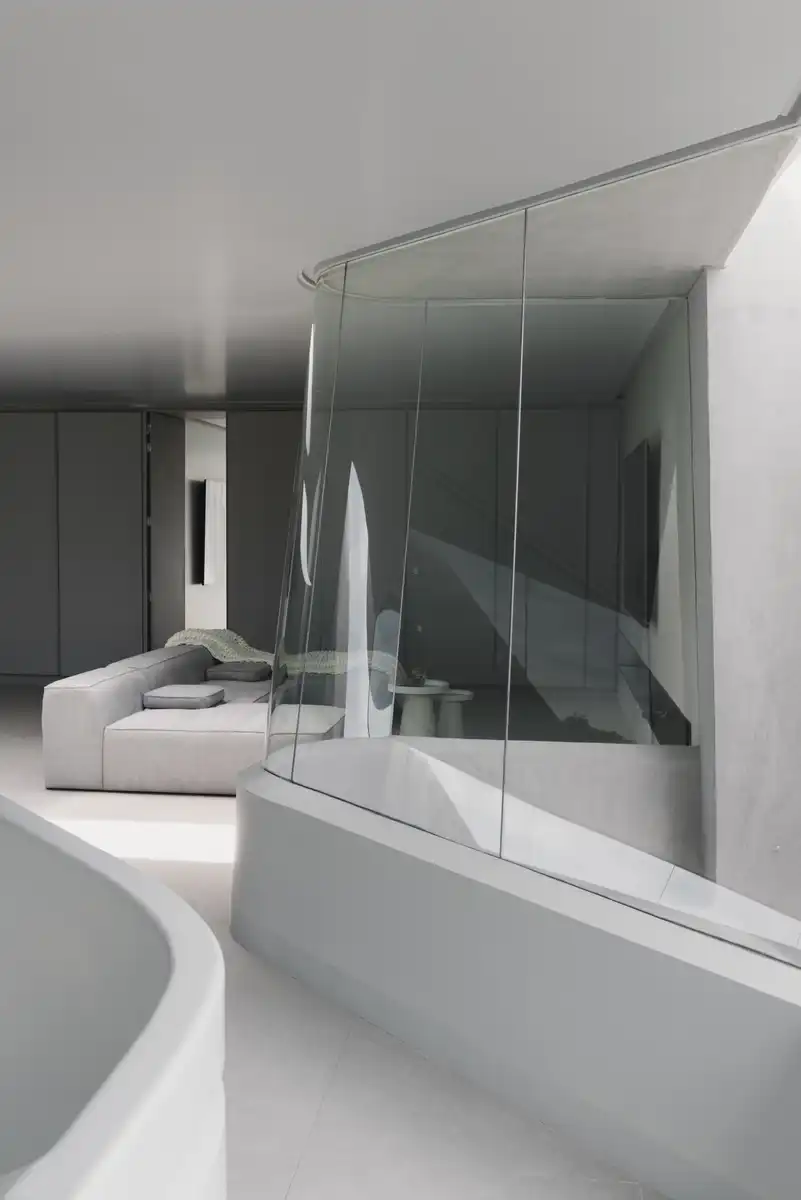
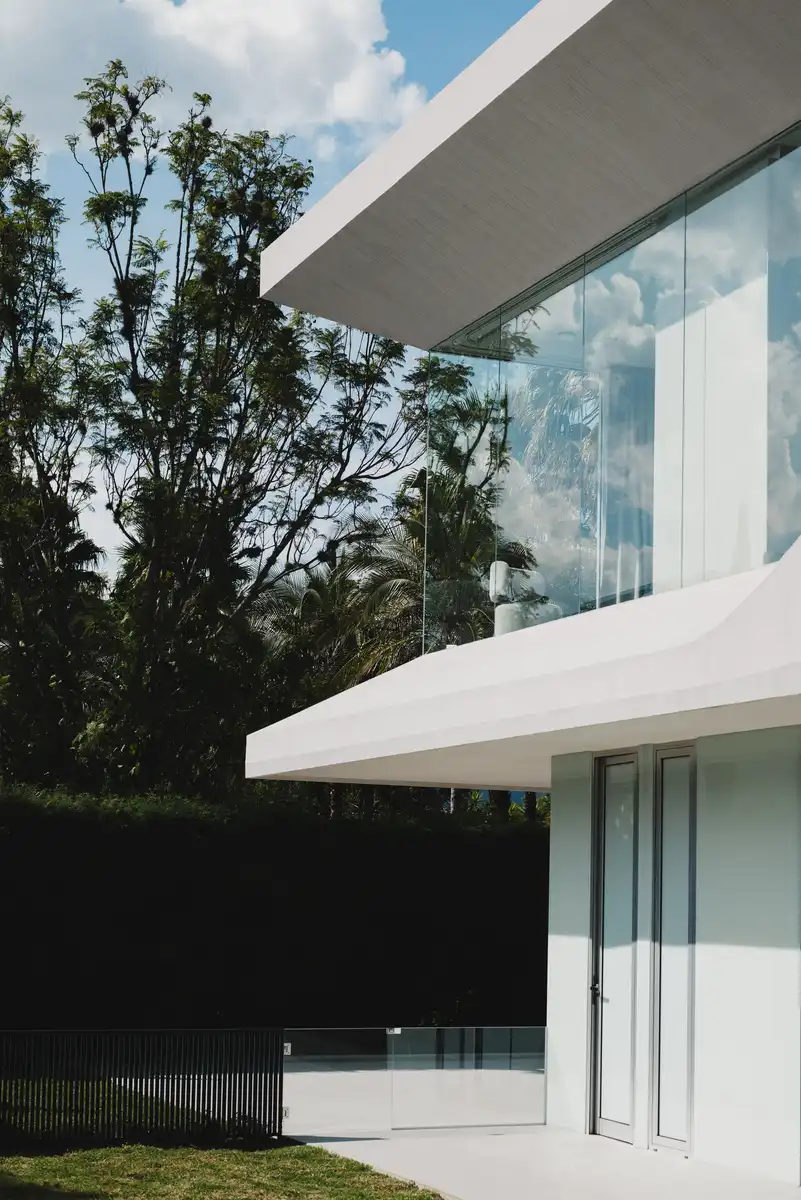
Its sharp edges and generous overhangs create a striking balance between visual weight and lightness. At ground level, the roof extends outward over the main entrance, forming a broad canopy that marks the transition between exterior and interior spaces. There are no added decorative elements; the architecture itself gives the project its character. The surrounding vegetation—areca palms and carefully trimmed cypress trees— complements the composition, adding scale, depth, and a natural filter between the house and its surroundings.
On the side elevation, the relationship between the two levels becomes clear. The upper floor projects beyond the ground floor, creating a deep shaded area that protects the spaces below. At the same time, frameless glass walls reflect the sky and surrounding vegetation, allowing the house to blend visually with its environment.
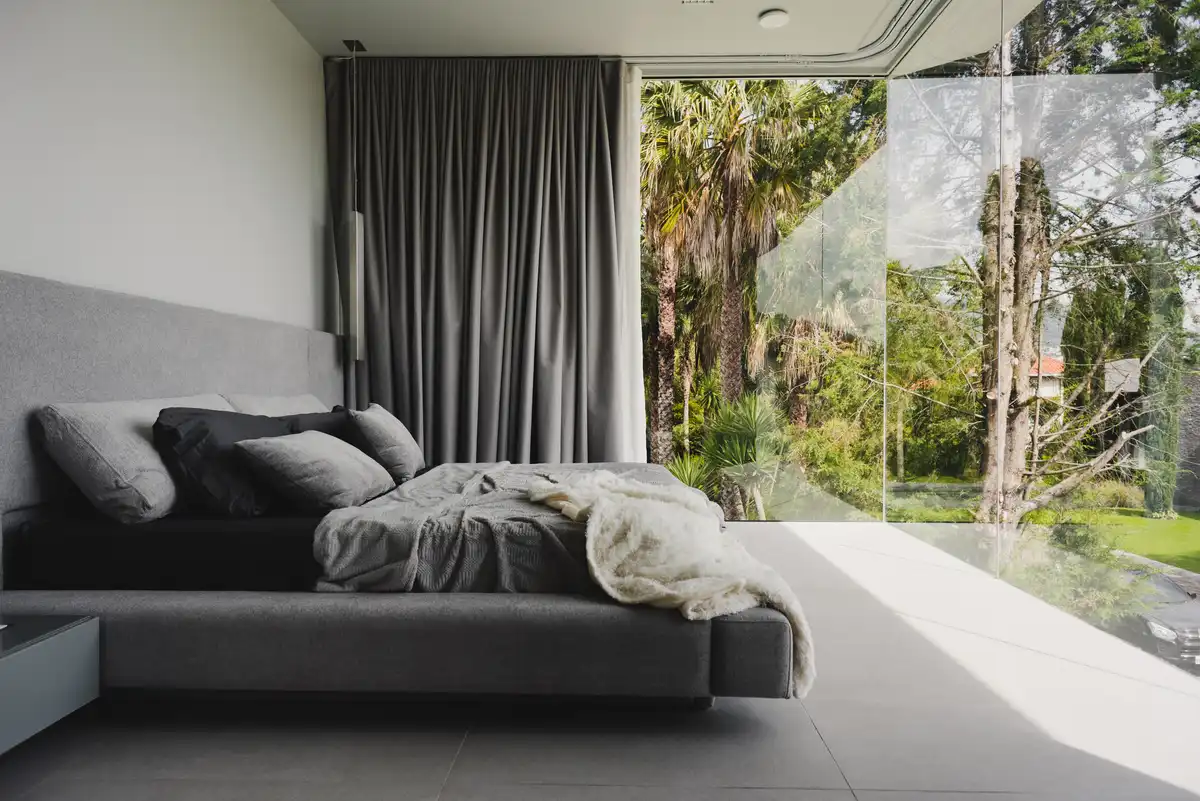
Privacy is achieved not through solid walls, but through a carefully designed landscape strategy. A perimeter of precisely trimmed cypress hedges acts as a green screen, filtering views while allowing natural light to enter. Throughout the house, large frameless glass openings maintain a strong connection to the surrounding gardens, creating a sense of openness without sacrificing privacy. In spaces such as the main bedroom, dense subtropical vegetation becomes a natural backdrop, while discreetly integrated curtains allow occupants to easily adjust the level of enclosure when desired.
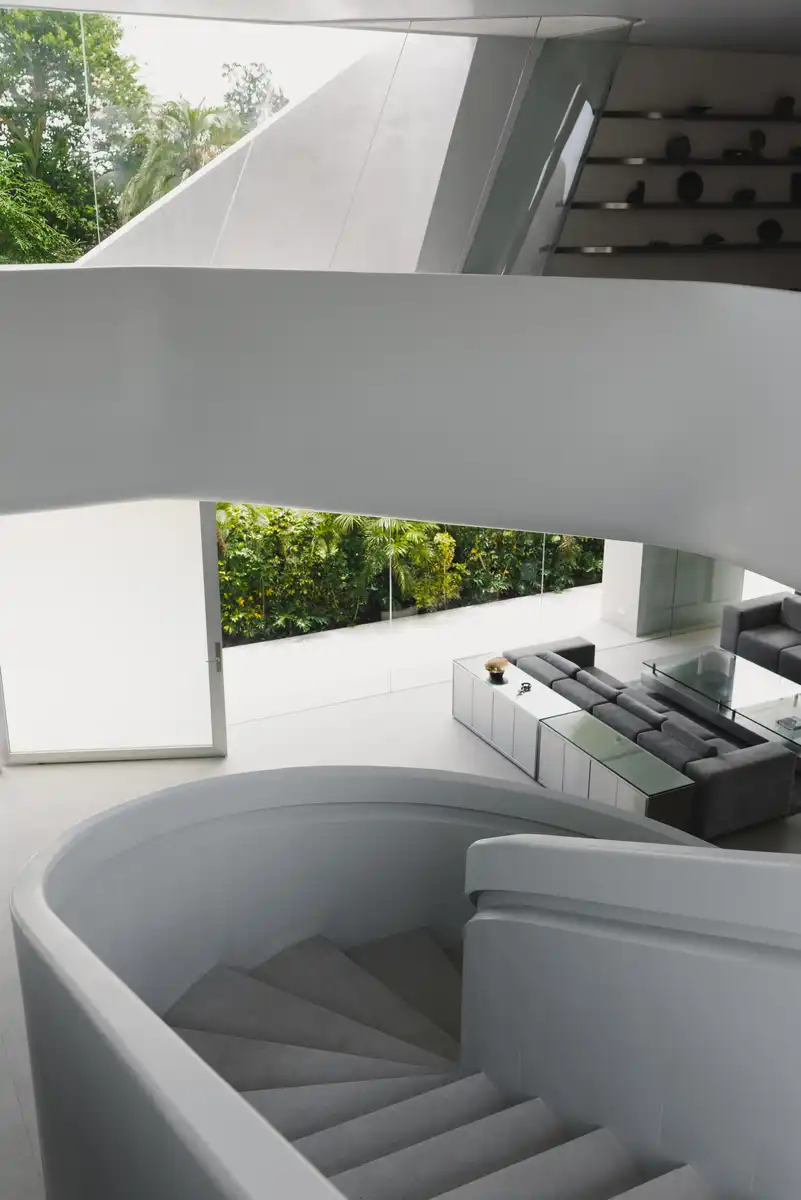
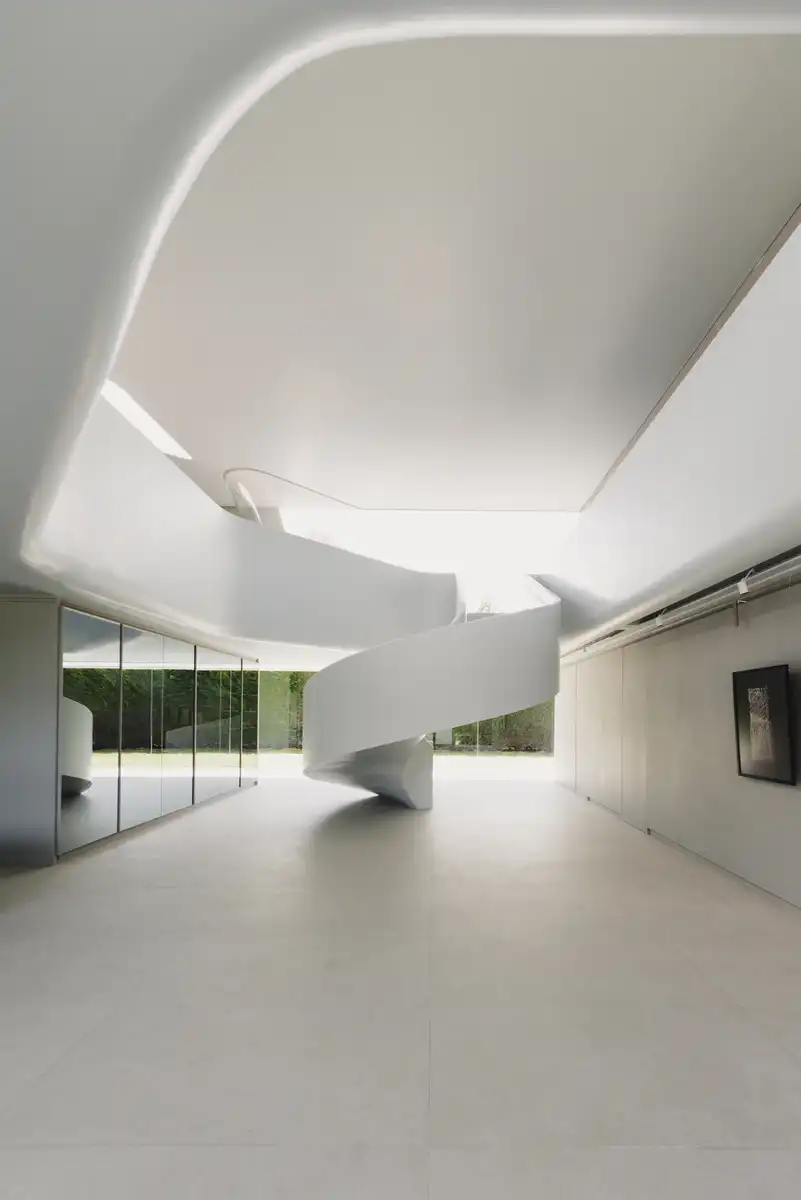
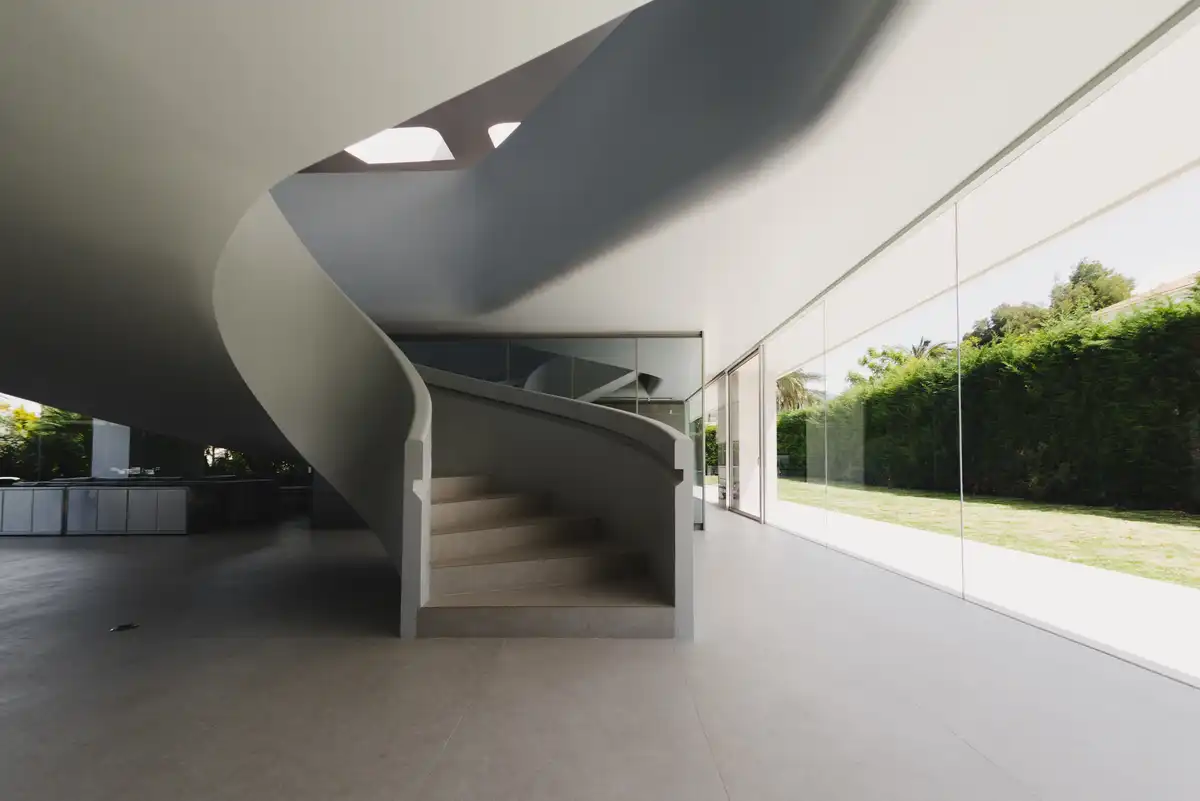
The interior is conceived as a continuous landscape, where space flows freely between functions, rooms, and the outdoors.
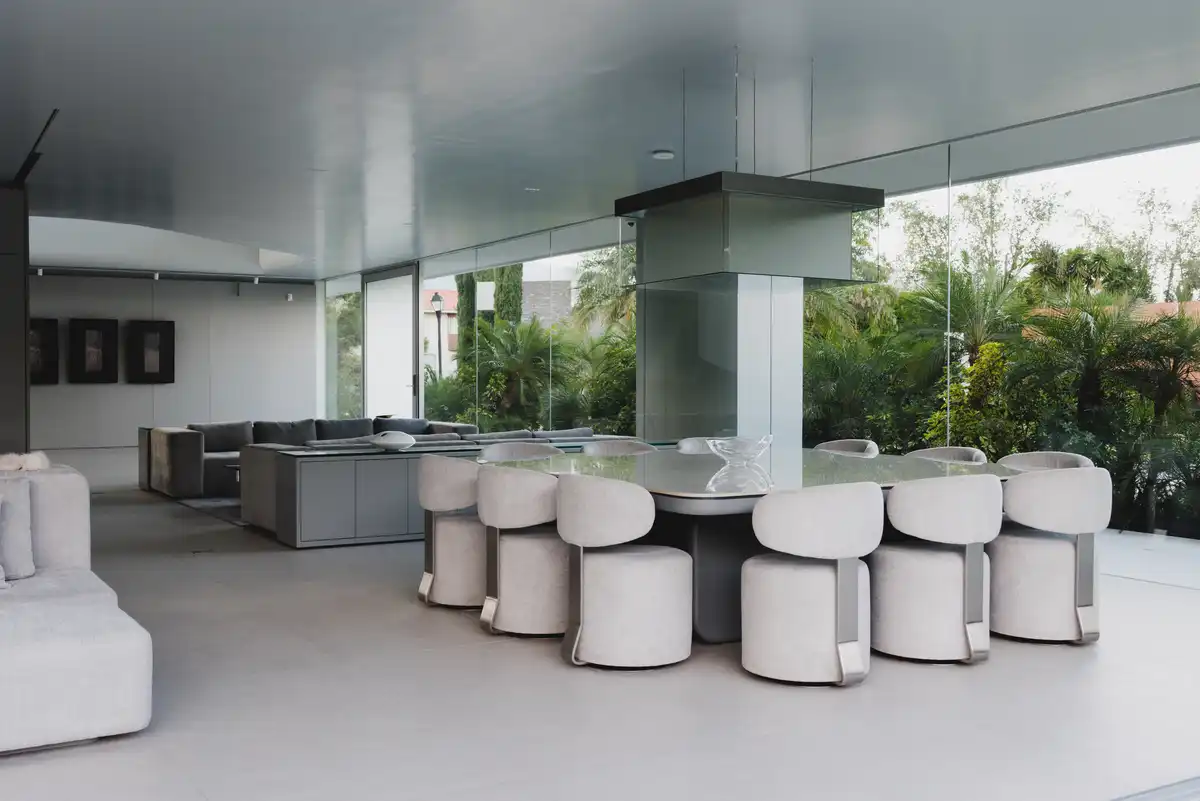
The ground floor follows an open-plan layout, with no interior walls dividing the main living areas. Instead, furniture helps organize the space. A long stainless-steel console with a glass top runs through the social area, creating different zones while also providing storage and practical functions.
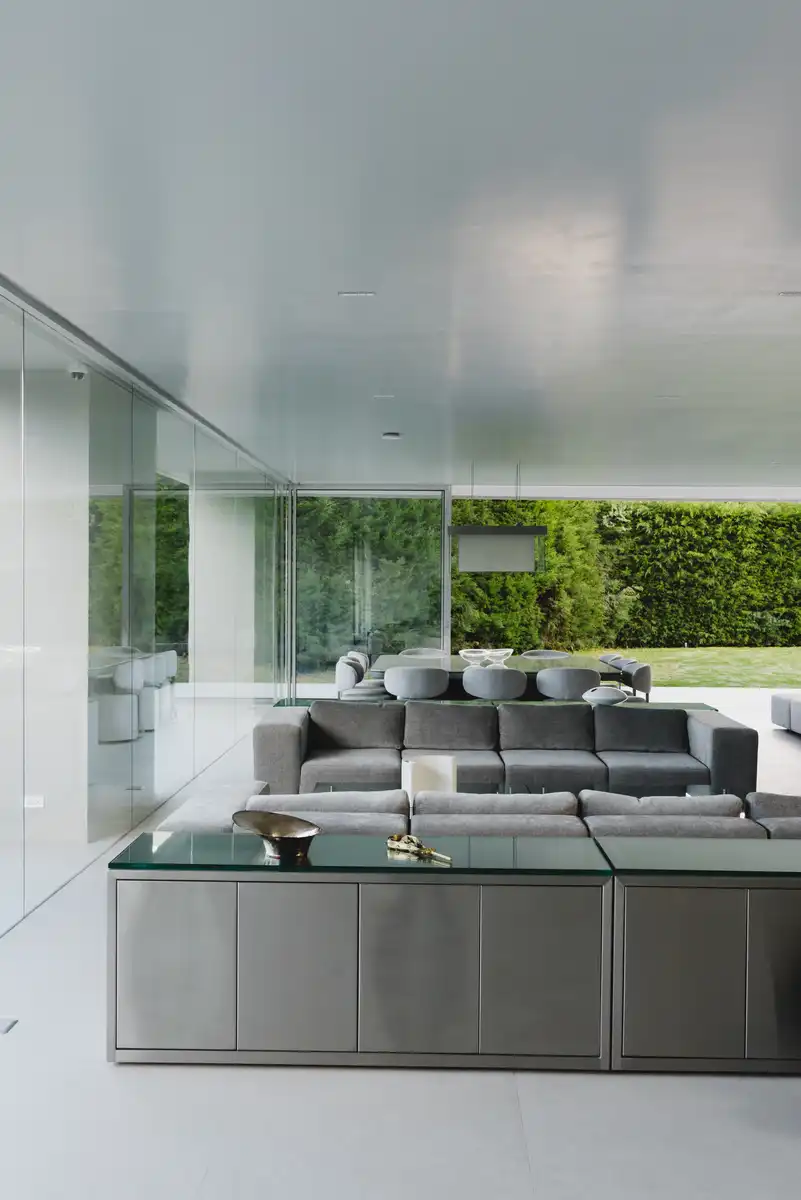
The connection between indoors and outdoors is achieved through frameless sliding glass panels that can open completely, allowing the living room and garden to become one continuous space. The interior and exterior floors are at the same level, removing any physical threshold. A gray microcement finish extends seamlessly from inside to outside, reinforcing this sense of continuity.
The varying ceiling height, created by the folded geometry of the roof, generates a natural sequence of lower and higher spaces that subtly guide movement through the house. Rather than relying on signs or visual cues, the architecture itself shapes the experience of moving through the space.
Furniture becomes again an extension of architecture, rather than a separate object
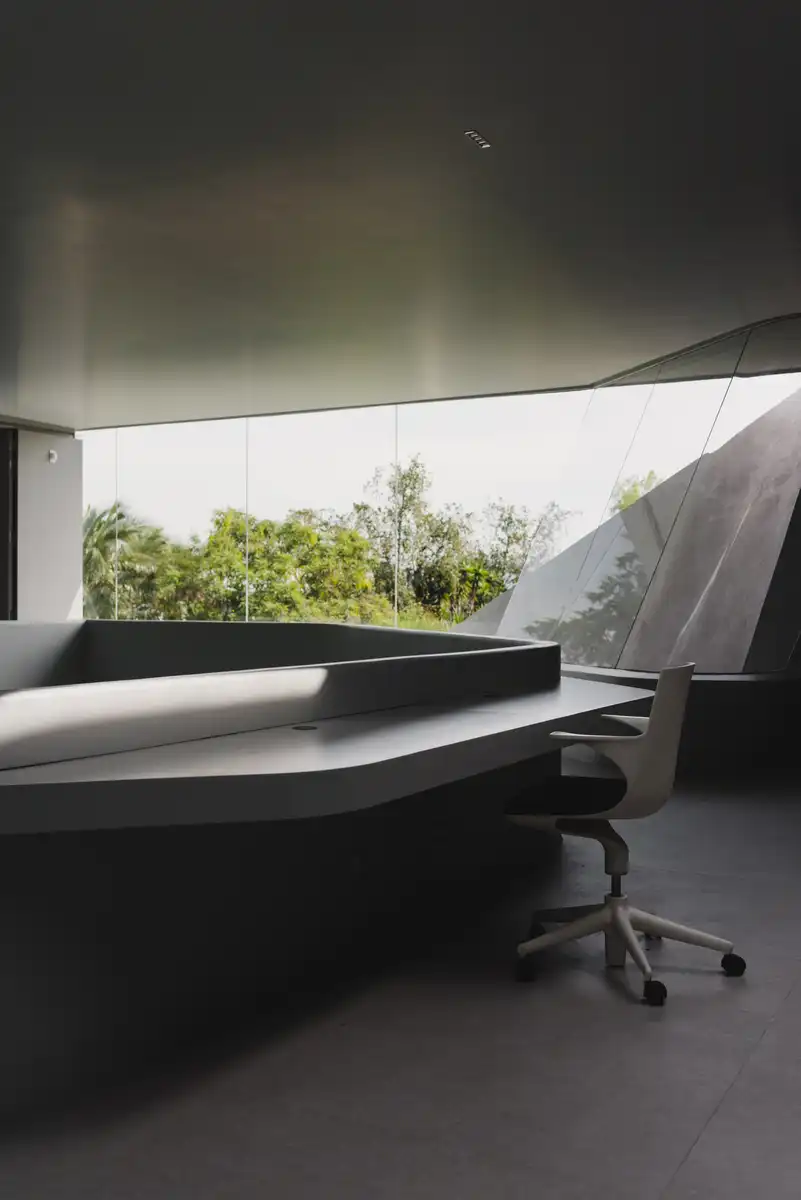
On the upper floor, the design pushes functionality to its most direct expression. A curved monolithic desk made of continuous microcement sits at the center of the workspace. It has no visible joints and feels more like part of the building than a piece of furniture.
Its curved shape follows the glass corner, making it hard to tell where the architecture ends and the desk begins. A single light office chair emphasizes the scale and weight of the desk by contrast.
The desk does not simply sit on the floor—it seems to grow from it. Its connection to the microcement surface is softly rounded, with no sharp edges, as if it formed directly from the slab. This careful detail, subtle and only fully appreciated in person, reflects the project’s attention to precision in unexpected places. The work area is open to the landscape through frameless glass, offering wide views of the garden and surrounding greenery. Without visible frames or metal edges, the glass becomes more of a transparent skin than a barrier. The sky, trees, and clouds feel fully present inside the space
Architects: Estudio Felipe Escudero – https://www.felipeescudero.com/
Photographs: Vicer
Casa TA, Quito, Ecuador property design images / information received 080626
Location: Quito, Ecuador, South America
Ecuador Property
Puembo Property Designs
Hidden Stone House in Puembo, Pichincha
Architects: A1 Arquitectura Avanzada
photo : Paolo Caicedo
Alambique House, Quito, Ecuador property
Ecuador Property Designs
Contemporary Ecuador Home Designs
The Hills Apartment Towers, Guayaquil, Puerto Santa Ana
Architecture: MVRDV
render © MVRDV
Ecuador Architecture
Contemporary Ecuador Architectural Projects
EPIQ Building in Quito by BIG architects
Comments / photos for the Casa TA, Quito, Ecuador property design – Ecuador Residential Architecture designed by Estudio Felipe Escudero page welcome