Reside housing in New Farm, Brisbane
8 June 2026
Architects: Alexandra Buchanan Architecture
Location: New Farm, Brisbane, Queensland, Australia
Photos: Cieran Murphy
Reside is a boutique multi-residential project located on Sydney Street in New Farm, occupying one of the remaining undeveloped sites within the precinct.
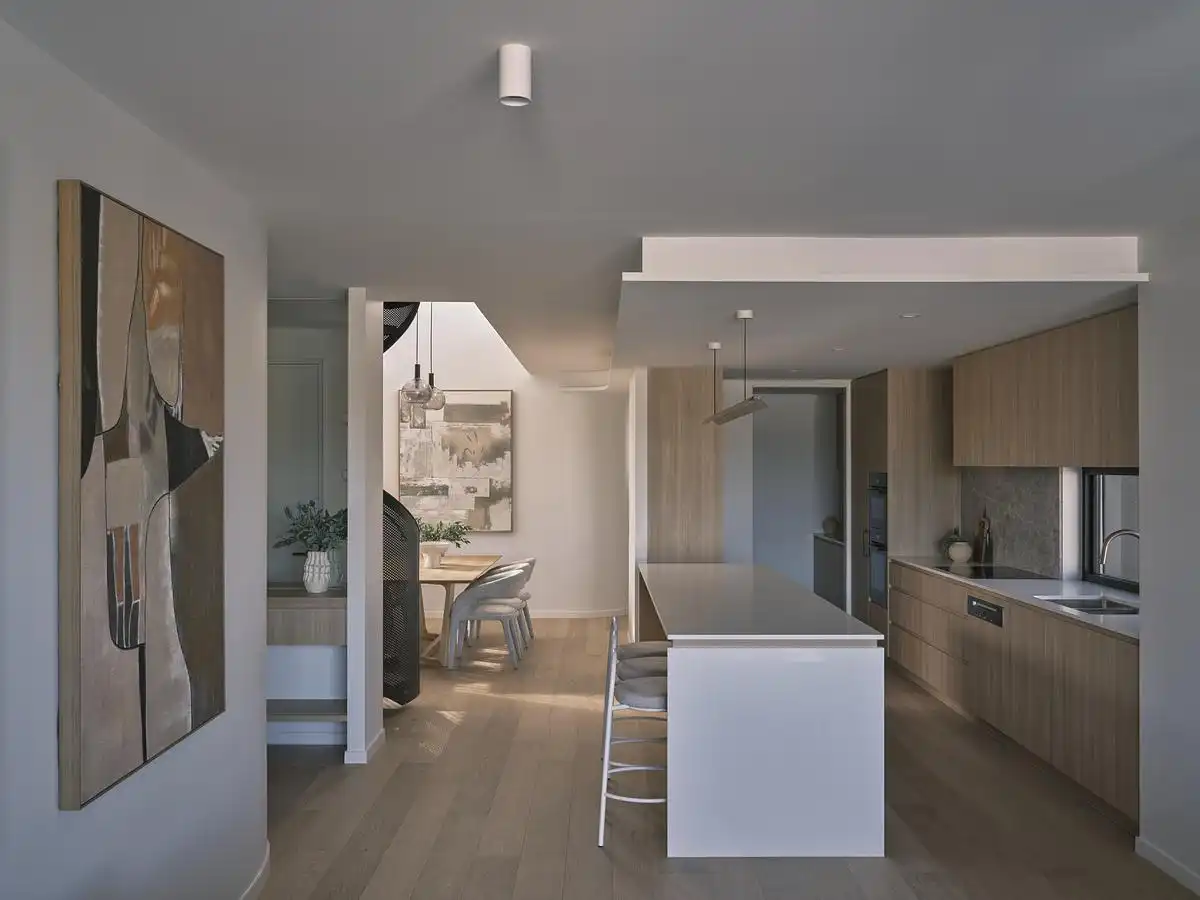
The building comprises of three independent dwellings designed to operate with the spatial qualities of houses, prioritising openness, scale and separation rather than conventional apartment typology.
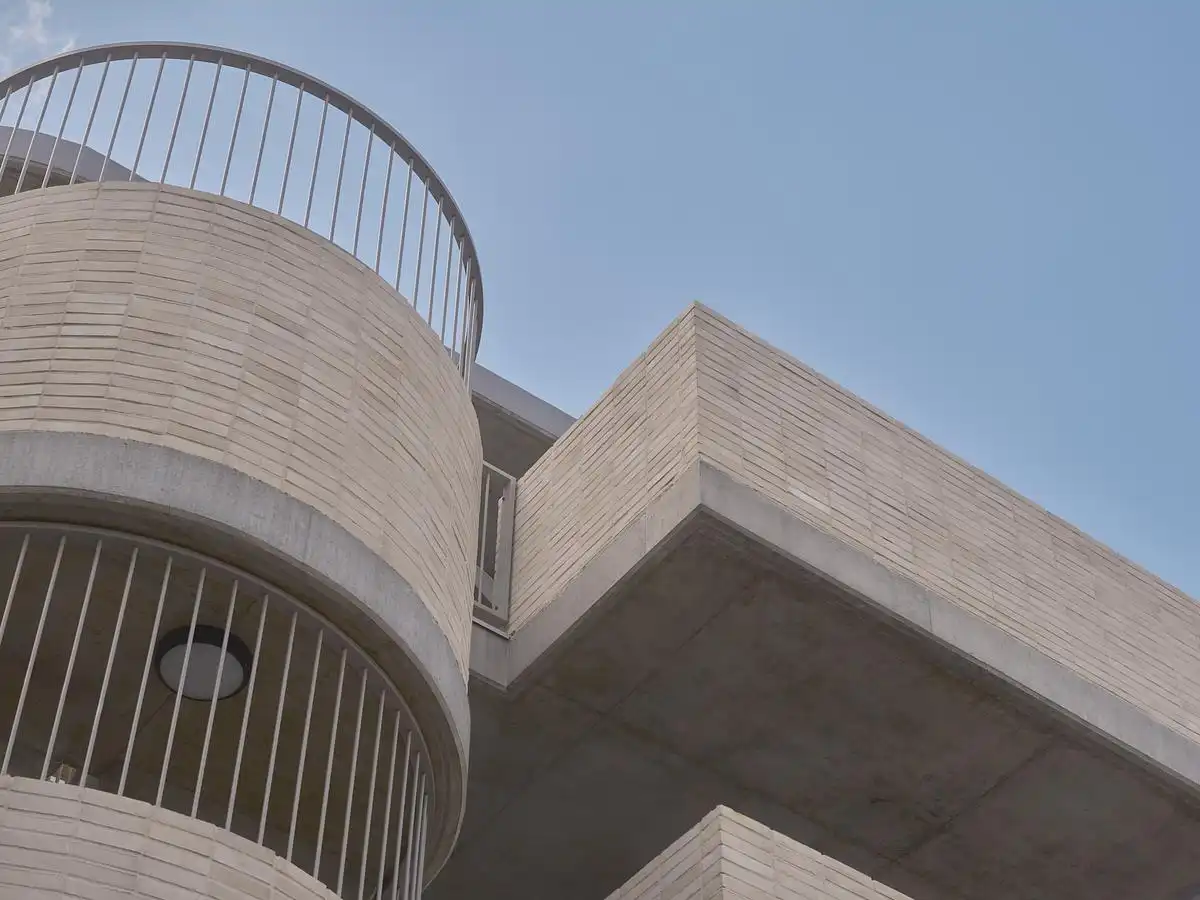
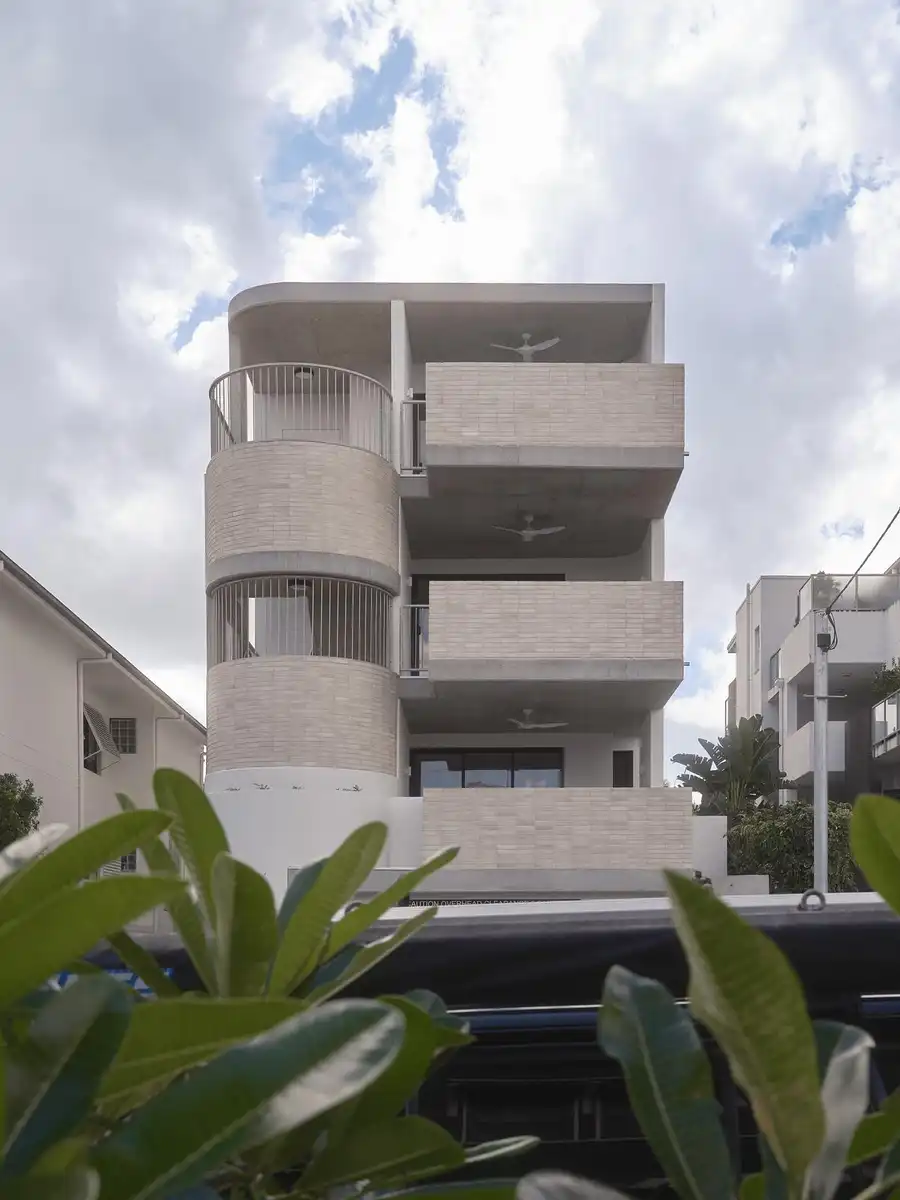
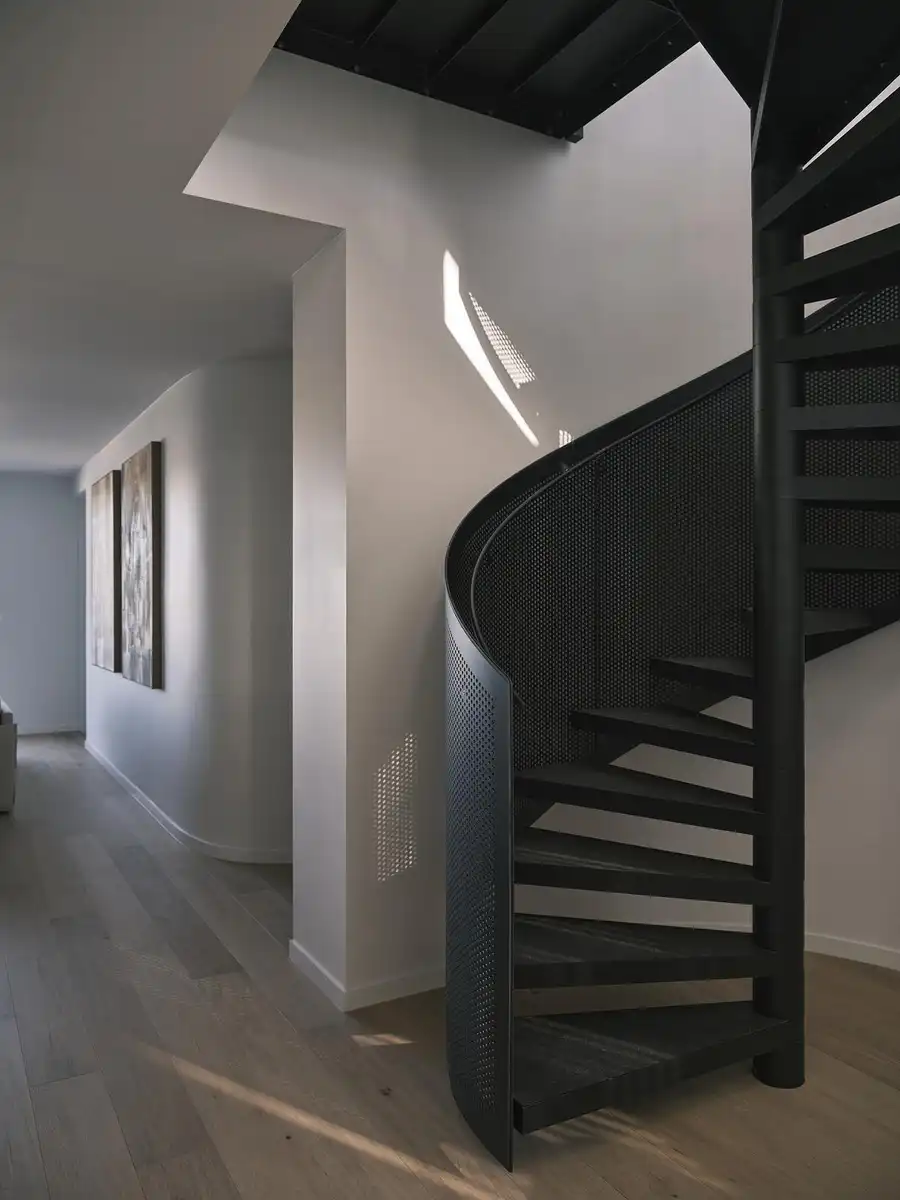
The architectural response is informed by the Art Deco character of the surrounding context, reinterpreted through a restrained material palette of steel, brick, timber and concrete expressed in a contemporary composition.
The building is organised to respond to the subtropical climate, with openings and transitional thresholds that extend living spaces towards the exterior and establish a layered relationship with the street and surrounding landscape.
Upper-level communal circulation is conceived as a shared externalised spine, introducing light and ventilation while reinforcing a sense of openness within the building.
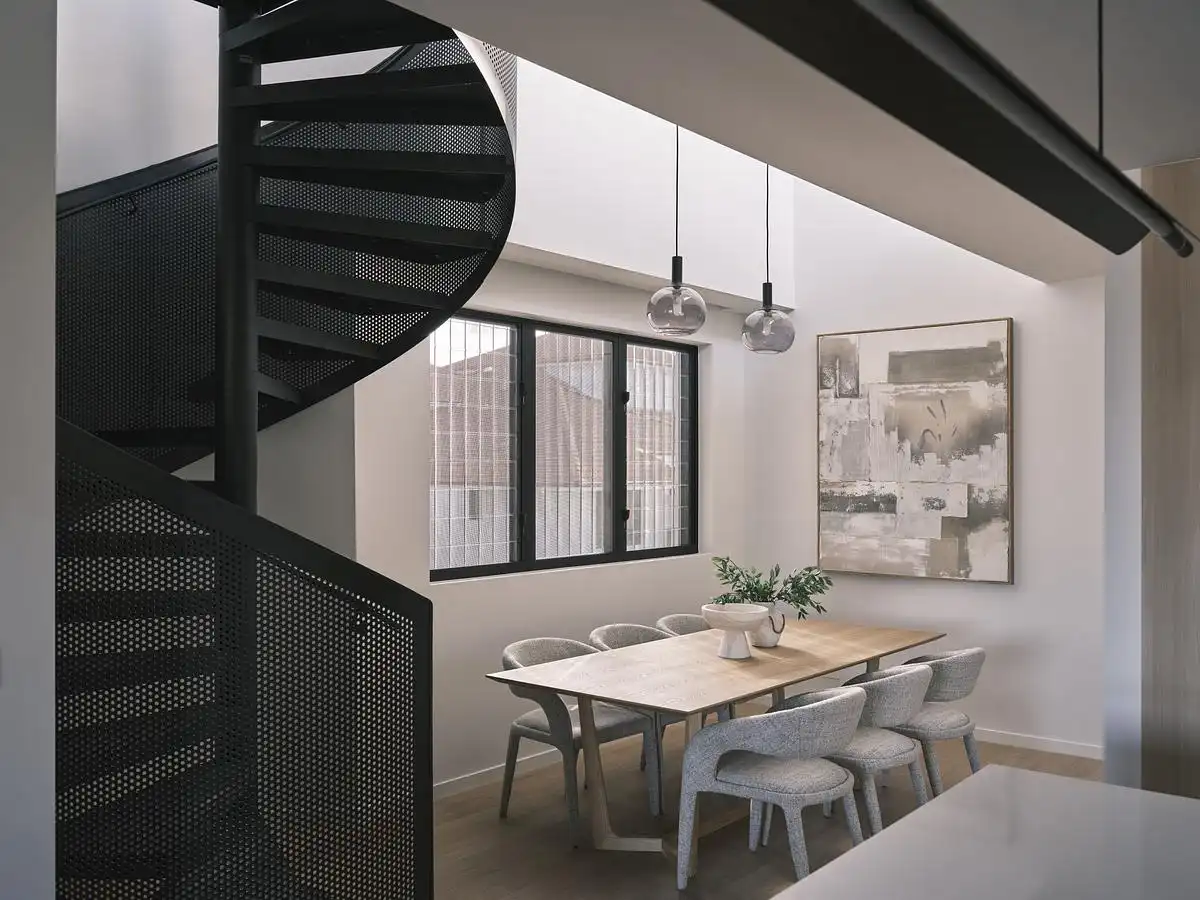
Internal spaces are oriented towards surrounding tree canopy views and structured to balance spatial generosity with material restraint.
Given Reside – New Farm occupies one of the last undeveloped sites in the area, what were the specific challenges and opportunities presented by this unique location, and how did it influence the project’s design and development?
Reside occupies one of the final undeveloped parcels within New Farm’s established medium-density fabric, a condition that presented both a significant opportunity and a unique set of challenges.
The site itself was relatively modest in size and previously occupied by a small Queenslander cottage. While the surrounding context has, over time, transitioned to predominantly multi-residential development, the proposal was met with considerable community resistance. Despite the site’s zoning and its location within an established medium-density precinct, there remained a strong perception that any new apartment development represented an erosion of the neighbourhood’s character.
One of the project’s primary challenges therefore became less about density itself and more about redefining what density could look like. Rather than pursuing a conventional apartment model, the design sought to demonstrate that increased housing supply could coexist with the spatial qualities, privacy and amenity typically associated with detached homes.
The constrained nature of the site further intensified this challenge. Surrounded on all sides by existing unit developments, the building needed to carefully negotiate issues of overlooking, privacy, access to daylight and landscape outlook while still creating generous and highly liveable dwellings.
The resulting architectural response became an exercise in restraint. Considerable effort was invested in reducing the perceived scale of the building, establishing meaningful setbacks, framing views towards surrounding tree canopies and creating a strong relationship between interior and exterior space. The project ultimately argues for a more nuanced model of urban infill—one where density is measured not by yield alone, but by the quality of life it affords its occupants and the contribution it makes to its neighbourhood.
In many respects, Reside emerged from a fundamental question: how can we introduce additional housing into established inner-city suburbs without sacrificing the qualities that make those places desirable in the first place? The project positions itself as a possible answer.
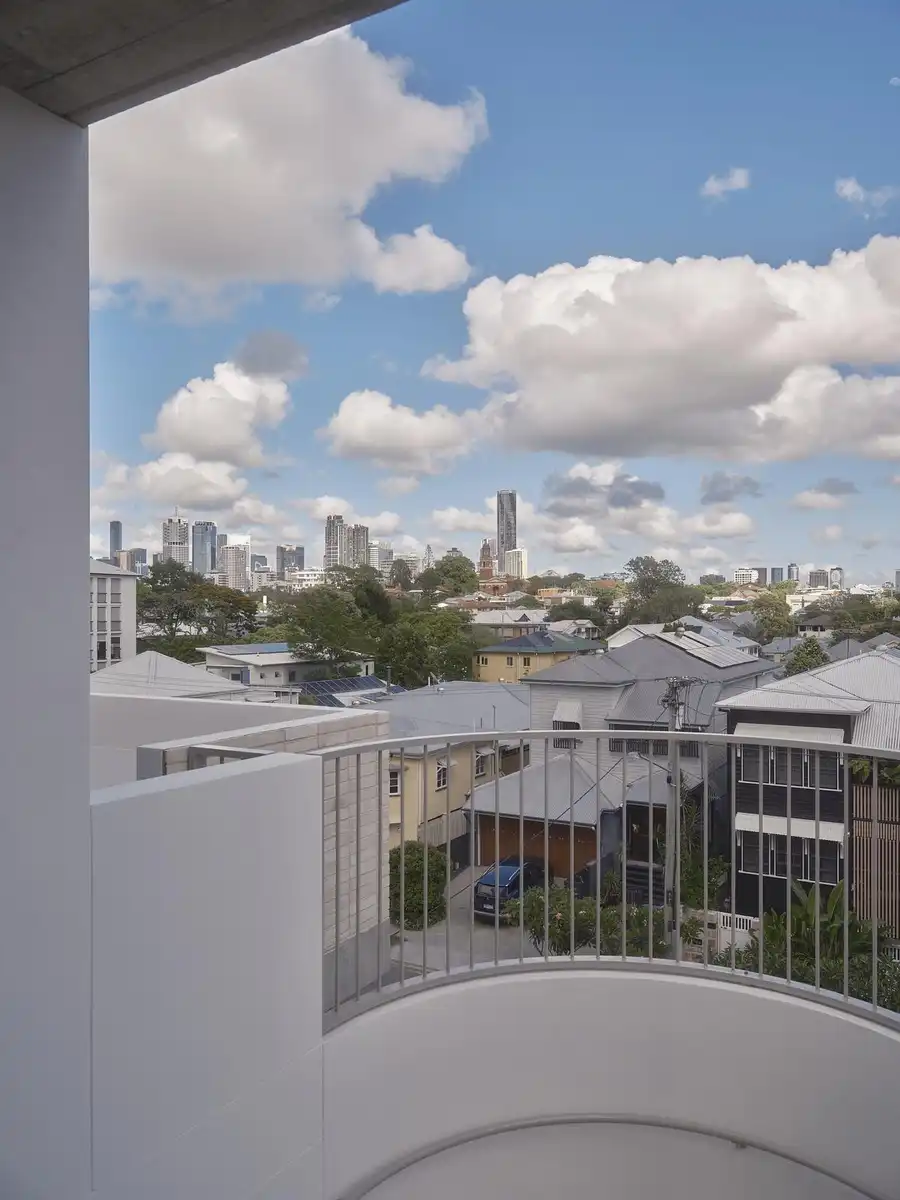
Reside is described as a boutique multi-residential project. Could you elaborate on the design philosophy behind this, and how it differentiates Reside from other developments in New Farm?
At its core, Reside challenges the conventional relationship between apartment living and residential quality. While many multi-residential developments seek to maximise yield, the project began with a different question: what would apartment living look like if it prioritised the spatial generosity, privacy and permanence of a house?
The result is a deliberately boutique development comprising just three whole-floor residences, each occupying an entire level of the building. This approach significantly reduces the density typically associated with apartment projects while allowing each dwelling to enjoy abundant natural light, cross ventilation, privacy and a strong connection to the surrounding landscape.
The project was specifically conceived for downsizers—residents who have often spent decades in substantial family homes within Brisbane’s inner suburbs and are seeking to remain connected to the lifestyle and amenity of New Farm without the ongoing maintenance obligations that accompany traditional housing. For this demographic, the challenge is often not finding an apartment, but finding one that does not feel like a compromise.
Reside responds by offering residences that function more like elevated homes than conventional apartments. Generous living spaces, direct lift access, expansive outdoor rooms, carefully considered storage, and a high level of material refinement create a residential experience that retains the comfort and dignity of a standalone dwelling while benefiting from the convenience of apartment living.
This philosophy also informed the building’s architectural expression. Rather than pursuing a highly commercial development model, the design adopts a level of detail and material authenticity more commonly associated with bespoke residential architecture. The restrained palette of brick, concrete, timber and steel was selected not only for its durability but for its ability to age gracefully and contribute to a sense of permanence within the streetscape.
In the context of New Farm, where many apartment developments are either legacy stock or larger-scale contemporary projects, Reside occupies a distinct position. It is neither a traditional apartment building nor a collection of detached houses. Instead, it explores an alternative model of urban living—one that provides the amenity, security and convenience of multi-residential development while preserving many of the qualities people value most in a home.
The project ultimately reflects a growing shift in how luxury is understood. Rather than being defined by excess, luxury here is expressed through space, light, privacy, craftsmanship and longevity. It is an architecture that seeks to provide residents with everything they need, while removing the burden of everything they no longer want to maintain.
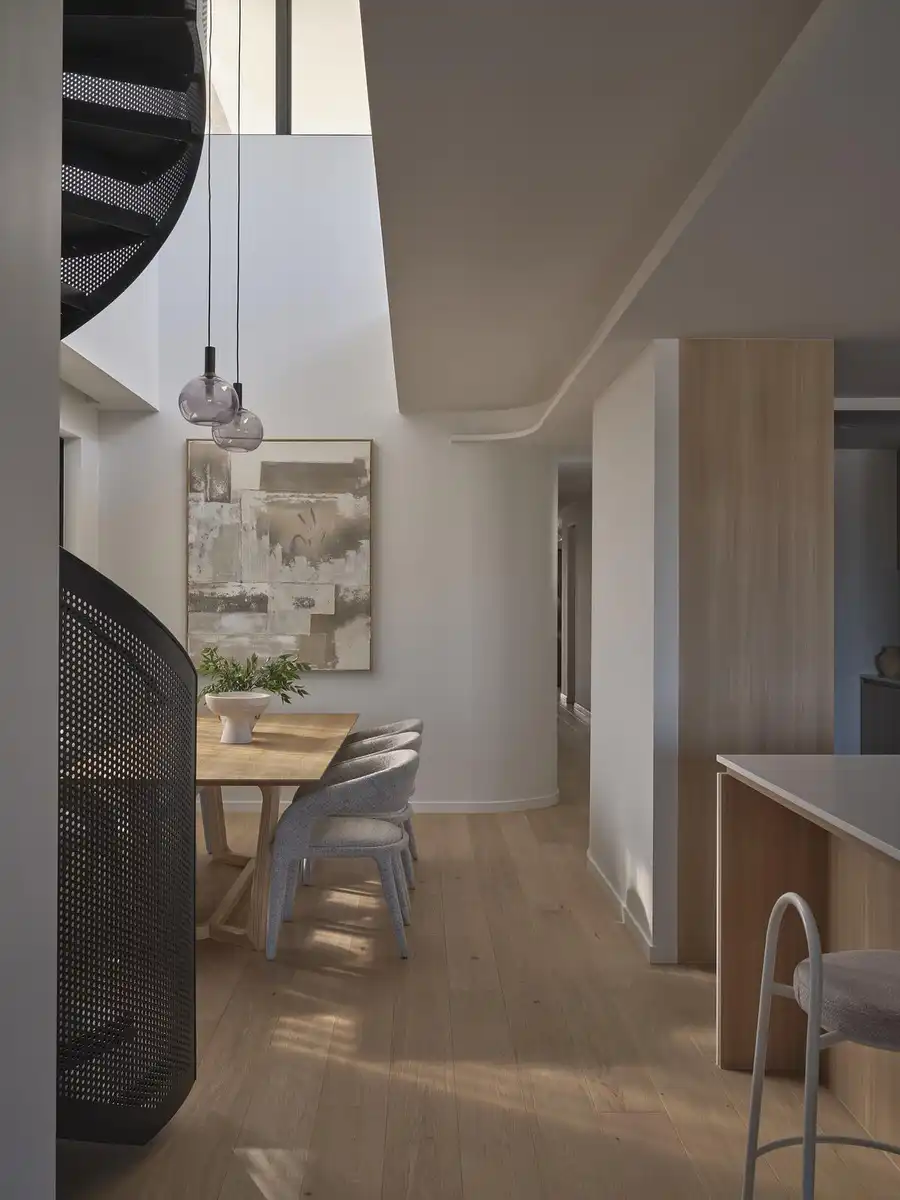
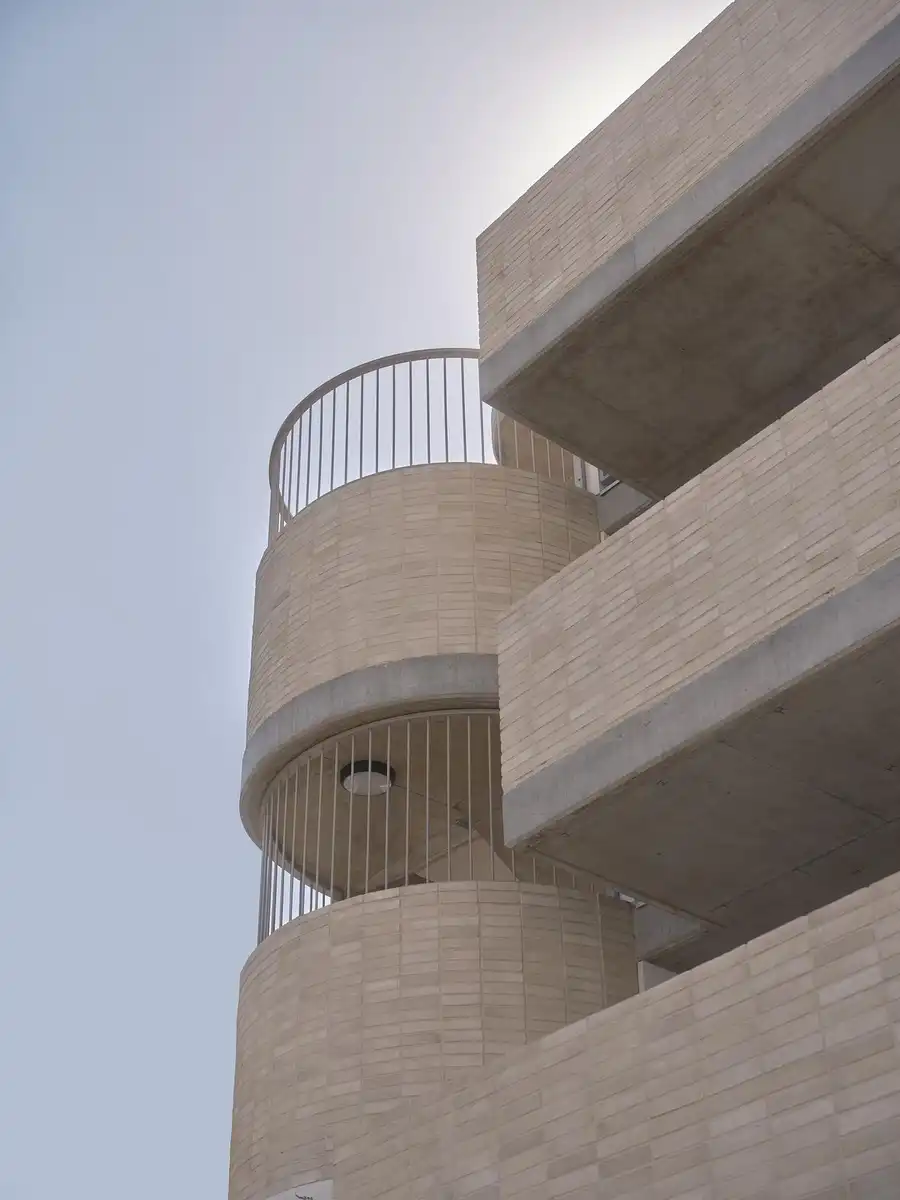
New Farm is a well-established suburb. How did Alexandra Buchanan Architecture approach the design to ensure Reside harmoniously integrates with the existing character and community of the area?
From the outset, the ambition for Reside was not to create a building that stood apart from New Farm, but one that felt intrinsically connected to it. New Farm is one of Brisbane’s most established and layered neighbourhoods, defined by a rich collection of architectural periods, mature landscape, walkable streets and a strong sense of community. Any intervention within this context carries a responsibility to contribute positively to that existing character.
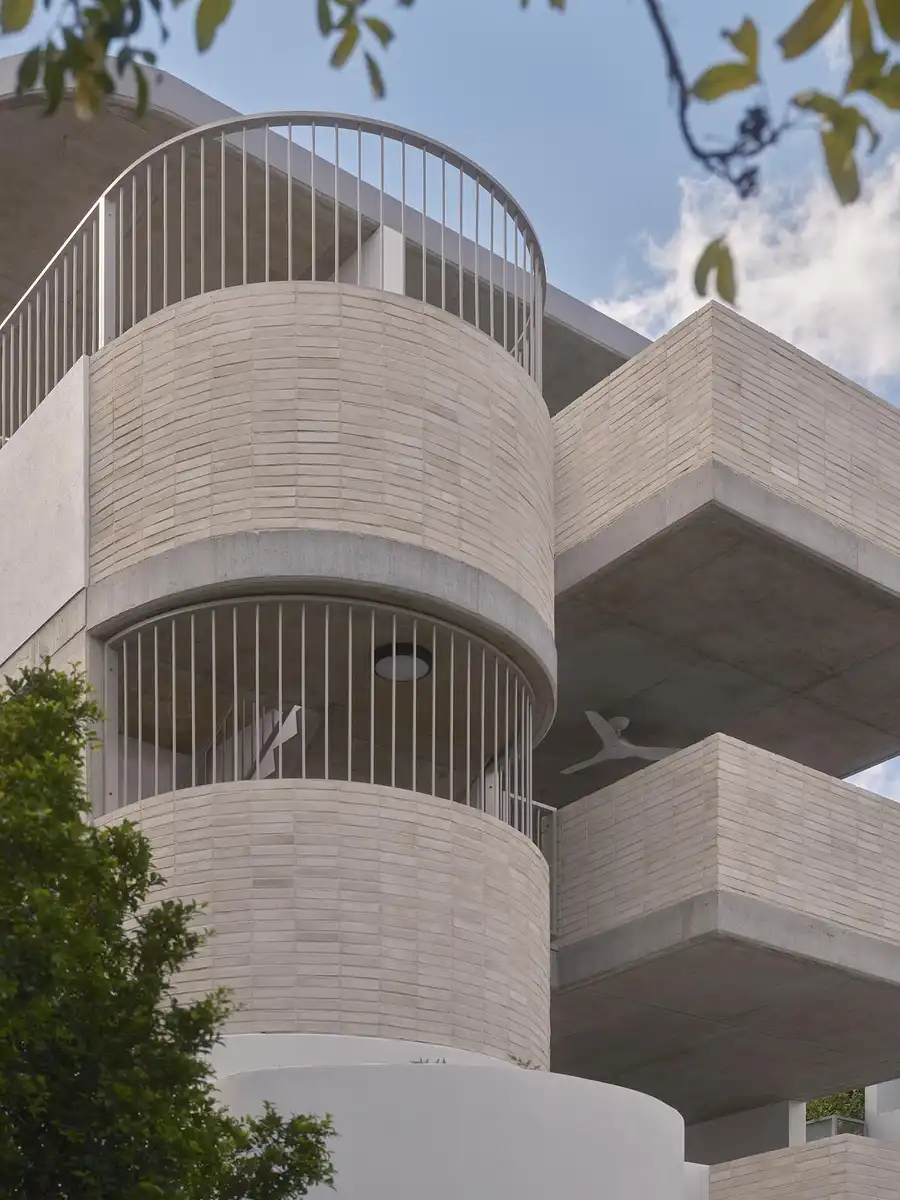
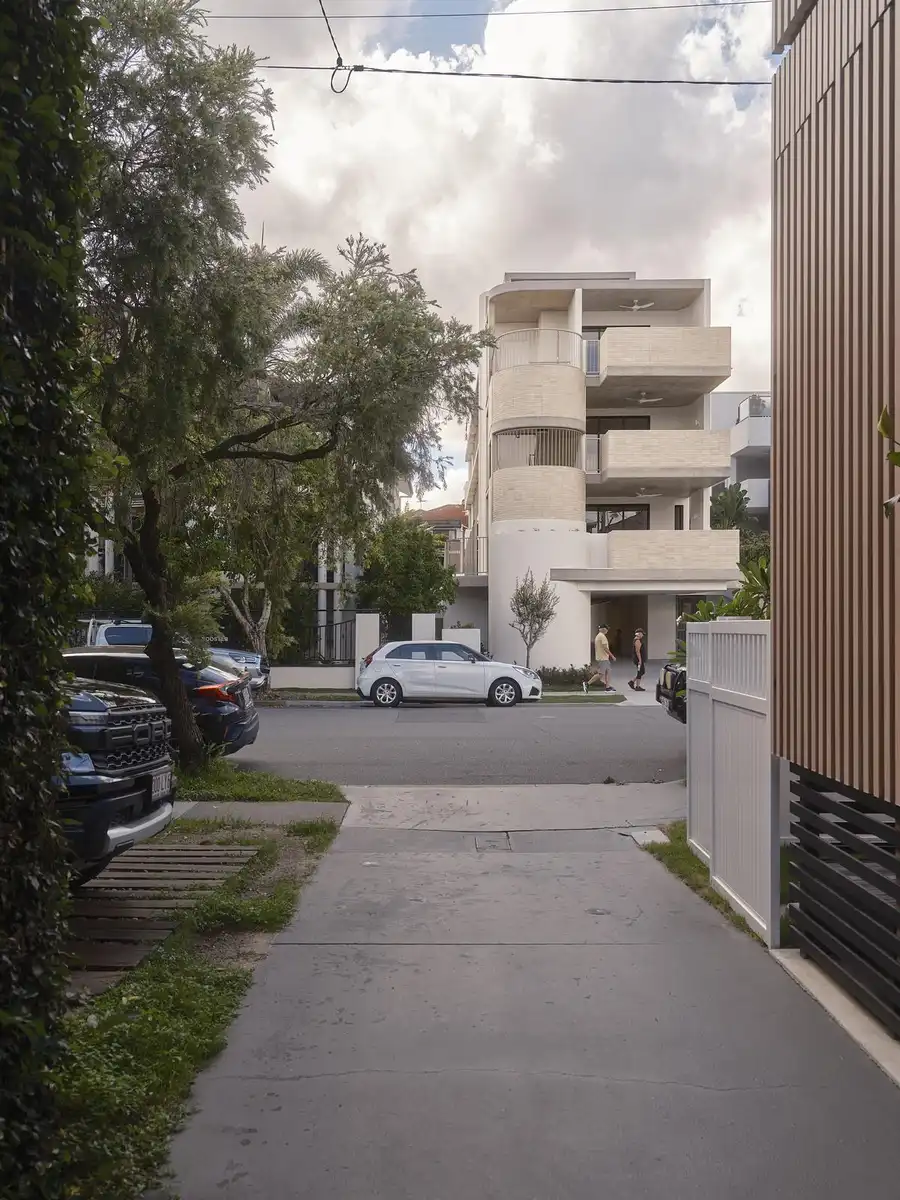
Rather than replicating historical styles, Alexandra Buchanan Architecture sought to understand the underlying qualities that make the neighbourhood distinctive and reinterpret them through a contemporary lens. The design draws particular influence from the scale, permanence and craftsmanship of the surrounding Art Deco apartment buildings, many of which have become enduring landmarks within the suburb. Their robust masonry construction, softened corners, expressed forms and human-scaled proportions informed many aspects of the architectural response.
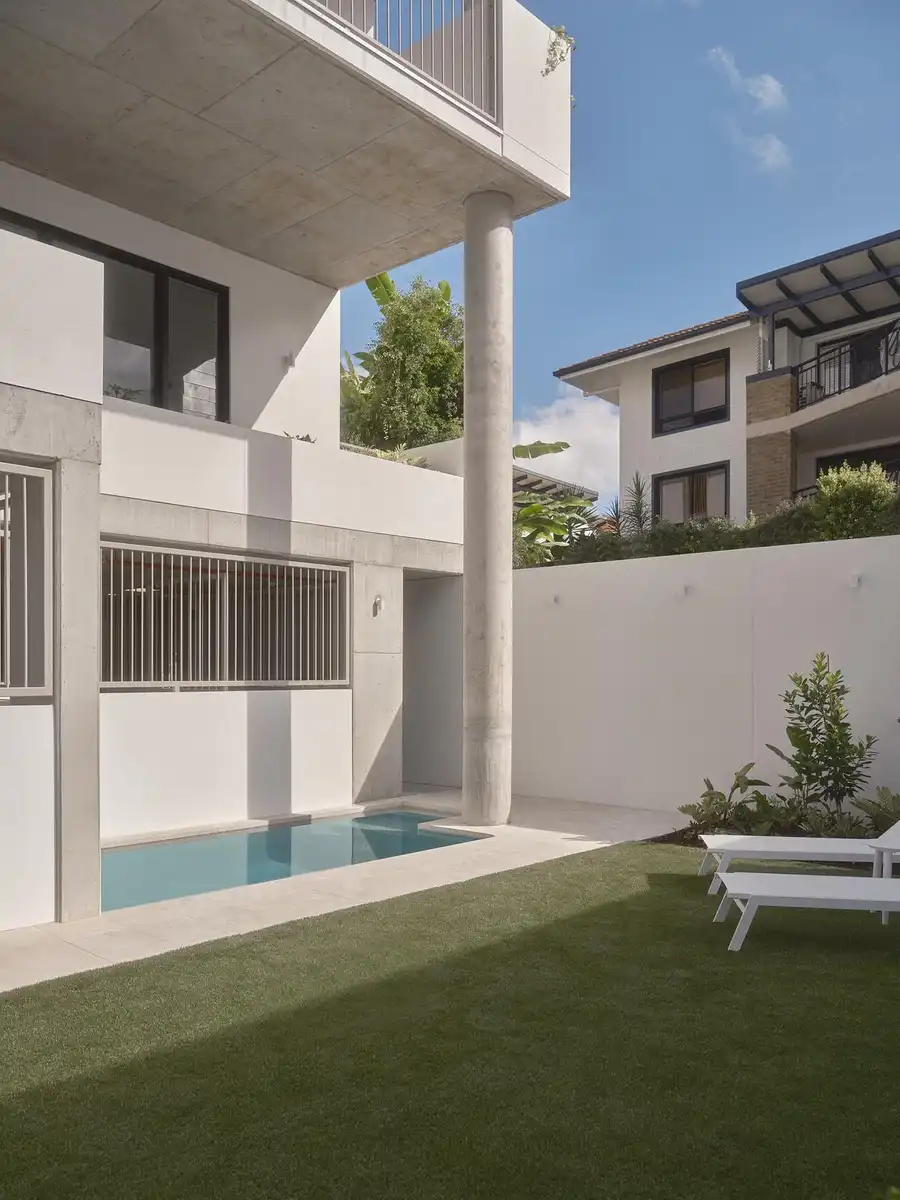
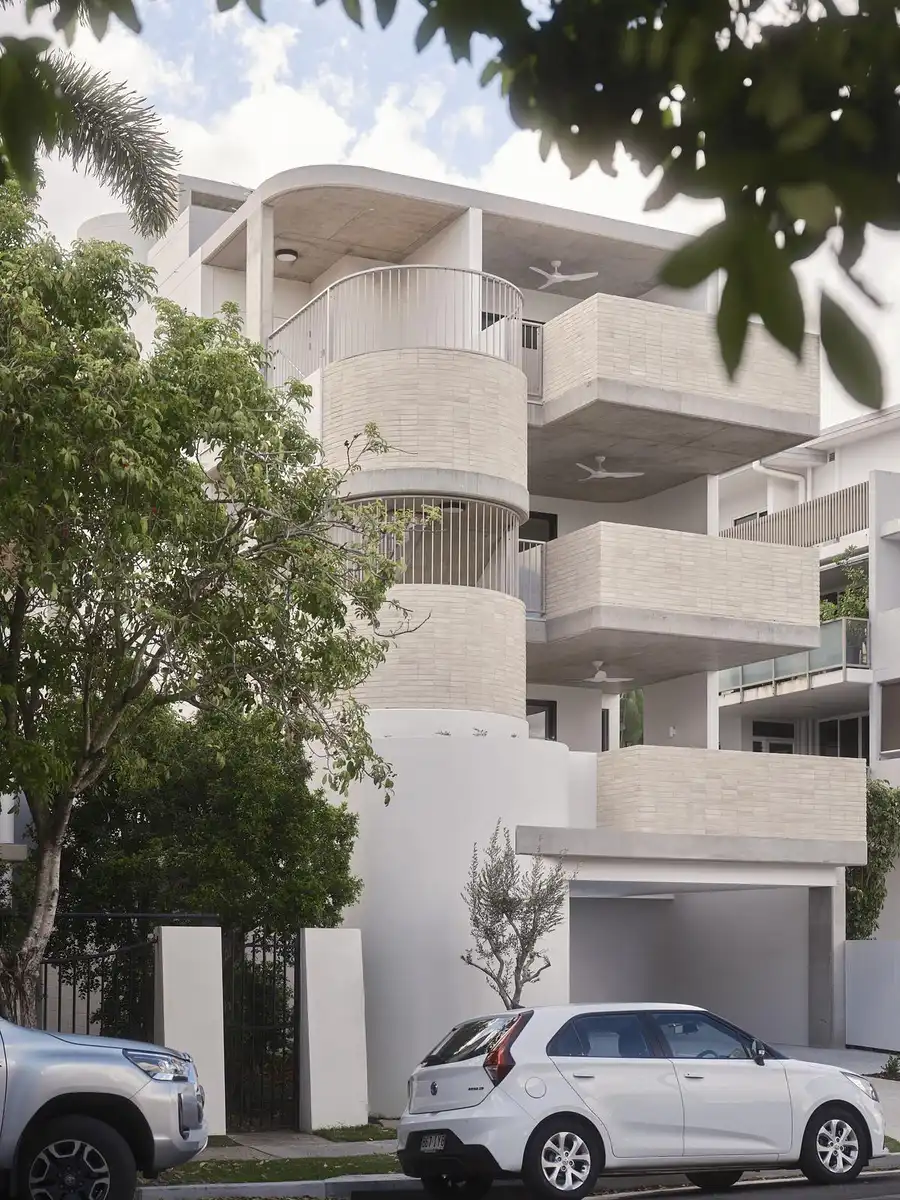
This influence can be seen in Reside’s curvilinear geometry, carefully modelled massing and emphasis on solid, enduring materials. Curved elements help soften the building’s presence within the streetscape while establishing a dialogue with the neighbouring Art Deco buildings that have long contributed to New Farm’s character.
Materially, the project also references Brisbane’s evolving architectural language. The open masonry screens and textured brickwork draw inspiration from the contemporary architecture emerging throughout the James Street precinct, where masonry has been reinterpreted as a sophisticated subtropical material capable of providing both environmental performance and visual richness. At Reside, these elements are employed not as decoration but as functional devices that filter light, promote ventilation and establish layers of privacy between the building and the public realm.
The building’s scale was another critical consideration. Although the site sits within a medium-density precinct, the design deliberately avoids the appearance of a larger apartment development. Through the articulation of the façade, generous landscaping, deep recesses and carefully proportioned openings, the building is broken down into a more residential scale that sits comfortably amongst its neighbours.
Equally important was the desire to foster a meaningful relationship between residents and the street. The architecture embraces the subtropical lifestyle that defines New Farm, incorporating transitional spaces, operable openings and outdoor living areas that encourage passive interaction with the surrounding neighbourhood rather than creating a sealed or isolated environment.
Ultimately, Reside reflects a belief that contextual architecture is not about imitation. It is about understanding the physical, cultural and environmental qualities that define a place and finding contemporary ways to reinforce them. The project seeks to contribute to the ongoing story of New Farm—drawing from its Art Deco heritage, its established urban character and Brisbane’s evolving subtropical architectural language to create a building that feels both familiar and distinctly of its time.
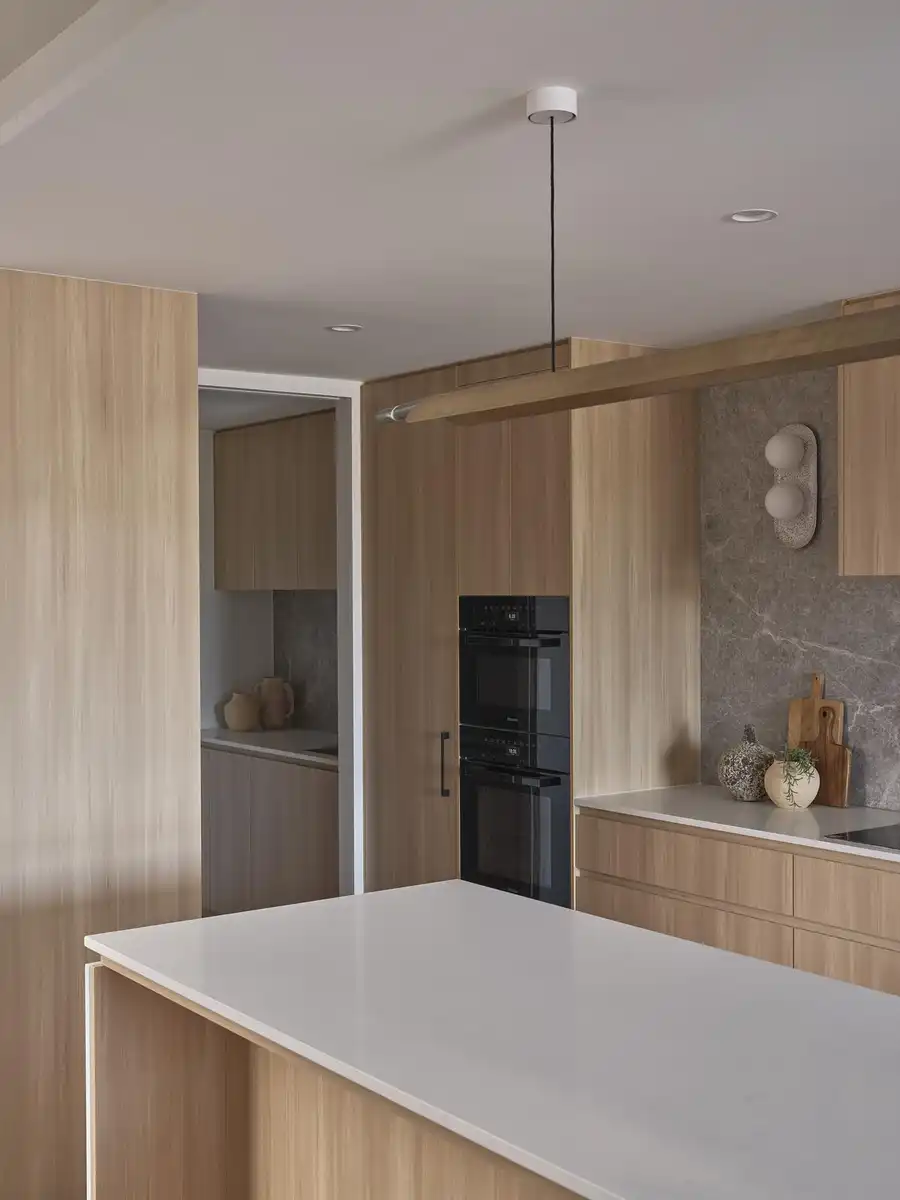
How does Reside – New Farm contribute to the evolving conversation around urban living and multi-residential design, particularly in sought-after, mature suburbs like New Farm?
Reside emerges at a time when Australian cities are grappling with a fundamental housing question: how can established inner-city suburbs accommodate growth without compromising the qualities that make them desirable in the first place?
In many ways, the project challenges the traditional polarisation between detached housing and conventional apartment living. For decades, downsizers in suburbs such as New Farm have often faced a difficult choice—remain in large family homes that no longer suit their lifestyle, or move into apartments that frequently sacrifice space, privacy and connection to the outdoors. Reside proposes an alternative model.
By providing just three whole-floor residences, the project demonstrates that increased density does not necessarily require increased intensity. Instead, it explores a form of gentle density that respects neighbourhood character while introducing new housing opportunities into an established urban fabric. The building delivers the efficiency and convenience of multi-residential living without abandoning many of the qualities traditionally associated with a standalone home.
This approach is particularly relevant within mature suburbs such as New Farm, where demand continues to grow but opportunities for new development are increasingly limited. As one of the last remaining undeveloped sites within the precinct, Reside presented an opportunity to ask a broader question about how infill development can contribute positively to the life of the neighbourhood rather than simply maximise development yield.
The project deliberately prioritises quality over quantity. Large floor plates, direct lift access, generous outdoor living areas, natural cross ventilation, abundant daylight and carefully framed views towards the surrounding tree canopy create residences that are intended to support long-term occupation rather than transient living. In doing so, the building acknowledges a demographic that is often underserved by the apartment market—residents seeking the amenity, walkability and cultural richness of inner-city living without the maintenance burden of a detached house.
Reside also contributes to an emerging conversation around permanence in residential architecture. At a time when many apartment developments are driven by efficiency and repetition, the project advocates for a more enduring model of housing founded on robust materiality, environmental responsiveness and architectural longevity. The use of masonry, concrete, timber and steel reflects a commitment to buildings that age gracefully and become part of the established character of their surroundings over time.
Perhaps most importantly, the project suggests that density should be measured not only by the number of dwellings delivered, but by the quality of life those dwellings provide. Reside demonstrates that multi-residential architecture can offer generosity, individuality and a strong sense of home while contributing sensitively to the evolution of an established neighbourhood.
In this sense, the project is less concerned with redefining New Farm than it is with reinforcing the qualities that have made the suburb desirable for generations—walkability, community, landscape and architectural character—while providing a contemporary housing model capable of supporting its future.
Reside housing in Brisbane, Australia – Property Information
Architects: Alexandra Buchanan Architecture – https://alexandrabuchanan.com/
Completed: 2025
Traditional Lands of the Turrbal and Jagera people
Project Type: New Build & Interior Design
Location: New Farm, Brisbane, QLD
Floor area: 1,200sqm
Photography: Cieran Murphy
Architecture & Interior Design: Alexandra Buchanan with Adam Hamilton for ABA
Construction Team: Urban Planners Queensland
PITT: Nicholsons
Materials: Concrete, Masonry. Timber. Glass
Photographer: Cieran Murphy
Reside housing, New Farm, Brisbane, QLD images / information received 080626
Location: New Farm, Brisbane, Queensland, Australia.
+++
Brisbane Houses Designs
Queensland House Designs
Whynot Renovation, West End, Paddington, Queensland
Design: Clements Clarke Architects
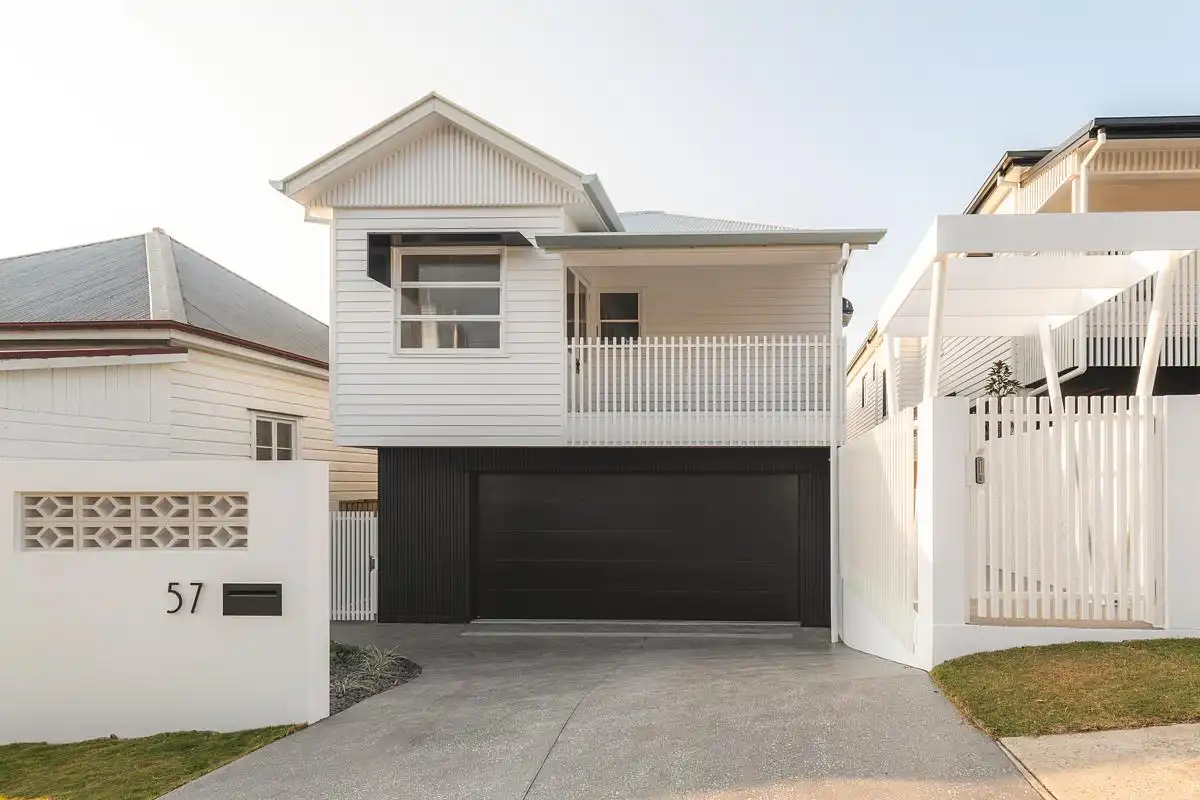
photo : Samuel Van Dyke
Warmington House, Paddington, Brisbane, QLD
Design: Alexandra Buchanan Architecture
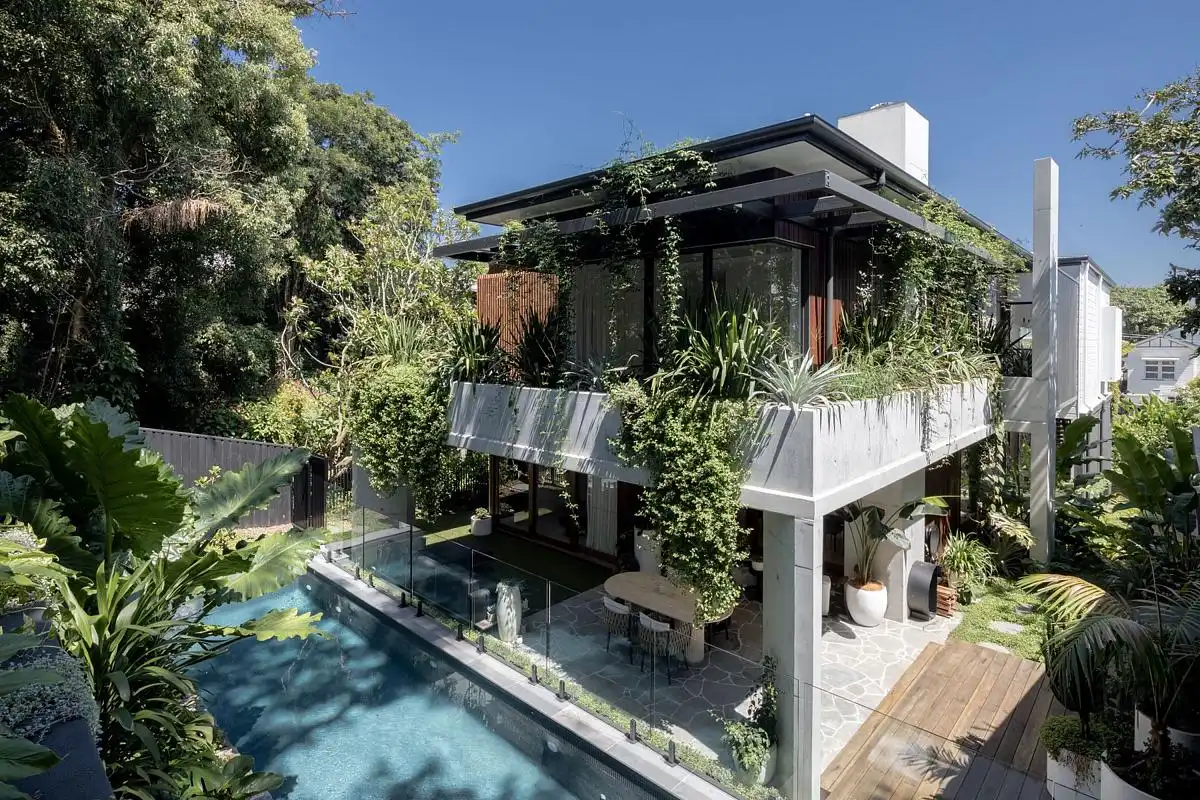
photo : James Peeters
+++
Brisbane Buildings
Contemporary Architecture in Brisbane – architectural selection below:
Brisbane Architecture Designs – chronological list
Brisbane Architecture News
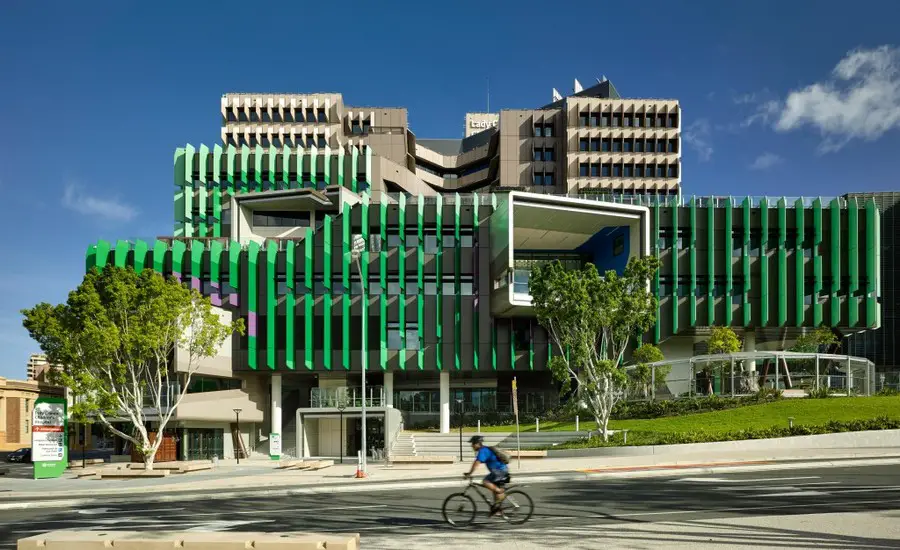
photograph courtesy Lend Lease
+++
Australian Architecture Designs
Australian Architectural Designs
Australian Houses – key new properties across the country
Comments / photos for the Reside housing, New Farm, Brisbane property design by Alexandra Buchanan Architecture page welcome