
What a construction quality control plan actually needs to include
July 9, 2026
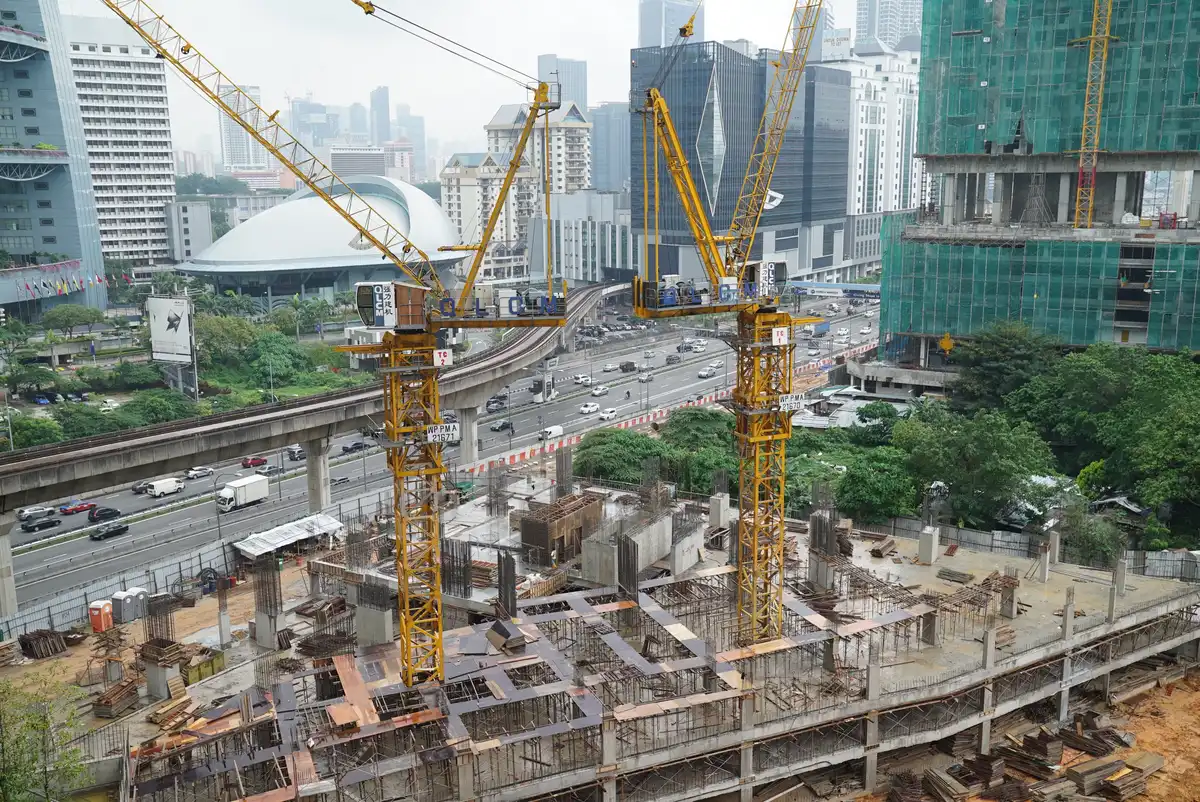
On many projects, the quality control plan shows up as a document produced to satisfy a contract clause, submitted once, then filed and rarely opened again. That approach treats the plan as paperwork to clear before the real work starts. A plan that actually protects a project reads more like an operating manual, because it names who checks what, at which point in the work, against which specification, and what happens the moment something falls short.
The stakes are concrete. Rework, meaning the correction of work that was already installed, consumes labor, materials, and schedule that no one budgeted for, and it often stays hidden until a later trade uncovers it. A single missed check can ripple outward, forcing a finished area to be opened back up and pushing dependent trades off their sequence. A peer-reviewed classification of rework causes in construction contracts groups those causes across the design, procurement, and construction stages and ties each one to the party responsible for it. The takeaway for anyone drafting a plan is that quality failures are rarely random events. They cluster around handoffs, unclear responsibilities, and specifications that no one confirmed before crews began.
Quality assurance and quality control describe two different jobs
Contracts and standards separate the two terms on purpose. Quality assurance covers the planned, systematic activities that give an owner confidence a finished facility will perform as intended. Quality control covers the inspection, testing, and measurement that verify individual features of work against the specification while the work is underway. The Federal Highway Administration‘s quality assurance program guidance frames a complete program around several elements, including contractor quality control, acceptance by the owner, independent assurance, dispute resolution, and the use of qualified laboratories and qualified personnel.
That division matters for a plan’s authors. A quality control plan documents what the party performing the work will do to confirm its own output. It sits alongside the owner’s acceptance testing rather than replacing it. A concrete pour offers a plain example: the contractor’s plan governs slump checks and cylinder sampling at the point of placement, while the owner’s program verifies those results independently before accepting the work. When the two roles blur, plans either duplicate the owner’s function or leave gaps where no single party is clearly accountable, and gaps of that kind are exactly where defects survive to closeout.
Start by defining the features of work
A plan cannot inspect everything with equal intensity, so the first task is to break the project into units that can be controlled one at a time. Federal construction practice calls these definable features of work: discrete activities such as sitework, foundations, structural steel, or roofing, each carrying its own specifications, submittals, and inspection points. The U.S. Army Corps of Engineers regulation on construction quality management builds its entire control process around these units, requiring that each one be planned before it starts, checked as work begins, and monitored as it continues.
Defining features of work early gives the plan its backbone. Each feature becomes a line item with a responsible person, a set of reference specifications, a testing frequency, and clear acceptance criteria. Practical overviews of quality control in construction make the same point from the field side: inspection and testing regimes hold up only when they are tied to these specific units, rather than applied as one generic checklist stretched across the whole project.
Why the plan structure matters
Research that classifies rework by project stage finds that the design and construction stages generate more categories of quality problems than procurement does, which is why a plan that assigns responsibility to specific parties and stages tends to close the most gaps.
The components every plan should spell out
Once the features of work are defined, the plan has to say, in concrete terms, how each one will be controlled. A handful of components recur across plans that function on site rather than in a binder.
- Roles and responsibilities. Name the quality control manager and define their authority, including the authority to pause work on a feature that is not ready. Research on rework causes repeatedly traces corrections back to unclear allocation of responsibility among project parties, so ambiguity written into the plan becomes cost on the ground.
- Submittals and material control. List the submittals each feature requires, name who reviews and approves them, and describe how delivered materials are verified against what the specification called for.
- Inspection and testing. State which properties will be measured, how often, by whom, and with which methods. Federal programs require that sampling and testing feeding an acceptance decision be carried out by qualified personnel working through qualified laboratories.
- Phased control. The Corps of Engineers organizes inspection into three phases for each feature: a preparatory phase before work starts, an initial phase once the first representative portion is in place, and a follow-up phase of continuing checks. The structure is designed to surface problems early, while correction is still cheap.
- Nonconformance and corrective action. Define how deficient work gets identified, documented, tracked to closure, and re-inspected, along with how recurring issues feed back into the process so the same defect does not reappear on the next feature.
- Specify the daily reports, inspection checklists, test logs, and photographic records the plan will produce. An inspection that no one recorded is difficult to defend once the work is covered.
Where quality control plans commonly fall short
Even detailed plans fail in predictable ways. Recognizing the patterns early is often the difference between a plan that guides work and one that merely satisfies a reviewer.
- Generic templates. A plan copied from a previous project and lightly edited tends to describe features of work that are not on this job while missing the ones that are. Reviewers can usually spot a template that repeats the specification back without adding project-specific detail.
- Inspection points with no owner. Listing a test without naming who performs it, and by when, leaves the check to chance. Every inspection in the plan needs a name attached to it.
- No feedback loop. When a plan records defects but never routes the recurring ones back into the process, the same problem reappears feature after feature until someone notices the pattern by accident.
- Documentation treated as an afterthought. Plans that leave reports and logs optional leave a project unable to prove, later, that a covered feature was ever verified at all.
A quality control plan is a living document
Standards for quality management treat the written system as something to maintain, not to file. The international standard for quality management systems describes a framework built on documented processes and continual improvement, and it deliberately avoids prescribing a single way to operate, leaving each organization to adapt the structure to its own work. Applied to construction, that means the plan should change as the project does. New features of work get added, testing frequencies get tightened when results trend the wrong way, and lessons from an early phase inform the ones that follow.
A plan maintained this way doubles as a record. The daily reports and test logs it produces show that each feature was verified against its specification, which is exactly the evidence that matters during closeout, warranty questions, and any later dispute over whether the work met the contract.
A short test for a plan that will hold up
Before a plan goes out for approval, a handful of questions reveal whether it will function on site or gather dust:
- Does every definable feature of work carry named acceptance criteria and a responsible person?
- Can a field engineer read the plan alone and know what to inspect this week and how to inspect it?
- Is there a clear path from a failed inspection through corrective action to re-inspection?
- Does the plan keep the contractor’s control activities distinct from the owner’s acceptance role?
- Will the documentation it generates still stand up a year after the work was covered?
A plan that answers those questions gives a project team something to work from every day. A plan that cannot answer them is the paperwork version, and it usually reveals its gaps at the worst possible time, after nonconforming work has already disappeared under the next layer of construction.
Comments on this guide to What a construction quality control plan actually needs to include article are welcome.
Building
Recently added Building posts
Water reuse and treatment in sustainable building design
Gas vs Electric Hot Water Replacement at home
Why professional painting matters in home design
++
Property Design
Residential Property
Comments / photos for the What a construction quality control plan actually needs to include page welcome.


