Garzón School in Punta del Este, Uruguay
7 July 2026
Architects: Rosan Bosch Studio
Location: Punta del Este, Uruguay, South America
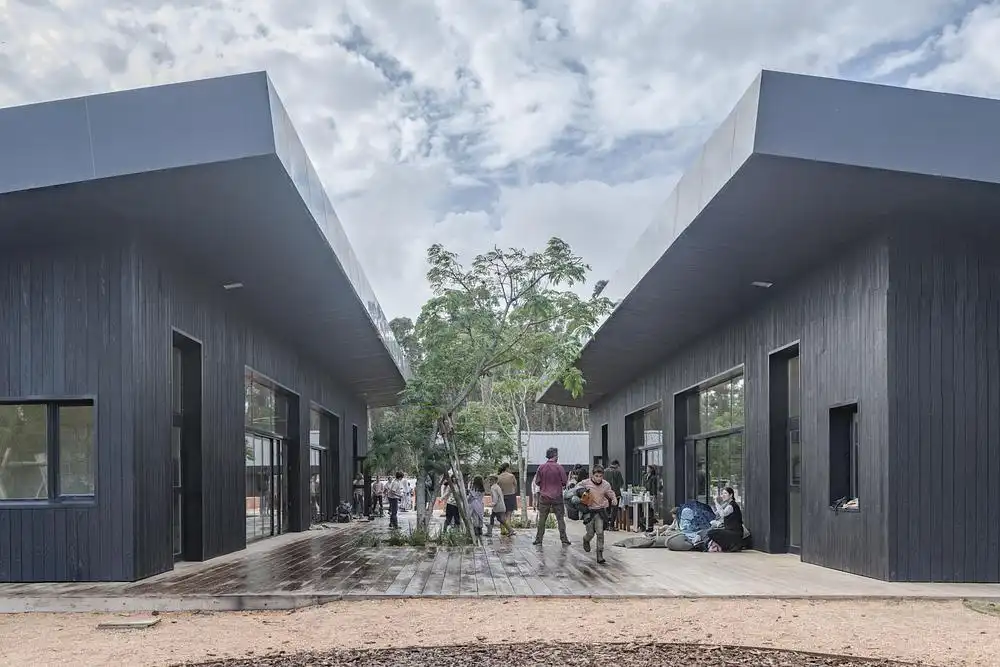
Photos by Eleazar Cuadros
The award-winning Garzón School presents a bold vision for the future of education, one in which architecture is not simply a backdrop to learning, but an active force in shaping how children think, move, collaborate, reflect, and connect with the world around them.
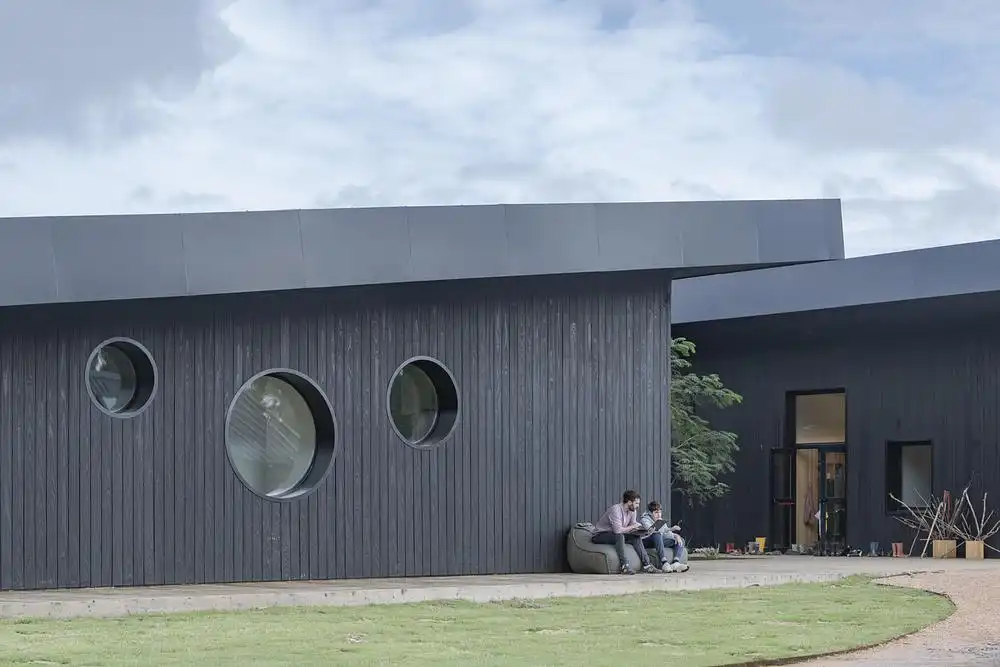
Designed by Rosan Bosch Studio, The Garzón School responds to one of the most important questions facing education today: what kinds of environments do children need in an age increasingly defined by screens, artificial intelligence, and digital acceleration? As technology transforms how knowledge is accessed and shared, the project highlights the continued importance of physical space, sensory experience, human connection, and direct engagement with nature.
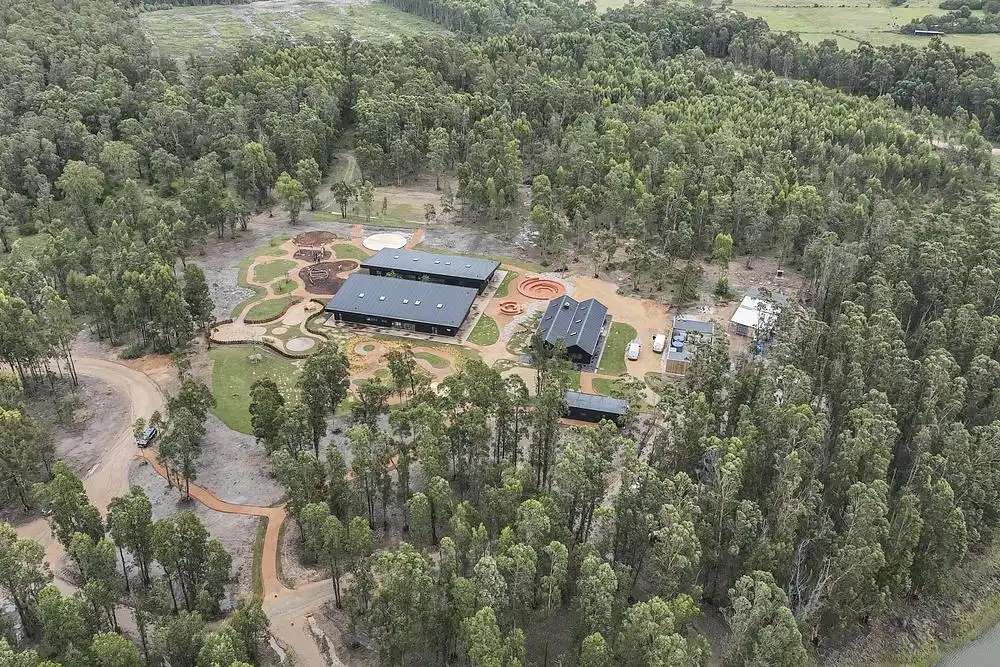
Set within a 94-acre rural landscape in Uruguay, surrounded by eucalyptus forests, meadows, and a lake, The Garzón School is conceived as a living learning environment. Its guiding principle — that the school is the park, and the park is the school — dissolves the conventional boundary between classroom and landscape. Nature is not treated as scenery or an occasional destination. It is embedded into the everyday structure of learning.
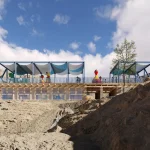
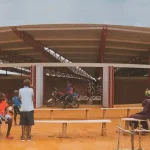
The design invites children to learn indoors, outdoors, and in the spaces between. Pathways, plazas, vegetation, timber structures, and open-air areas create a campus that encourages curiosity, movement, and discovery throughout the day. Instead of relying on fixed classrooms and rigid corridors, the school offers a spatial framework that supports different forms of learning and different ways of being.
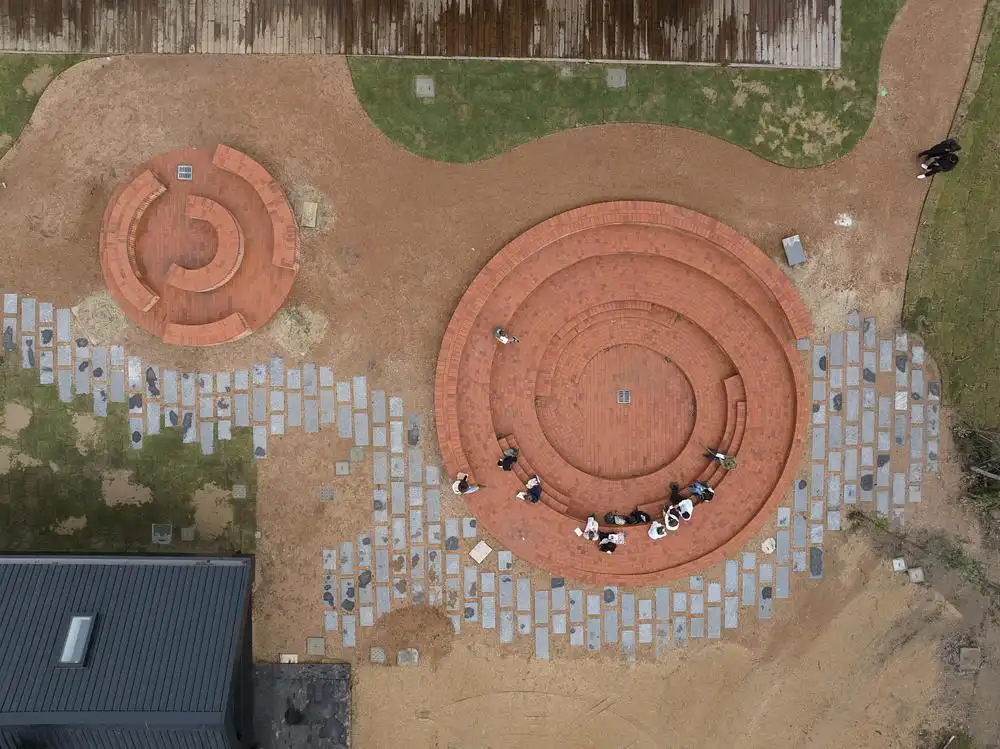
The campus is built entirely from sustainably sourced timber and finished with the traditional Japanese Shou Sugi Ban charring technique. This material approach gives the buildings a tactile, durable, and distinctive architectural identity while supporting a broader commitment to sustainability. Native vegetation and brick plazas, inspired by local Uruguayan architecture, anchor the project in its cultural and ecological context. The result is a school that feels contemporary, grounded, and deeply connected to place.
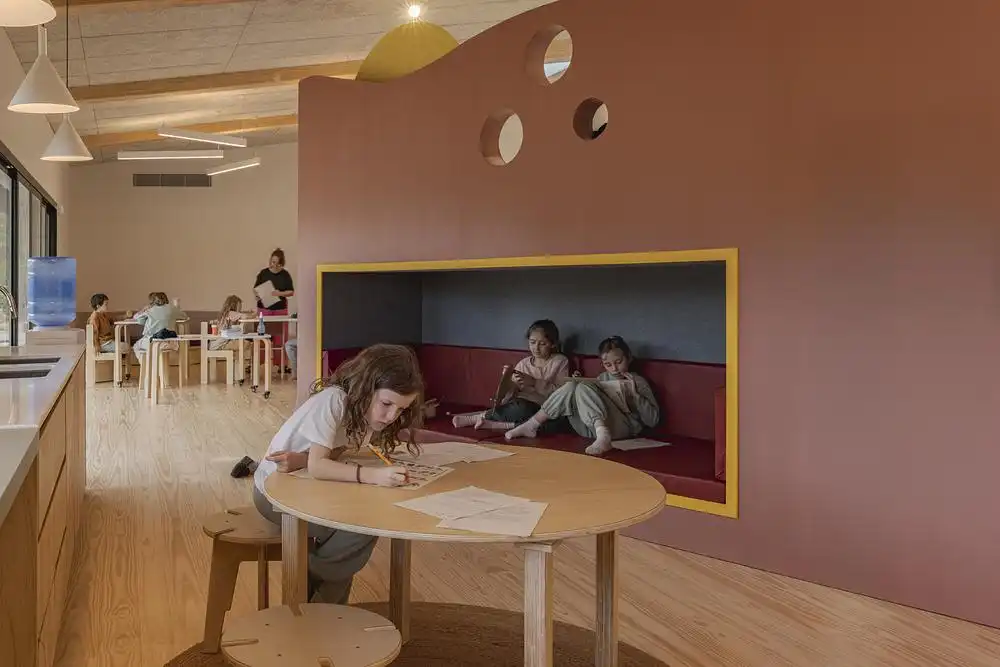
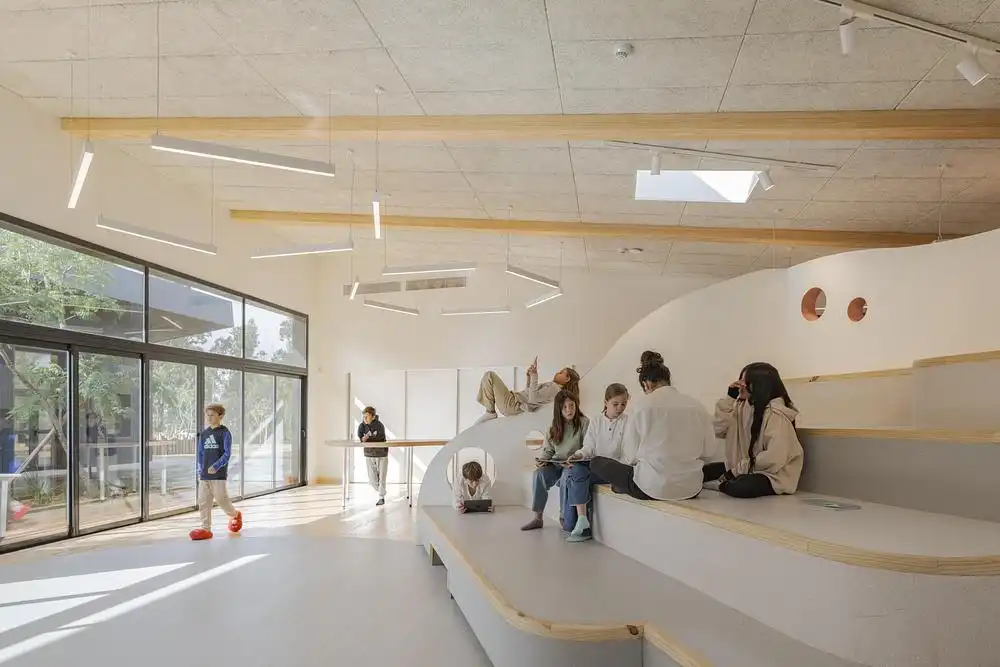
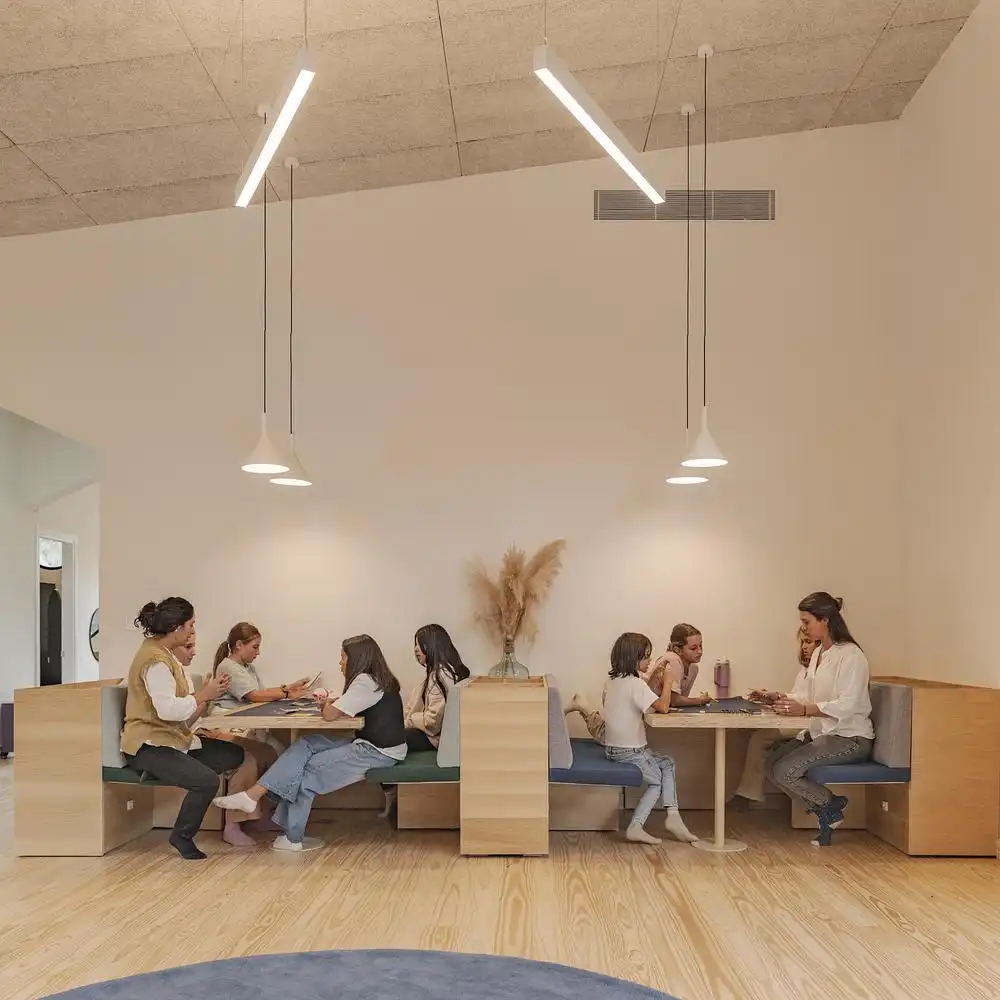
At the heart of the project is Rosan Bosch Studio’s belief that learning environments should support the full range of children’s development. The school is organized around six “Learning Worlds”: Mountain Top, Cave, Campfire, Watering Hole, Hands-on, and Movement. Each spatial typology is designed to support a distinct mode of learning.
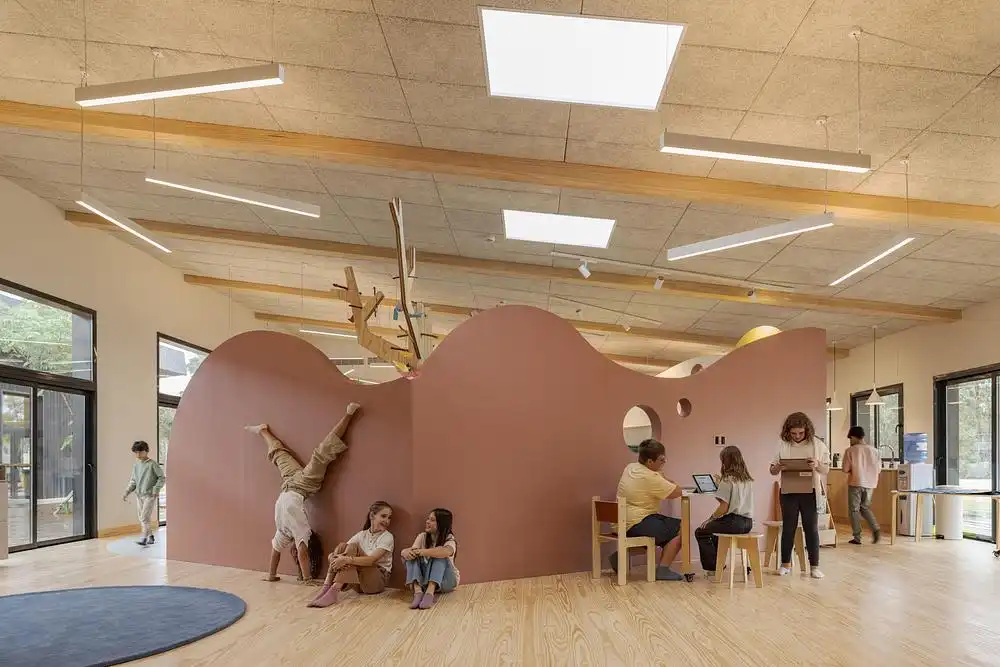
The Mountain Top provides settings for presentation, performance, and focused communication. The Cave offers more intimate spaces for concentration, retreat, and reflection. The Campfire supports storytelling, dialogue, and shared attention. The Watering Hole encourages informal exchange, social learning, and peer-to-peer interaction. Hands-on spaces enable experimentation, making, and creative problem-solving. Movement areas recognize the essential role of physical activity, play, and embodied learning in children’s cognitive and emotional development.
This architectural framework reflects a wider shift in education: the growing understanding that children do not all learn in the same way, and that space can either restrict or expand what teaching and learning can become. By offering a variety of spatial experiences, The Garzón School allows students and teachers to move between different rhythms of learning — from quiet focus to active exploration, from individual study to collective discovery, from structured instruction to open-ended inquiry.
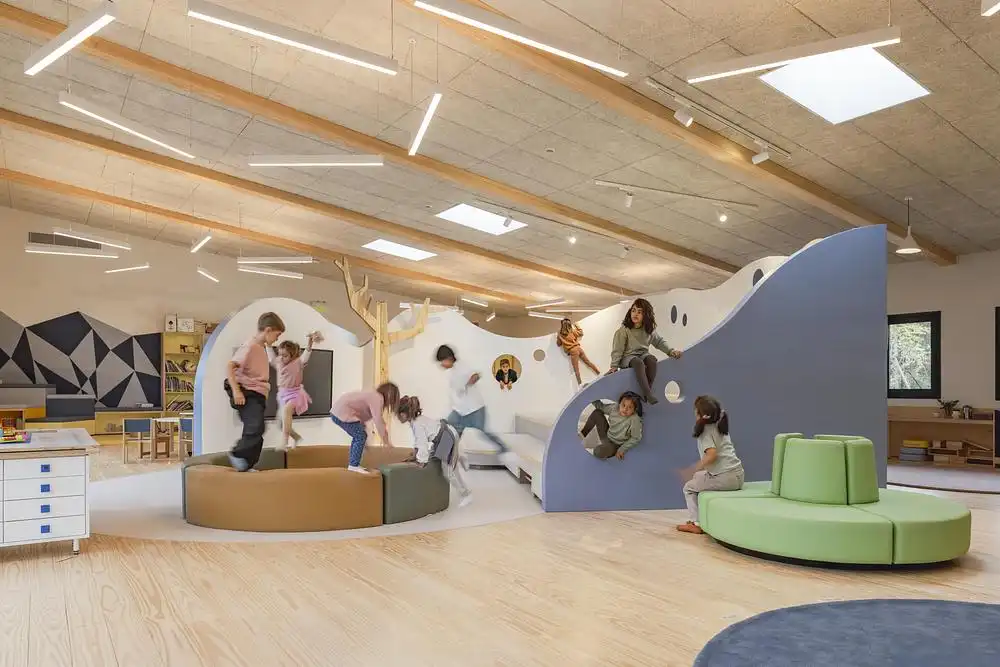
In this sense, the school is more than a collection of buildings. It is a pedagogical landscape. Every design decision contributes to the way children engage with knowledge, with one another, and with their surroundings. The architecture encourages independence while supporting community. It creates moments of shelter and openness, stillness and movement, intimacy and shared experience.
The project arrives at a time when many educators, families, and communities are reconsidering the balance between digital tools and real-world experience in children’s lives. The Garzón School does not reject technology, but it offers a timely and necessary counterpoint. Children also need environments where they can touch materials, observe the seasons, move freely, test ideas, collaborate face-to-face, and build a meaningful relationship with the natural world.
By placing nature, materiality, and spatial diversity at the centre of learning, the school demonstrates how architecture can support wellbeing, curiosity, confidence, and joy. It recognises that learning is not limited to information transfer. It is emotional, social, physical, and sensory. It happens through exploration, dialogue, making, movement, silence, observation, and play.
For Rosan Bosch Studio, The Garzón School reflects a long-standing commitment to designing educational environments that motivate and empower learners. The project challenges the idea of the school as a standardized institution and instead proposes a richer model: a school as an ecosystem of experiences.
Here, architecture becomes part of the curriculum. The landscape becomes a teacher. The spaces invite children to ask questions, take initiative, and participate actively in their own development.
The Garzón School offers an inspiring example of how design can contribute to educational transformation. By uniting sustainable materials, local identity, nature-based learning, and a nuanced understanding of how children learn, the project demonstrates that the spaces we create for education matter profoundly.
A school can be more than classrooms, corridors, and schedules. It can be a landscape of possibilities — a place where children do not simply attend school, but inhabit, explore, and bring learning to life.
About Rosan Bosch Studio
Rosan Bosch Studio is a multidisciplinary design and architecture firm with offices in Copenhagen and Madrid, developing learning environments
worldwide. The firm focuses on play and creativity in schools, universities, and other educational institutions. The company has a holistic approach to buildings, interiors, landscapes, and surroundings. The learning environment as a whole must support
differentiated learning and active, independent students. The company was founded by Rosan Bosch in 2011.
Rosan Bosch Studio develops projects from a user perspective and engages teachers and students in the development of new learning spaces. The projects are located worldwide, and the company is currently developing projects in Argentina, Denmark, Guatemala, Jamaica, Mexico, Norway, Peru, Portugal, Qatar, Saudi Arabia, Switzerland, Spain, Taiwan, and Uruguay.
Garzón School in Uruguay, South America – Property Information
Architects: Rosan Bosch Studio – https://www.rosanbosch.com/
Photography: Eleazar Cuadros
Garzón School, Punta del Este, Uruguay images / information received 070726
Location: Uruguay, South America
Urugua Buildings
Recent Uruguay Buildings Projects selection from e-architect:
Uruguay Architecture Designs – chronological list
Big Fish House, Faro De José Ignacio – located just east of Montevideo
Design: Martin Gomez Arquitectos
photo : Daniela Mac Adden
Médano El Pinar, Montevideo homes
Design: Rafael Viñoly Architects
image courtesy of architects office
+++
American Architectural Designs
Comments / photos for the Garzón School, Punta del Este, Uruguay designed by Rosan Bosch Studio page welcome.