Crystal Palace Park Regeneration News
17 July 2026
Architects: HTA Design
Location: South London, England, UK
Historic Revival Of Crystal Palace Park’s Dinosaurs, Terraces And Victorian Vision Completes
Multi-million-pound first phase of regeneration restores iconic heritage assets and secures the removal of the Grade I listed Dinosaurs from Historic England’s Heritage at Risk Register, revitalises the historic landscape and reimagines new experiences for future generations.
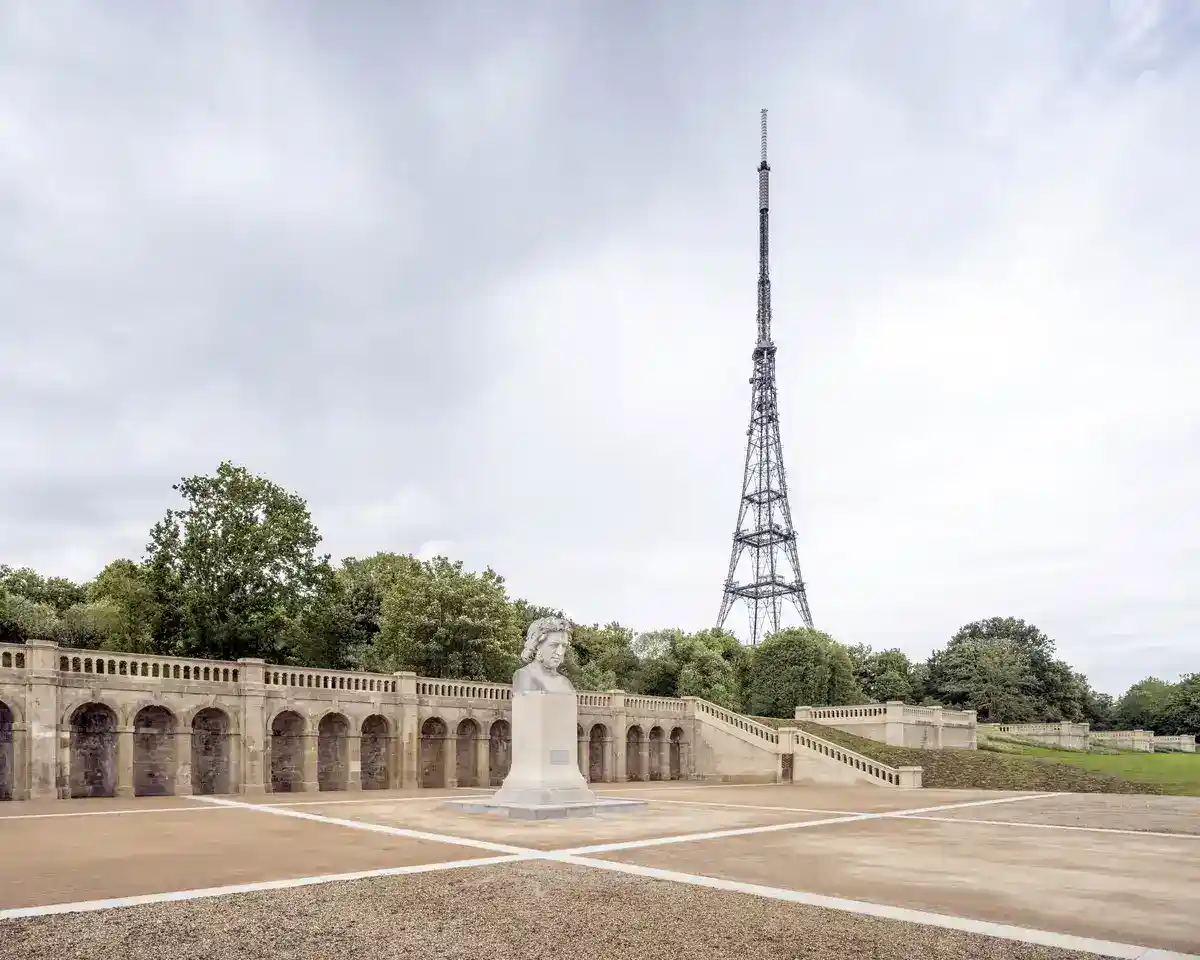
Crystal Palace Park Italian Terraces regeneration:
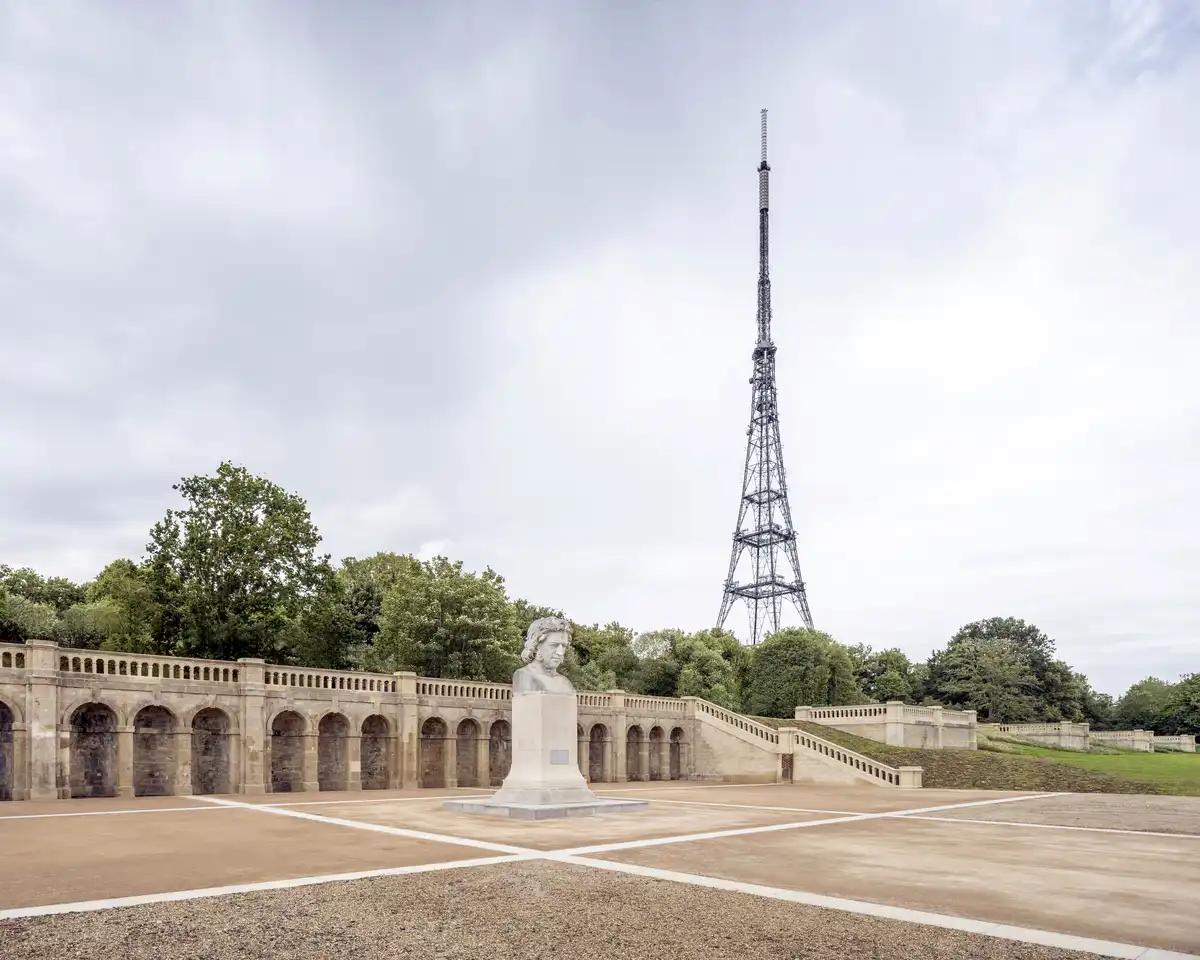
Photos by Kilian O’Sullivan
17 JULY 2026 – Bromley Council and Crystal Palace Park Trust have delivered a major phase of the regeneration of Crystal Palace Park, one of the UK’s most important historic parks. HTA Design collaborated on the project as Lead Consultant and Landscape Architect with the works completed by construction company, Maylim.
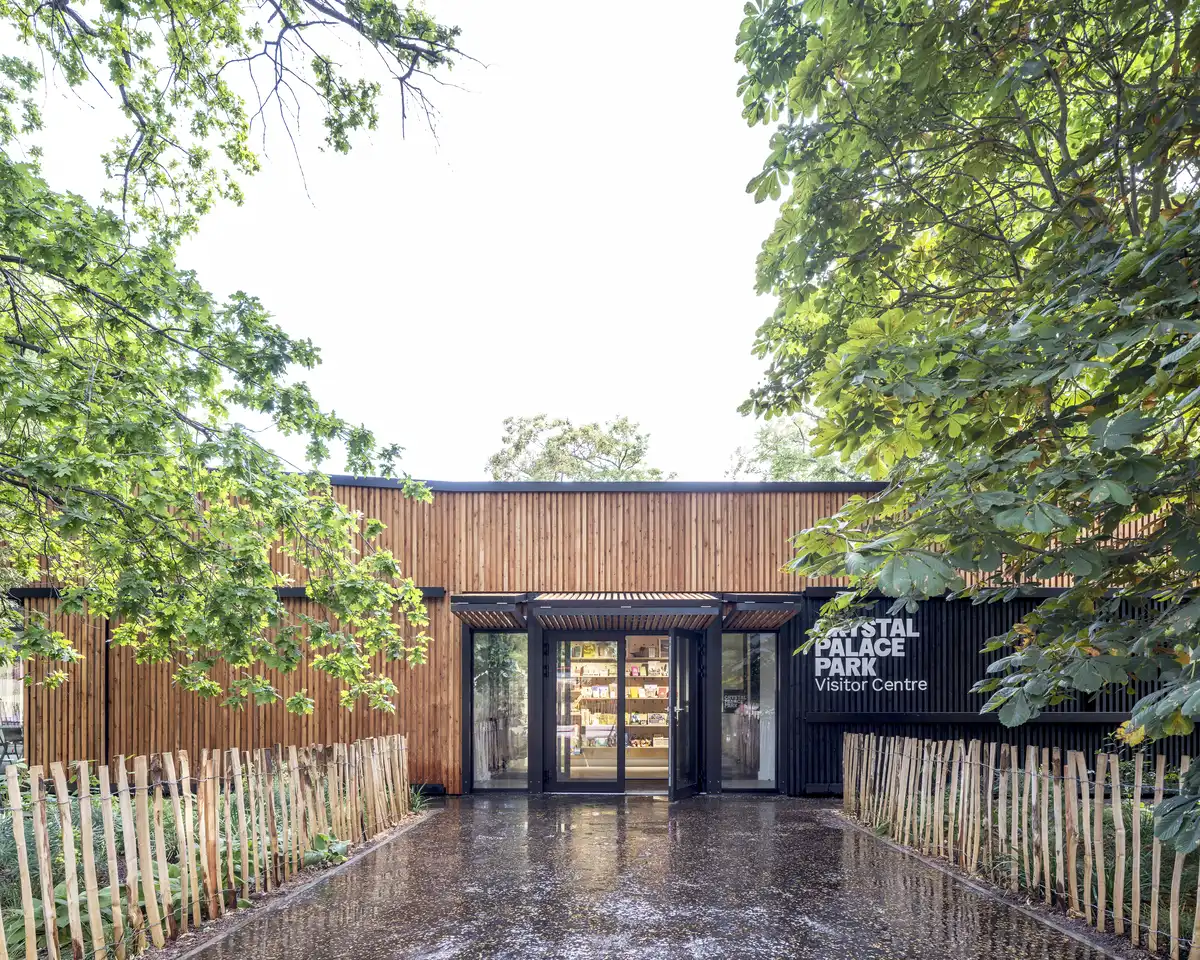
Crystal Palace Park Visitor Centre:
Developed with support from Historic England and a wide range of stakeholders, the project sees the reopening of the revitalised park to the public and marks a major milestone in the long-term transformation of the Grade II* listed park. The works were funded by the sale of land adjacent to the park for affordable housing and a £5m grant from The National Lottery Heritage Fund, with thanks to National Lottery players. Further match funding was also received from the Garfield Weston Foundation, London Marathon Foundation, the Wolfson Foundation and Pilgrim Trust.
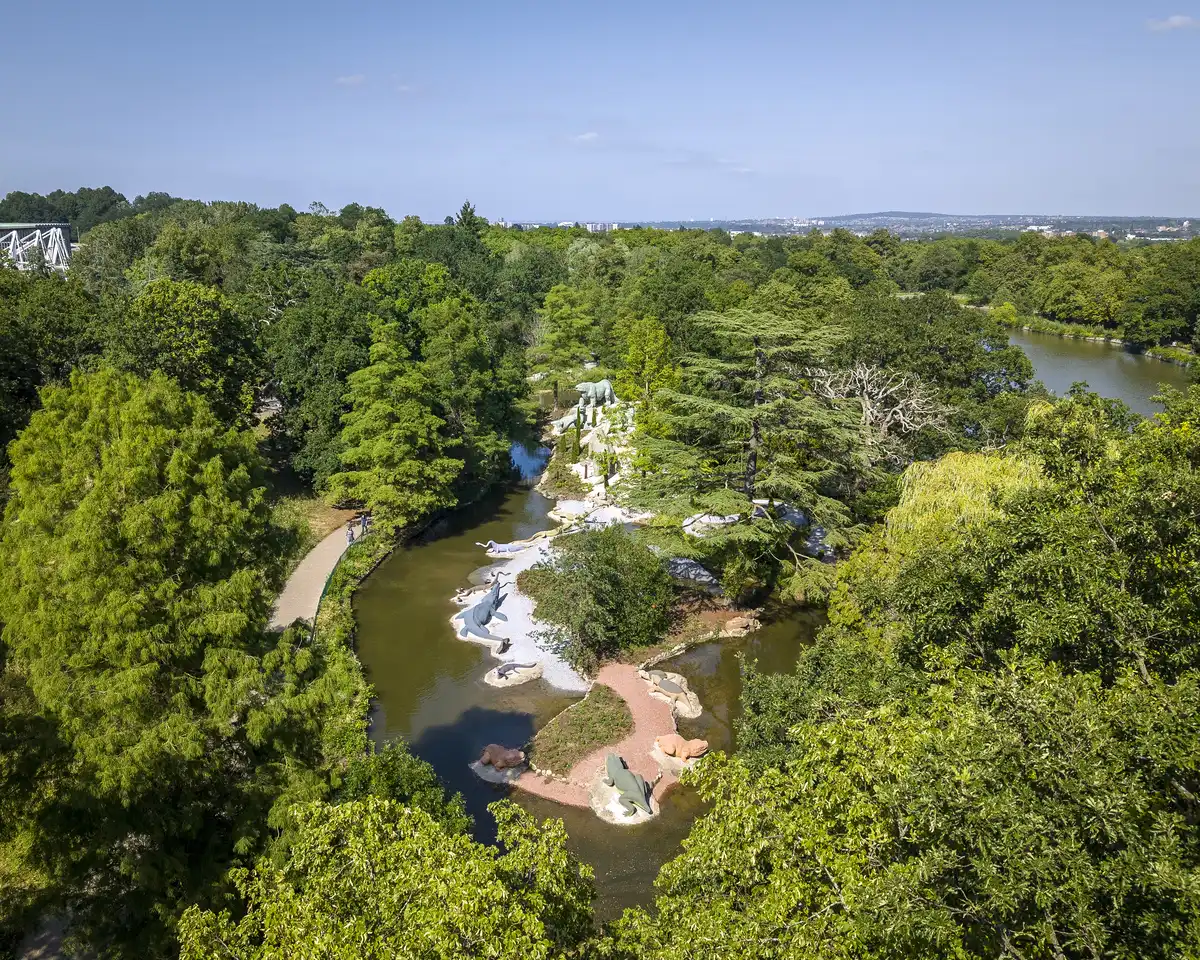
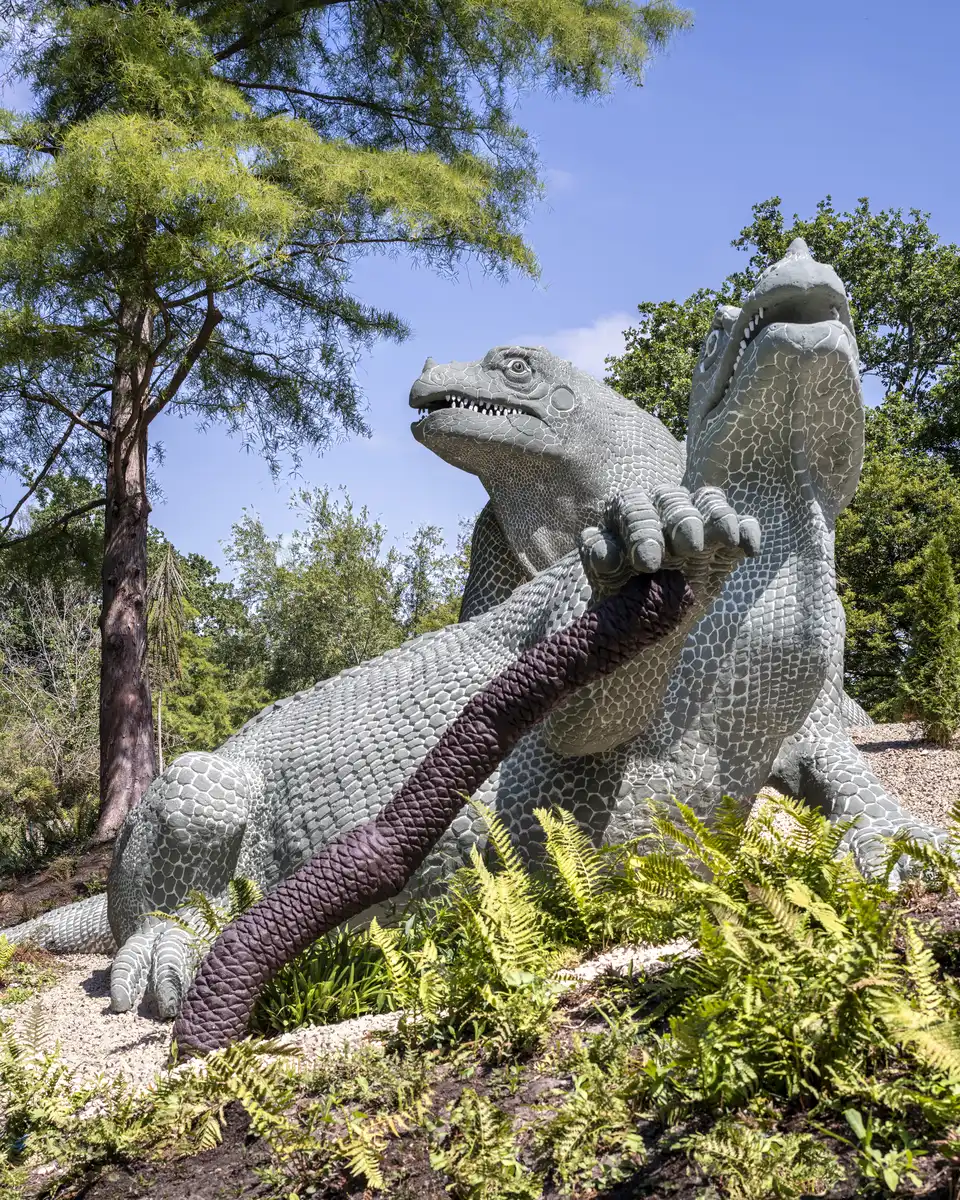
Crystal Palace Park Geological Park and Dinosaurs:
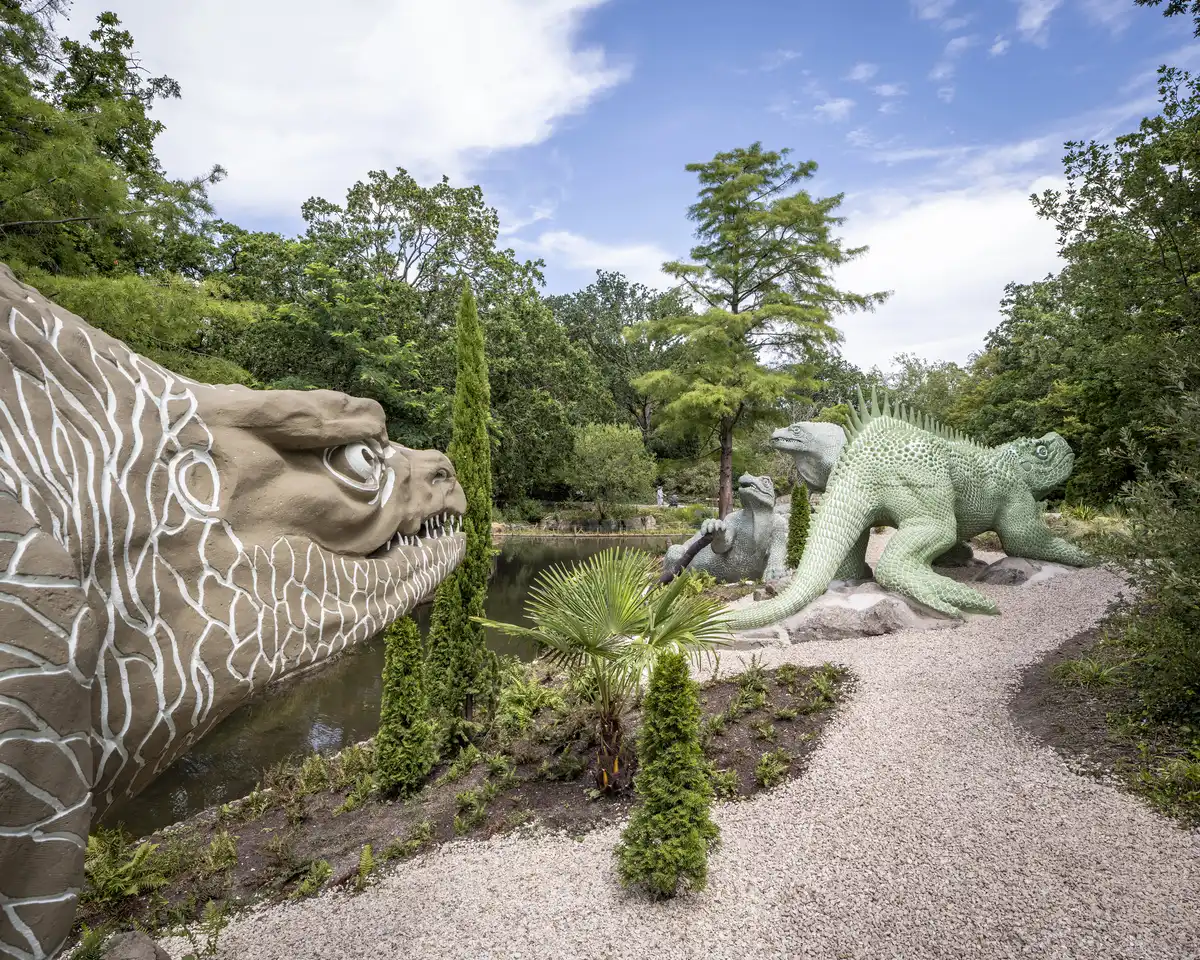
Appointed by Bromley Council in 2023, HTA Design led a multidisciplinary team of 20 specialist consultants from concept design through to the delivery of one of London’s most ambitious heritage-led landscape regeneration projects. The works restore internationally significant Victorian heritage assets, improve biodiversity and accessibility across the park, and introduce new facilities that reconnect visitors with Sir Joseph Paxton’s original vision of education, entertainment and innovation.
Originally created following the relocation of the Crystal Palace from Hyde Park after the Great Exhibition of 1851, the park was conceived as a pioneering destination that combined science, landscape and spectacle. Paxton designed the park as a “journey through time”, beginning with prehistory – represented by the world’s first dinosaur sculptures in the Geological Court – and culminating in the grandeur of the Victorian era, symbolised by the Crystal Palace itself.
The design reinterprets Paxton’s legacy through three layers that connect past, present and future: restoring the park’s historic assets, revitalising it as an inclusive, biodiverse and adaptable landscape, and reimagining its role as a place of learning, discovery and enjoyment for future generations.
Crystal Palace Park Playground aerial view:
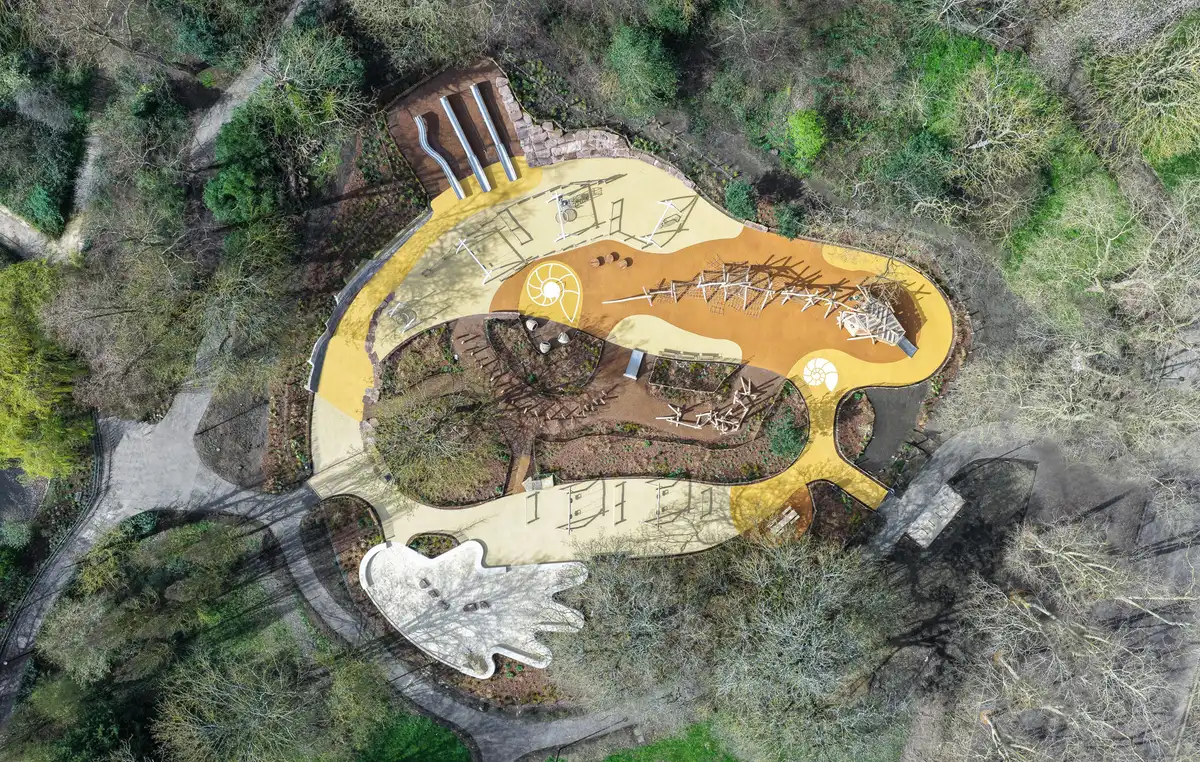
photo : Maylim Ltd
Restore
Central to the project has been the conservation of the park’s most significant heritage assets.
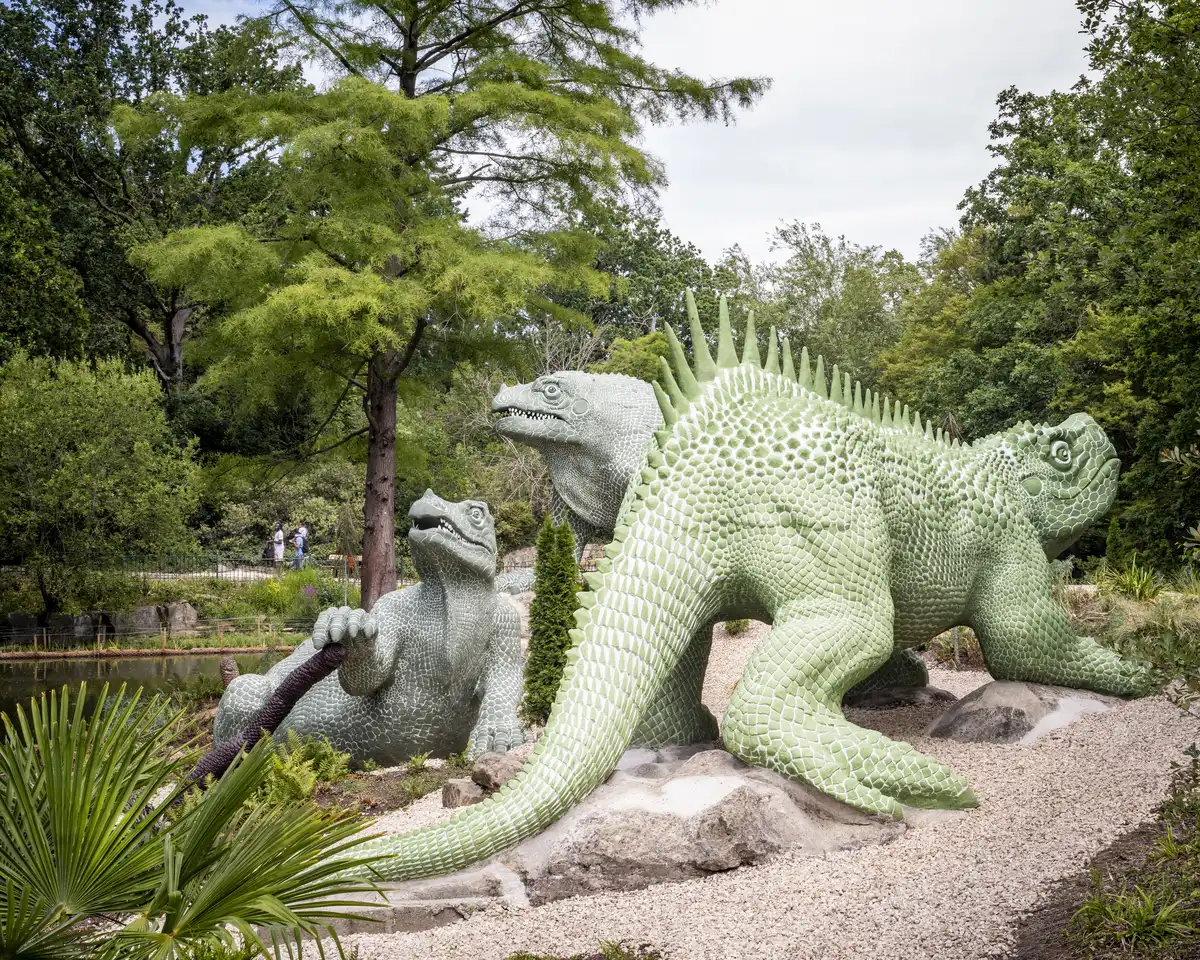
The Grade I listed Geological Court, including Benjamin Waterhouse Hawkins’ world-famous dinosaur sculptures, has undergone an extensive conservation programme, resulting in its removal from Historic England’s Heritage at Risk Register, representing a major success of the regeneration project. This included collaboration with Donald Insall Associates, Alan Baxter Associates, Sally Strachey Heritage Conservators and the Friends of the Crystal Palace Dinosaurs.
Using scientific research, material testing, historic paint analysis and detailed surveys, the team carefully repaired and restored the sculptures and geological illustrations while retaining as much original fabric as possible. Conservation techniques included specialist cleaning, structural repairs, consolidation works and the use of 3D printing technologies where appropriate.
Crystal Palace Park Dinosaurs:
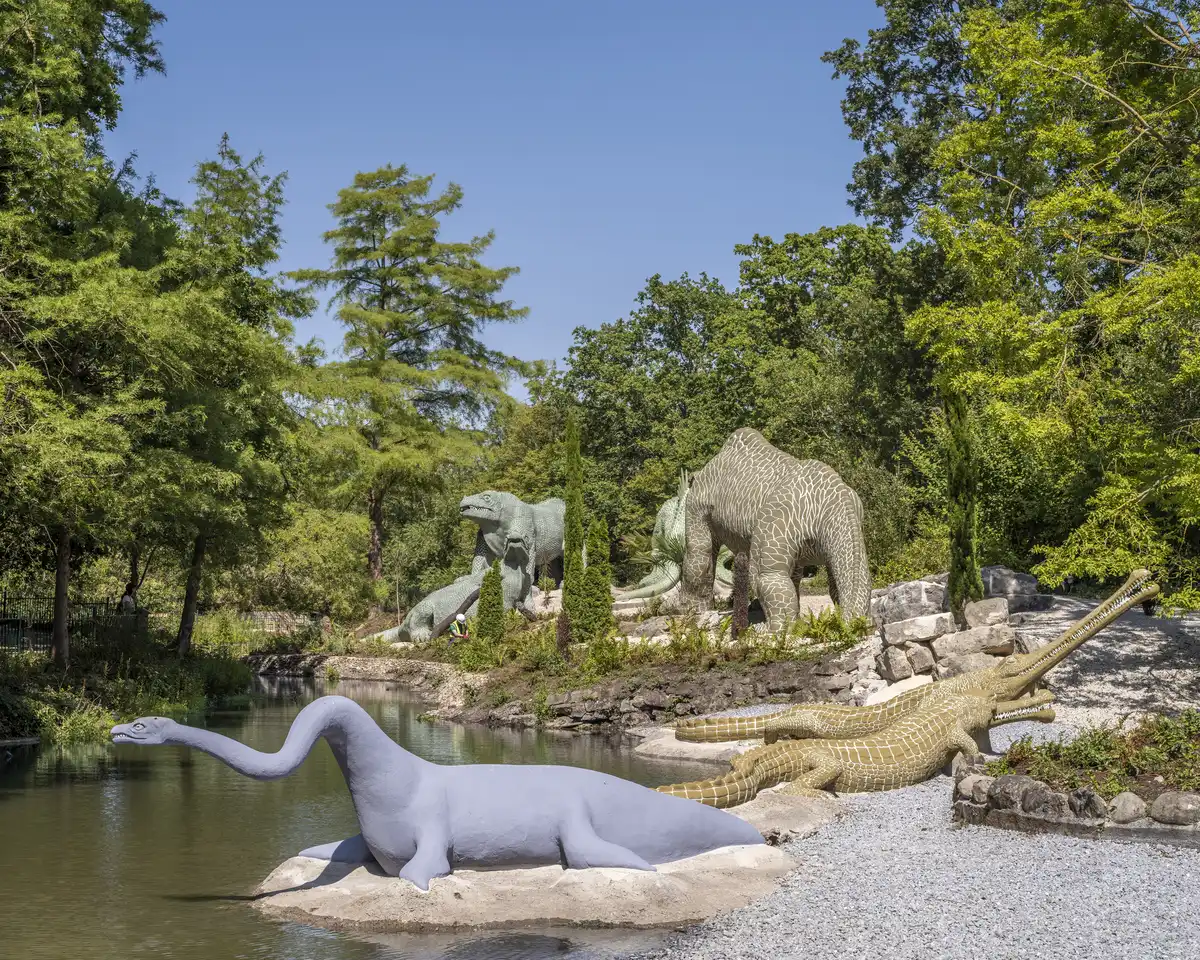
The landscape of the Geological Court has also been restored, revealing historic views and topography. New gravel formations, reflecting successive geological ages, are introduced around the dinosaur sculptures to reinforce the geological narrative, while The Upper Lake has been desilted and enhanced with a new water recirculation system that reinstates the park’s waterfalls and improves water quality.
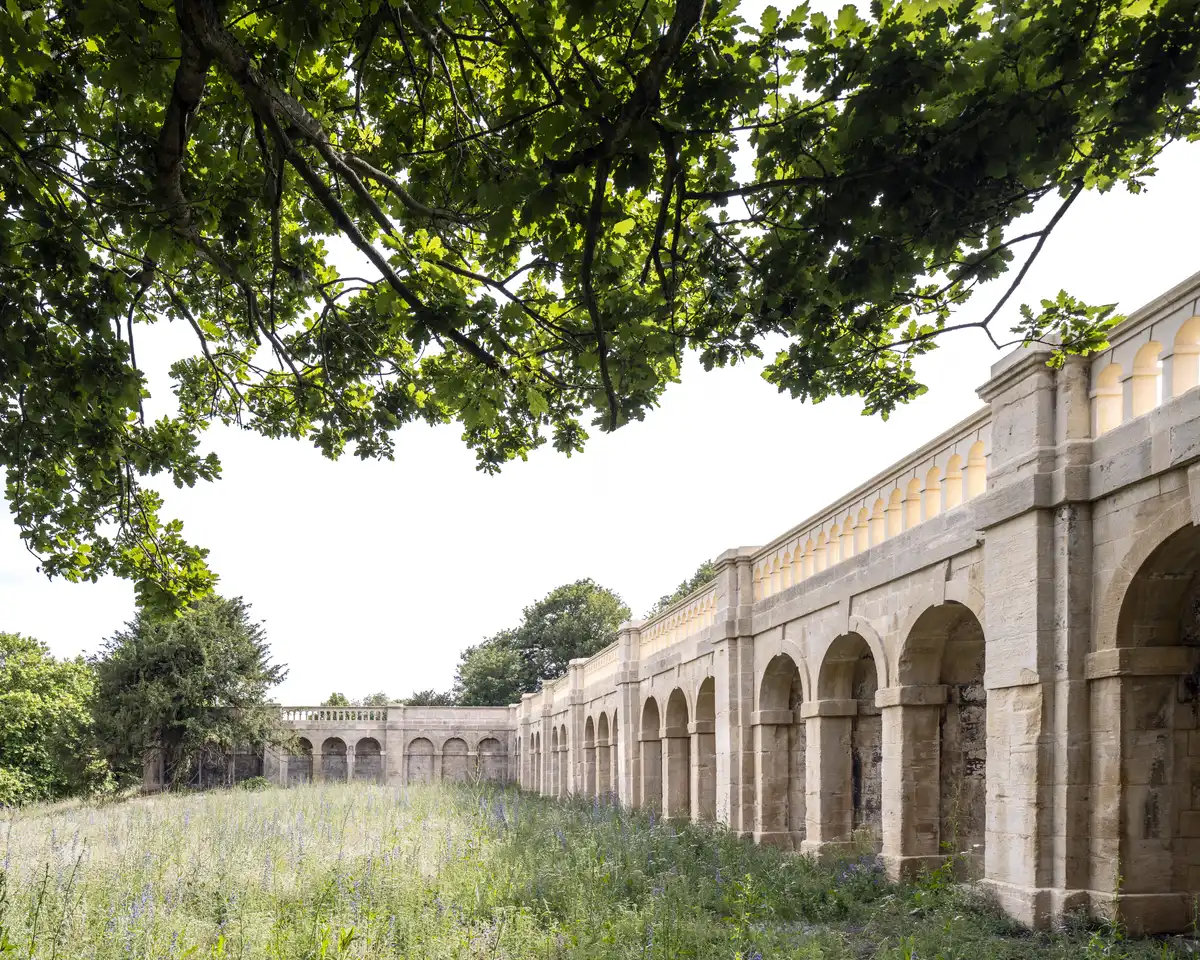
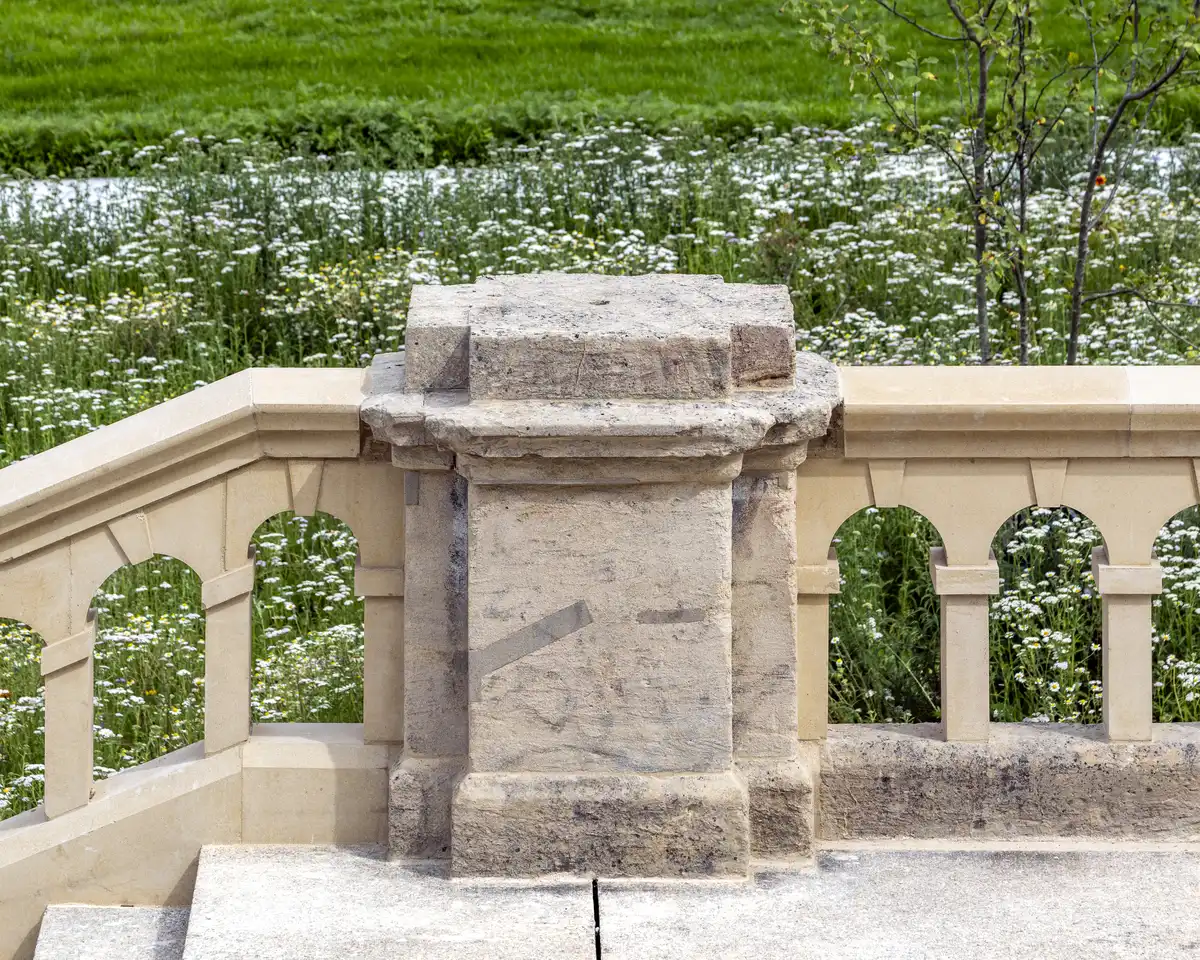
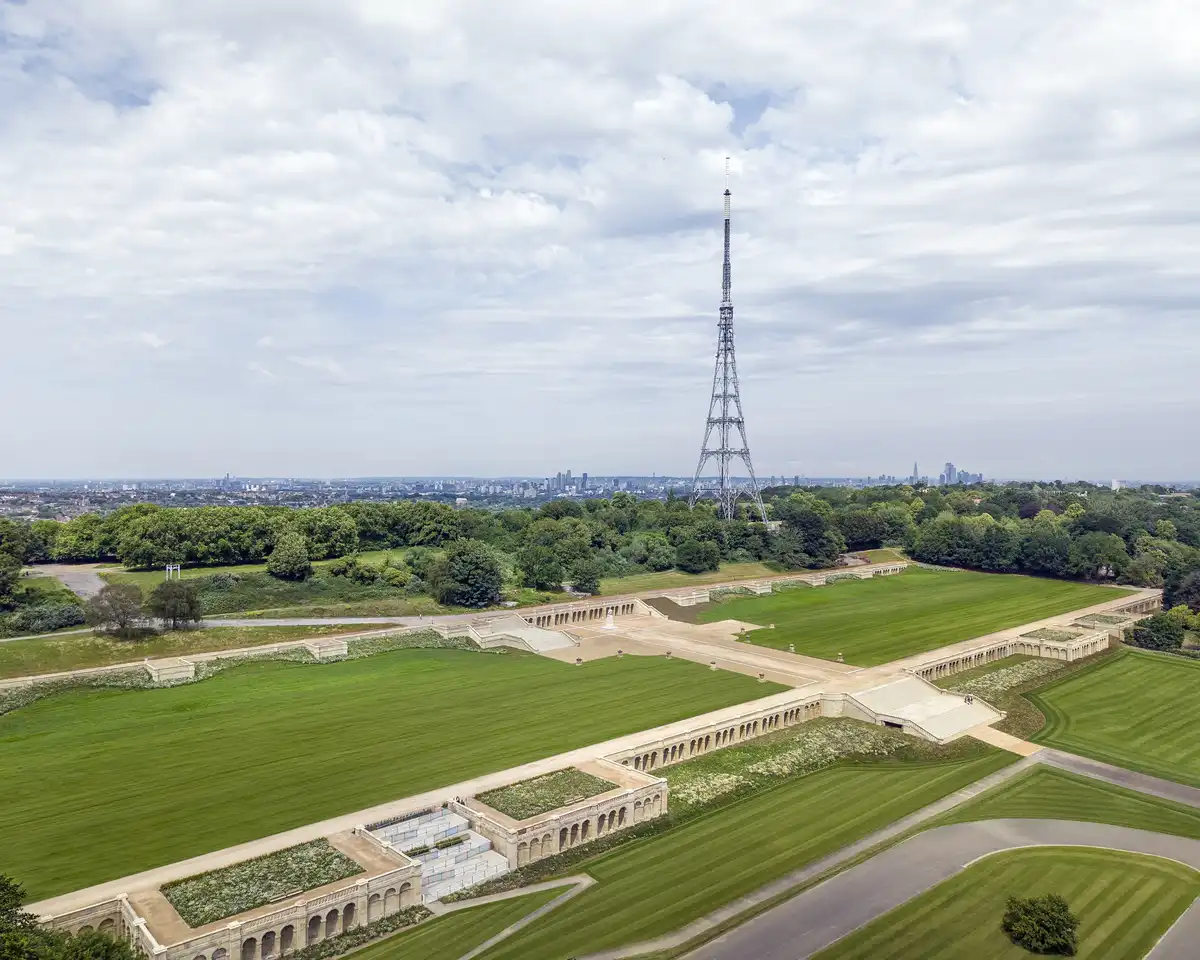
At the opposite end of the park, the Grade II listed Italian Terraces have been carefully restored, reviving the last surviving element of the Crystal Palace at its original scale. Working closely with Historic England, extensive stone conservation works have repaired walls, balustrades, copings and statues, returning a sense of grandeur to this landmark destination.
The restoration of Paxton’s Grand Centre Walk has also reinstated the historic spine of the park, reconnecting key destinations and reinforcing the original design intent. The Grade II listed bust of Sir Joseph Paxton has been returned to its original location following archaeological investigations during construction.
Crystal Palace Park Italian Terraces renewal:
Revitalise
A series of comprehensive landscape strategies transform the park into a biodiverse and accessible space.
More than 7,500 tonnes of site-won soils have been reused across the project, significantly reducing waste and vehicle movements, while sustainable drainage systems including rain gardens, swales and improved lake infrastructure help manage rainfall and create valuable habitats. All sediment removed during the lake desilting process has been repurposed to create 500m2 of new marginal shelves, maximising ecological and environmental benefits.
A mosaic of 58,000 m2 of flowering meadows and species-rich grassland, and over 64,000 herbaceous perennials, reintroduces the horticultural spectacle that once defined Crystal Palace Park. Planting in the Geological Court draws on prehistoric species such as ferns and grasses, illustrating the evolution of plants over time. More than 260 different plant species have been introduced, creating a habitat for bees, butterflies and other wildlife while significantly enhancing biodiversity across the park.
Accessibility improvements include new step-free routes, upgraded pathways and a redesigned Penge Gate entrance, which reflects the geometric language of The Crystal Palace’s modular design, celebrating its architectural heritage. A new lighting and wayfinding strategy creates a safer, more legible visitor experience while connecting key destinations throughout the park.
Crystal Palace Park Italian Terraces refurbishment:
Reimagine
Building on Paxton’s vision of combining education and entertainment, the regeneration introduces new destinations that reinterpret the park’s legacy for future generations.
A new ‘palaeontological-dig’-themed play space encourages children to explore the story of prehistory through imaginative and inclusive play. Co-designed with local children and accessibility specialists, the play area features large sculptural play structures inspired by fossil discoveries and dinosaur anatomy, creating an interactive landscape of adventure and learning.
The new Visitor Centre, designed by Tate + Co, provides a welcoming hub for visitors. The timber building reuses the existing concrete slabs, creating a flexible space for interpretation, learning and community engagement.
These facilities are connected by a reimagined heritage trail and interpretation strategy developed by HTA Design’s wayfinding team, creating a coherent visitor experience that links the Geological Court, play space, Visitor Centre and wider park landscape.
Crystal Palace Park Dinosaurs restored:
Councillor Yvonne Bear, Executive Councillor for Renewal, Recreation and Housing, said: “Our regeneration plan has always been about securing this historic park for the future and when you look at the incredible transformation that we have delivered, that future is looking brighter than ever. I hope residents and visitors enjoy exploring the stunning restored heritage and the host of new improvements across the park, which will be taken into the next chapter of its history under the careful custodianship of our partners Crystal Palace Park Trust.”
Victoria Pinnington, CEO of Crystal Palace Park Trust, said: “With this major regeneration project now complete we’re thrilled to ‘throw open the gates’ so that the Crystal Palace Dinosaurs and wider park can do their job inspiring joy, wonder and curiosity among visitors, just as the park’s visionary founder, Sir Joseph Paxton, always intended. This September marks the third anniversary of the Trust’s custodianship of the park. With this major project now complete we look forward to caring for these internationally historic 200 acres, and all 12 listed assets within them, for the enjoyment of many generations to come.”
Crystal Palace Park Dinosaurs refurbished:
Natalia Roussou, Landscape Design Director at HTA Design, said: “Crystal Palace Park has always been a place of innovation, bringing together education, entertainment and discovery. That legacy shaped our approach throughout the project, combining the restoration of internationally significant heritage assets with the revitalisation of the wider landscape and the creation of new experiences for future generations to enjoy.
“Working closely with Bromley Council, Crystal Palace Park Trust, Historic England and an exceptional multidisciplinary team, our ambition has been to reveal and celebrate what makes this place so special and help more people connect with its remarkable story. Whether visitors come for the dinosaurs, the Italian Terraces, nature or play, we hope the park once again inspires the same sense of curiosity, wonder and delight that made it famous more than 170 years ago.”
+++
Crystal Palace Park Italian Terraces restoration:
Crystal Palace Park Renewal, South London – Building Information
Project Team
Client: London Borough of Bromley
Development Partner: Crystal Palace Park Trust
Key Stakeholders: Historic England and Friends of the Crystal Palace Park Dinosaurs
Key Consultant Team:
Lead Consultant and Landscape Architect: HTA Design
Planning Consultant: HTA Design
Interpretation & Wayfinding Consultant: HTA Design
Energy & Sustainability Consultant: HTA Design
Principal Designer: HTA Design
Project Manager: Leadenhall
Contract Administrator: Ian Sayer
Architect (Heritage): Donald Insall Associates
Architect (New Build): Tate + Co
Structural Engineer: Alan Baxter
Heritage Consultant: Alan Baxter
Lighting Designer: Speirs Major
Civil Engineer: Pell Frischmann
Transport Consultant: Pell Frischmann
Ecology Consultant: Pell Frischmann
M&E Engineer: Desco
Soil Consultant: Tim O Hare Associates
Arboriculture Consultant: Aspect
Accessibility Consultant: Lord Consulting
Building Control: Stroma
Fire Consultant: Semper
Play Specialist: PlayEquip
Historic Paint Analysis: Hirst Conservation
Key Contractor team:
Main Contractor: Maylim
Conservation works Contractor: Sally Strachey
+++
Crystal Palace Park Dinosaurs renewed:
HTA Design
HTA Design is an award‑winning, interdisciplinary practice recognised for creating well designed, sustainable places across the UK and internationally.
HTA’s landscape team is currently leading the regeneration of some of London’s most significant parks, including the landmark transformation of Crystal Palace Park and The Regent’s Park, commemorating the life of Queen Elizabeth II. Other key projects include the award‑winning 20‑acre Cator Park, recipient of the Sir David Attenborough Award for Enhancing Biodiversity; the restoration of The Water Gardens by Sir Geoffrey Jellicoe; and the greening of the Canary Wharf estate, including Eden Dock, an innovative, award‑winning project that repurposes former dockland into vibrant waterside public realm using floating aquatic islands.
HTA is a certified B Corporation, reflecting the practice’s long‑standing commitment to high standards of social and environmental performance, accountability and transparency.
With around 250 professionals, HTA works across architecture, landscape design, planning and masterplanning, interior design, wayfinding, and sustainability and building physics, delivering integrated, people‑centred places. HTA is widely recognised as a leading employer, having won AJ100 Employer of the Year in 2018, 2022, 2023 and 2024, and AJ100 Practice of the Year in 2025 https://www.hta.co.uk/
Photos by Kilian O’Sullivan
Crystal Palace Park regeneration in South London, England images / information received 170726
Location: Crystal Palace, London, England, UK.
Crystal Palace Architecture
Contemporary Crystal Palace Architectural Designs – selection from e-architect:
Crystal Palace National Sports Centre South London
Design: WOO architects and FaulknerBrowns
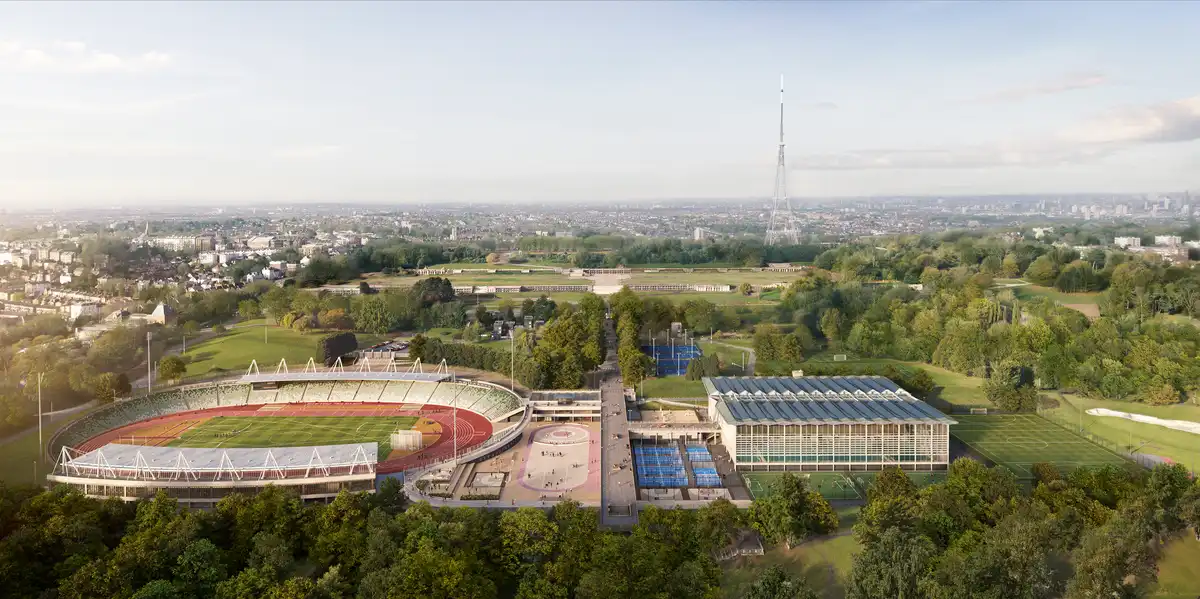
image : FaulknerBrowns / Pillar Visuals
Crystal Palace Park Cafe in London
Design: Chris Dyson Architects LLP
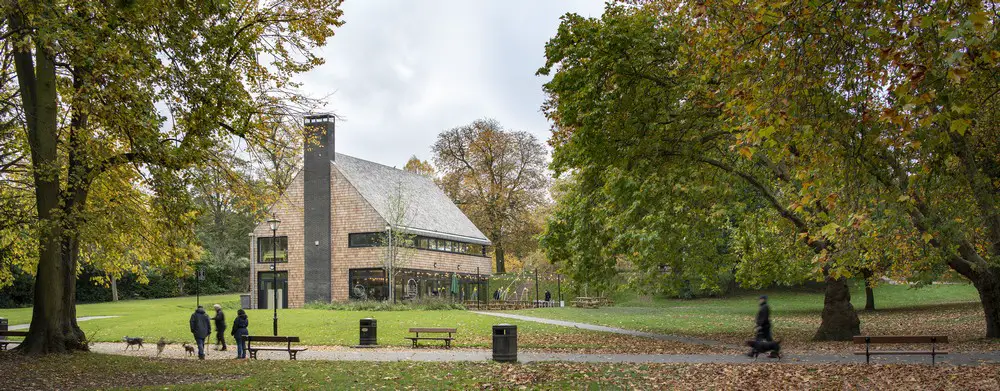
photo © David Churchill
Crystal Palace Concert Platform
Design: Ian Ritchie Architects
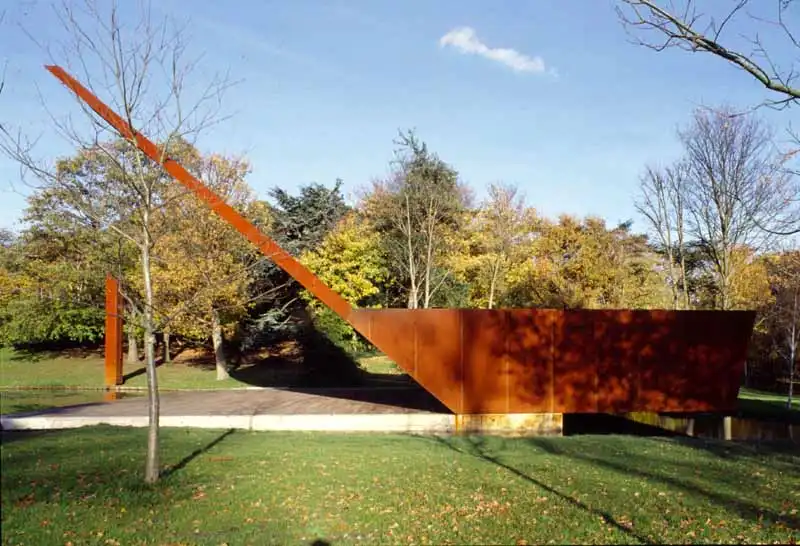
photo courtesy of architects office
+++
Architecture in London
Contemporary Architecture in London
London Architecture Links – chronological list
London Architecture Walking Tours
+++
South London Buildings
South London Building Designs
30 Pavilion Road Knightsbridge hotel and spa, south west London
Architect: PLP Architecture
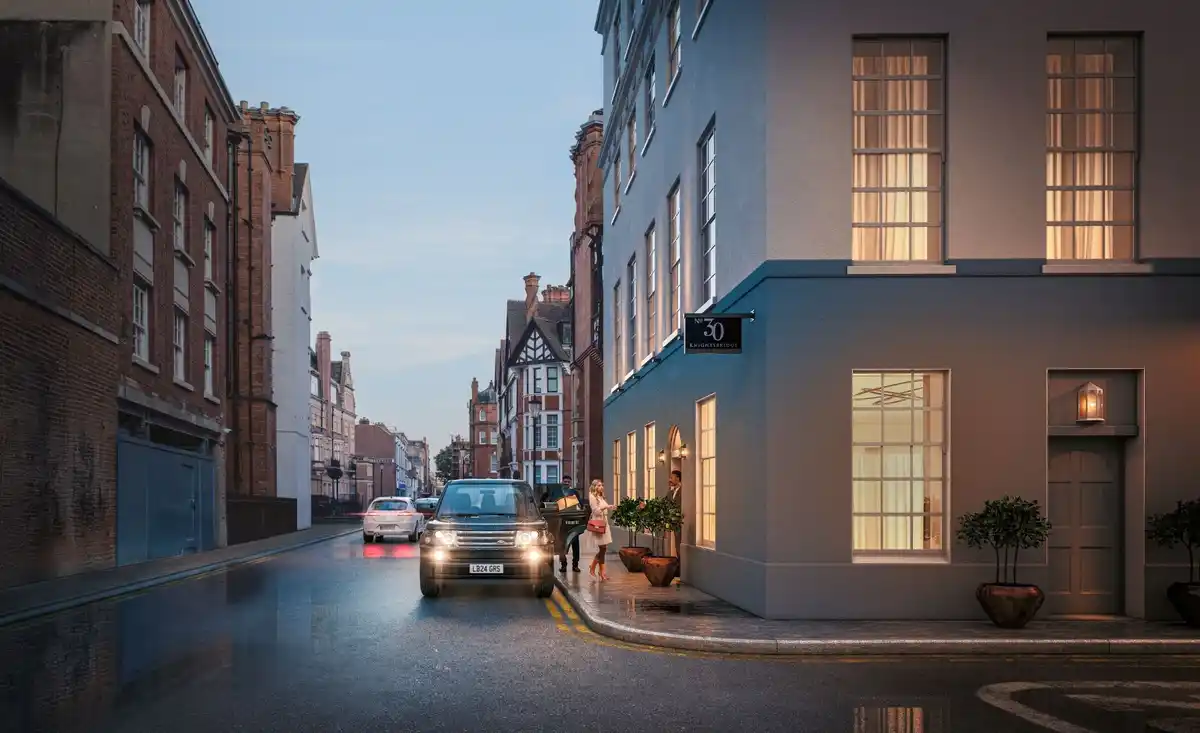
image courtesy of architects practice
Comments / photos for the Crystal Palace Park regeneration in South London designed by HTA Design in England, UK, page welcome.