Korean National Football Centre, South Korea
30 June 2026
Architecture: UNS – UNStudio
Location: Cheonan-shi, Chungnam-do, South Korea
Photos © Rohspace
TRAINING GROUND FOR A NATION: UNS COMPLETES KOREAN FOOTBALL PARK
UNS has completed the Korean Football Park, a new home for the Korean Football Association designed to shape the future of the sport and its next generation of athletes. Conceived as a long-term home for training, recovery, education and public engagement, the project brings together elite sporting facilities, specialist expertise and a clear public identity into a campus designed to support the next century of not only Korean athletes, but also the next generation of fans.
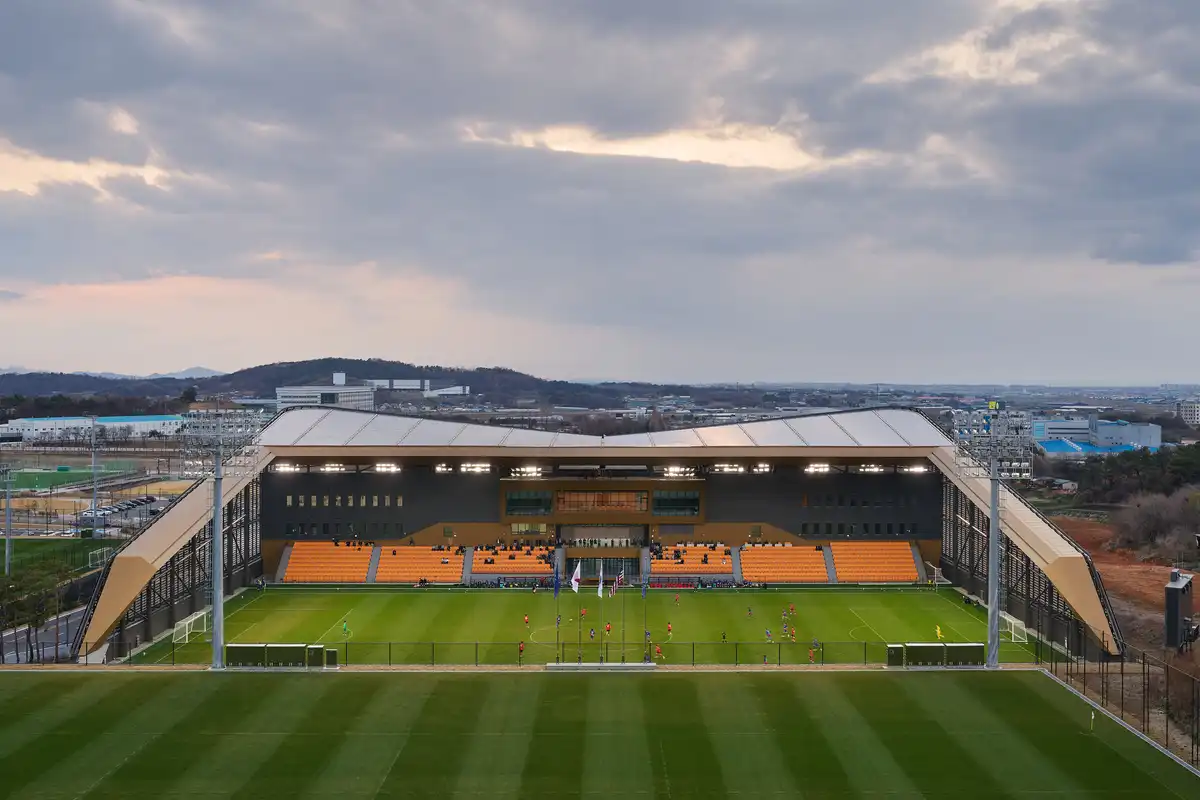
Ben van Berkel, Founder and Principal Architect of UNS, said: “The completed campus gives Korean football a strong architectural brand identity, while also creating the conditions for long-term growth. It supports athletes with focused spaces for training and rest, and it gives supporters and visitors a meaningful connection to the wider story of the game.”
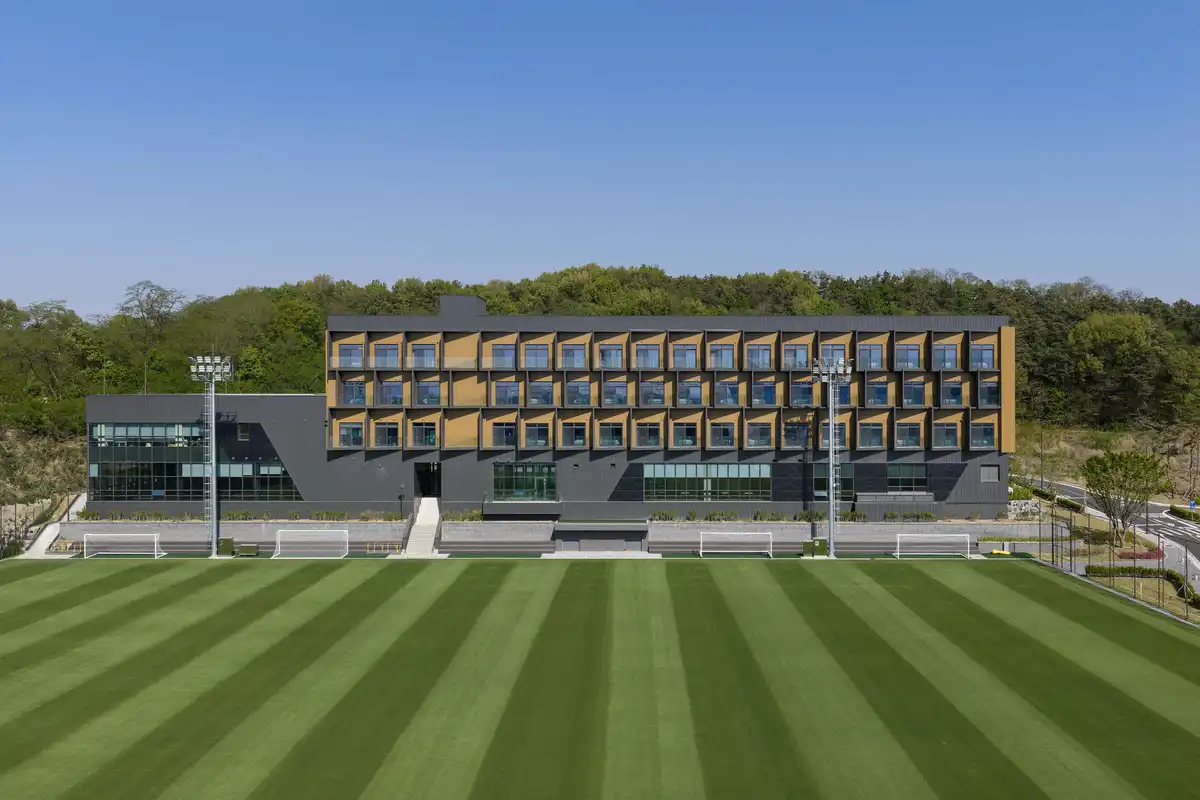
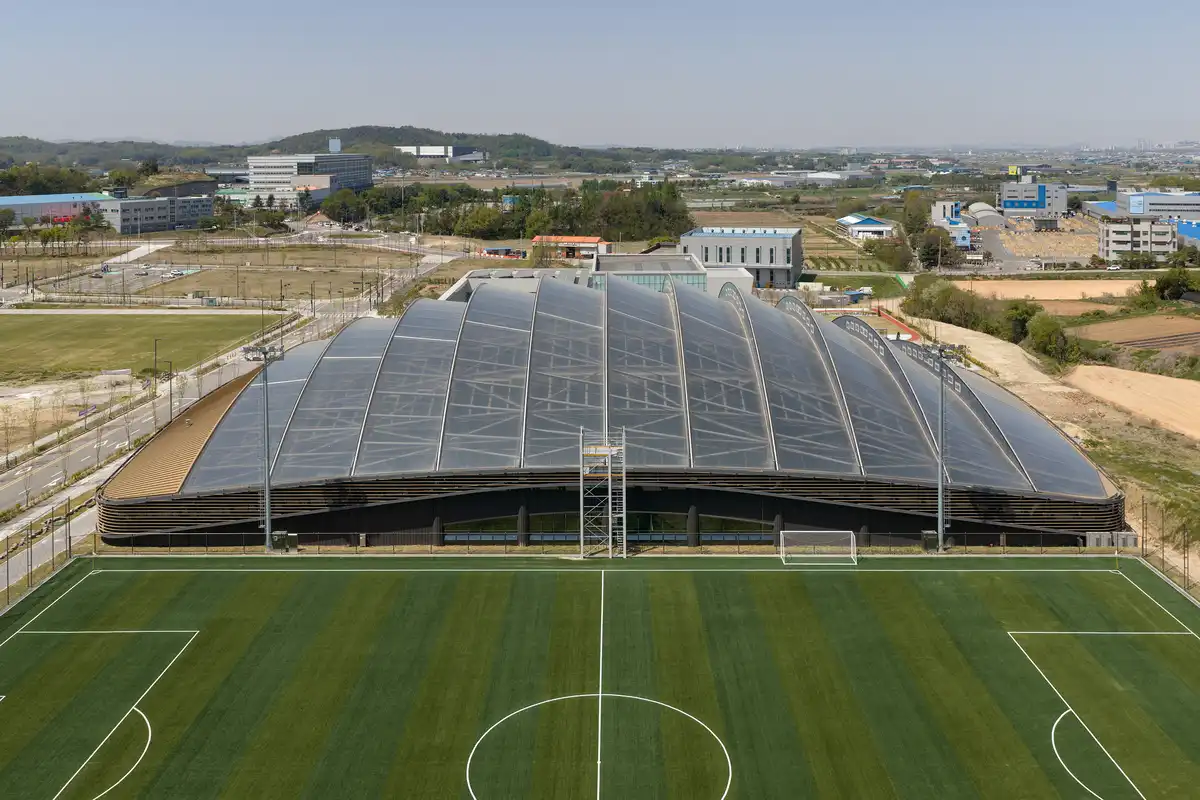
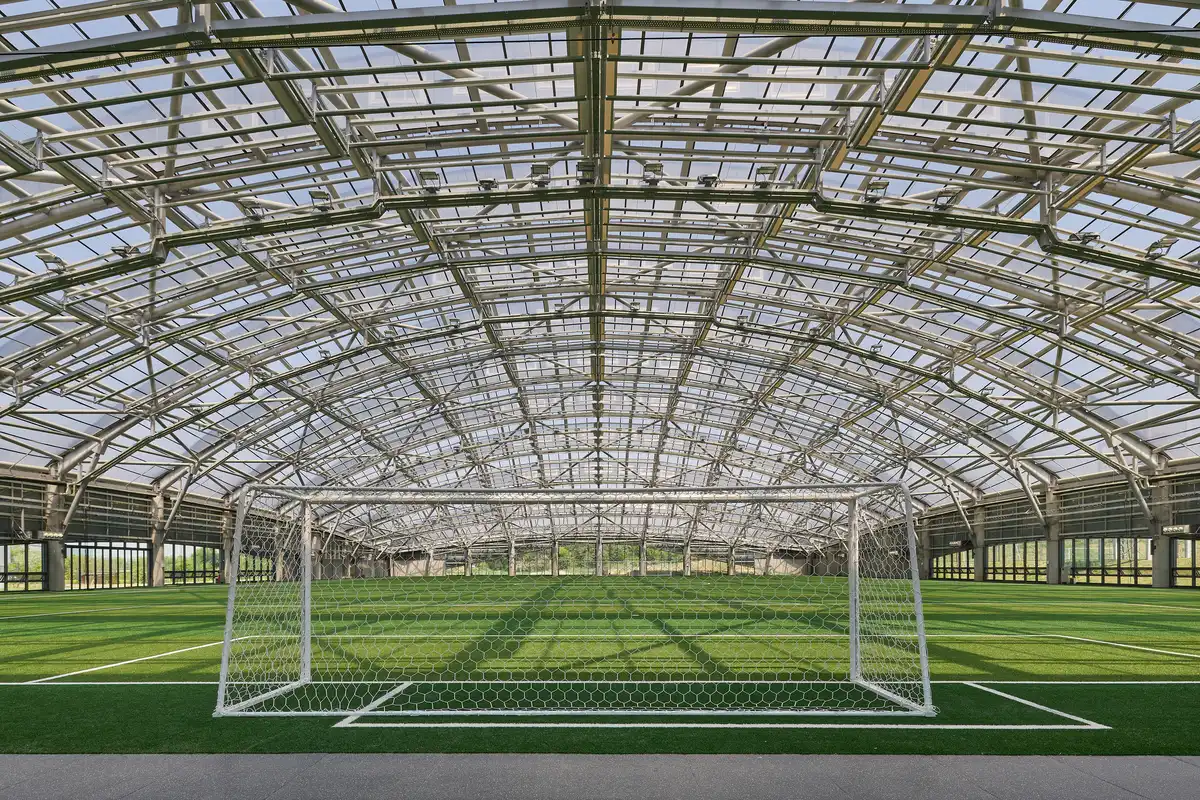
UNS’s ambition was to create a place that could serve athletes at the highest level while also giving football a broader civic presence. UNS designed the overall urban masterplan together with key components across the site, including the residential hall and players’ accommodation, the outdoor stadium with the integrated KFA headquarters, and the indoor climate-controlled arena for year-round training. The campus also includes multiple health and wellness facilities, physical therapy and fitness spaces, and a central public realm that connects the site’s programmes for celebratory events. As a project conceived during the beginning of the COVID-19 pandemic when most sporting venues were closing to the public, the Korean Football Park was viewed as a beacon of hope for the future of the sport and its supporters.
Guus Hiddink, Former Manager of the South Korean National Team: “Football has changed. A modern coach needs perfect, flat pitches to practice high-speed football. But today’s training also relies on advanced support facilities for data analysis and player development. It’s no longer just about the pitch; the entire complex has to be state-of-the-art.”
Collaboration to the core
The Korean Football Park was developed through close collaboration between UNS and a network of specialist partners from across stadium operations, sports science and active technology. During the design process, UNS worked with the Johan Cruijff ArenA and its facilities management team, drawing on decades of knowledge in stadium logistics, training environments, operational planning and innovation.
The exchanges helped shape key operational aspects of the masterplan, including security zoning, programme organisation, media requirements and the relationship between elite sport and public access. It also informed how the campus could accommodate future changes in training methods, technical systems and operational demands.
This collaboration was central to the project’s success for UNS. It allowed the design to combine architectural clarity with practical insight from those working directly in future-facing venue operations. The completion of the Korean Football Park reflects not only a shared design ambition, but also a sustained collaborative effort across architecture, sport and technical expertise.
Henk Markerink, former CEO at Johan Cruijff ArenA: “The ordering of functions is very important in training complexes of this kind. It requires a clear progression from public to private spaces, so we started by creating a public square with the museum and fan shop, using the stadium to create the feeling of entering a small city. From that public entrance, you move deeper into the more semi-public and private areas of the complex.”
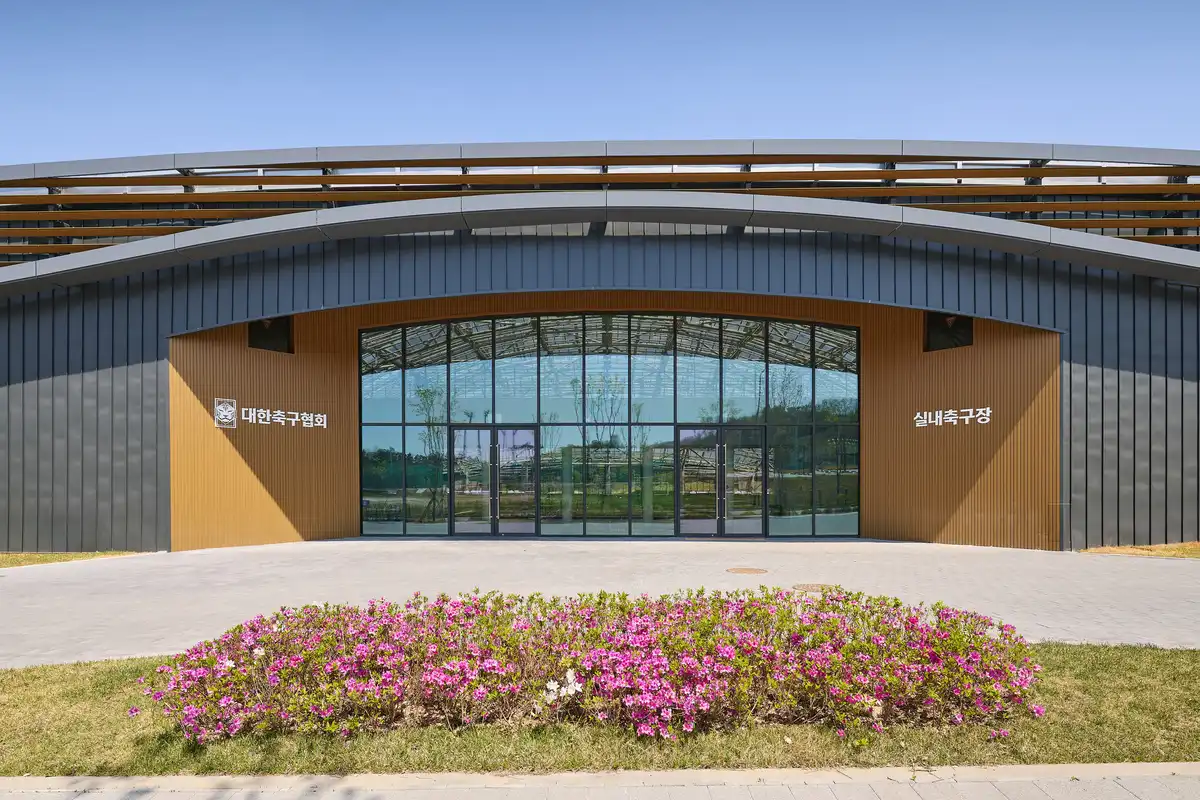
A new national home for football
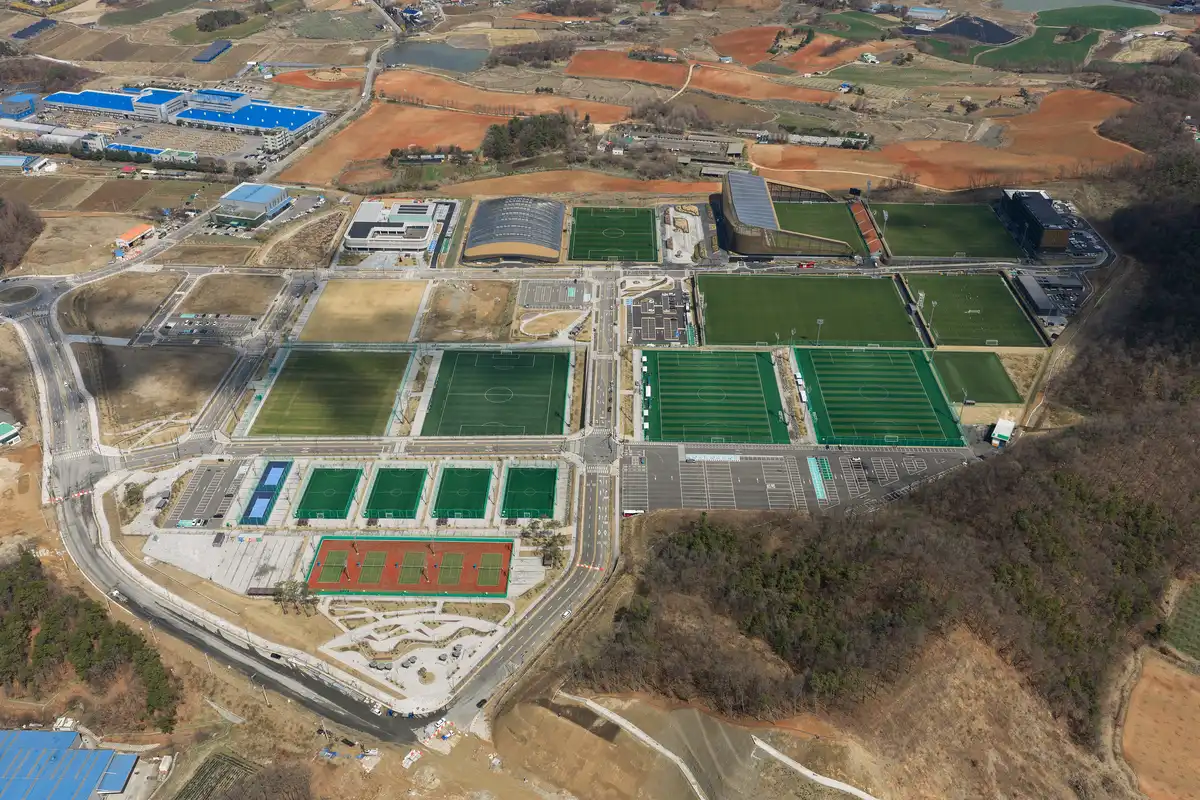
Located on a 450,427 square metre site in Cheonan, around an hour outside of the capital city, Seoul, the Korean Football Park is designed as the new home of the country’s national team while also serving youth development, women’s football and a public audience. The completed masterplan organises these uses into a campus with clear transitions between public, business and private zones.
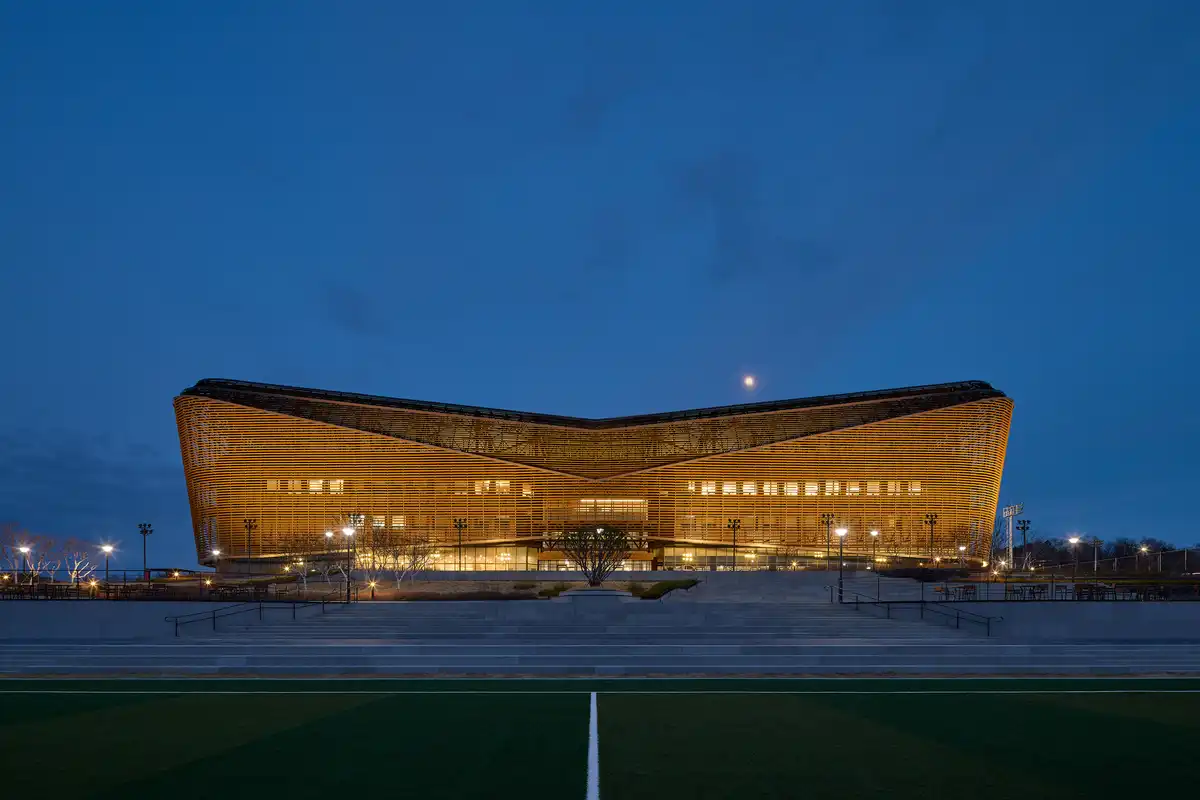
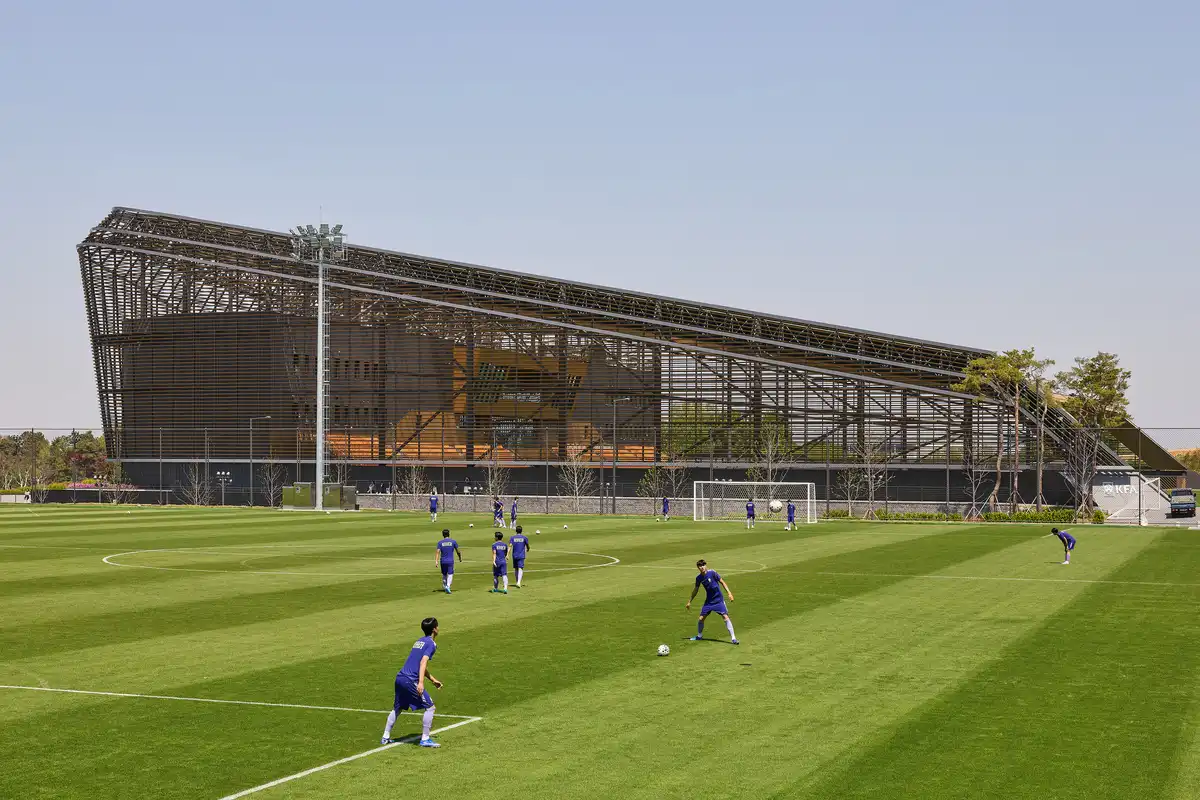
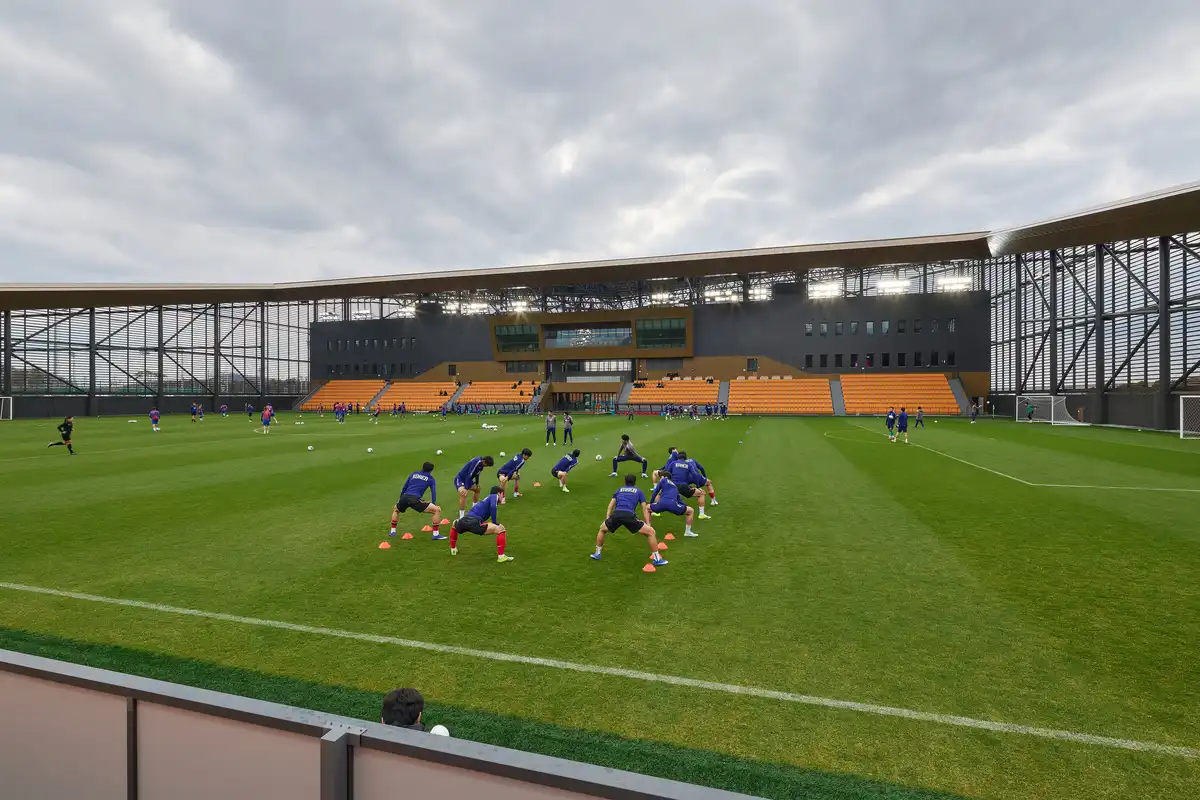
At the heart of the site is a central plaza, which is adjacent to three key buildings: the sports history museum, the indoor stadium and the outdoor stadium that is integrated with KFA’s Headquarters. This space acts as the focal point of the development, supporting events, gatherings, as well as retail and everyday use. By reorganising roads, football pitches and building positions, UNS created a more coherent layout with stronger orientation, a clearer arrival sequence and a more legible sense of identity.
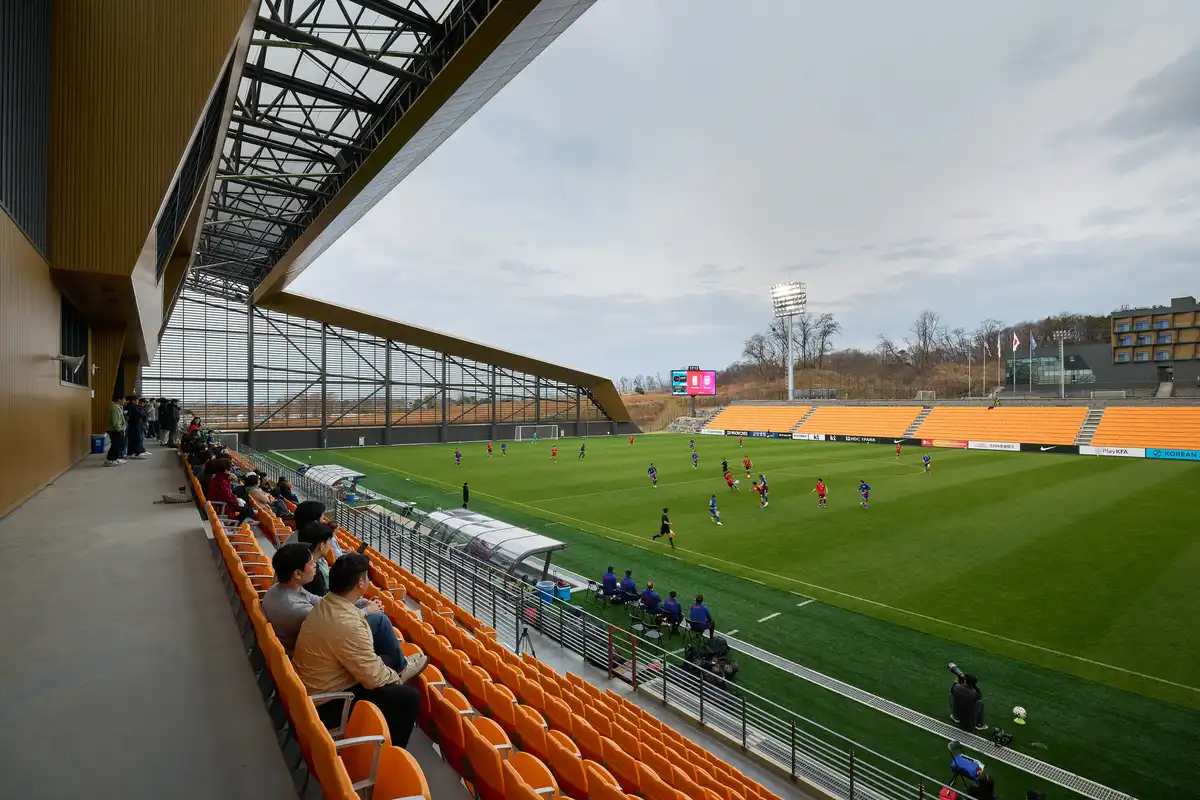
Bringing the global headquarters together with the outdoor stadium was an important design choice. It keeps decision-makers, coaches, players and fans closely connected in one place. With these functions under the same roof, sports medicine teams can follow players’ performance on the pitch in real time while staying in close contact with management. The stadium’s facade also opens towards the players’ accommodation, allowing the team to keep sight of training matches as they happen.
The masterplan design responds directly to the site’s sloping landscape which is embedded into the site of the mountainous countryside. A terraced topography helps structure the programme, establish flat playing surfaces where needed and guide movement across the campus from more open communal spaces to quieter private areas for players and staff. This landscape-led approach gives the project a distinct spatial character and ties the architecture closely to its setting.
In total, the completed campus includes 11 football fields, an indoor stadium, an outdoor stadium, the soon to be built football museum, numerous gyms and healthcare facilities, retail, multi-purpose sports areas, youth accommodation, a women’s training camp and a high-end hotel and spa. Together, these elements create a campus that can operate throughout the year rather than only during national team training periods.
Sander van Stiphout, Director International at Johan Cruijff ArenA: “The essence of this project is its dual purpose. It aims to connect elite football with aspiring youngsters to serve as an inspiration, while also opening the complex to the entire community. That combination is very powerful.”
Built around performance, recovery and future development
The project was conceived as more than a venue for training sessions and matches – it reflects the wider reality of contemporary sport, where athletic performance is closely linked to recovery, mental wellbeing, medical support and data-driven analysis.
The campus accommodates a broad range of training conditions to support athletes across age groups and levels. Through the addition of natural running tracks, indoor gymnasiums and treatment areas, the masterplan closely relates to UNS’s understanding that player development depends on a wider ecosystem of preparation and care. The proximity of training areas to healthcare and therapy facilities allows efficient movement between exertion, assessment and recovery.
Material and spatial choices also contribute to users’ wellbeing. Natural finishes, tactile surfaces, planted areas and views across the landscape help create an atmosphere that supports focus and rest. Player accommodation and wellness spaces have been positioned to provide privacy and calm while remaining connected to the wider campus.
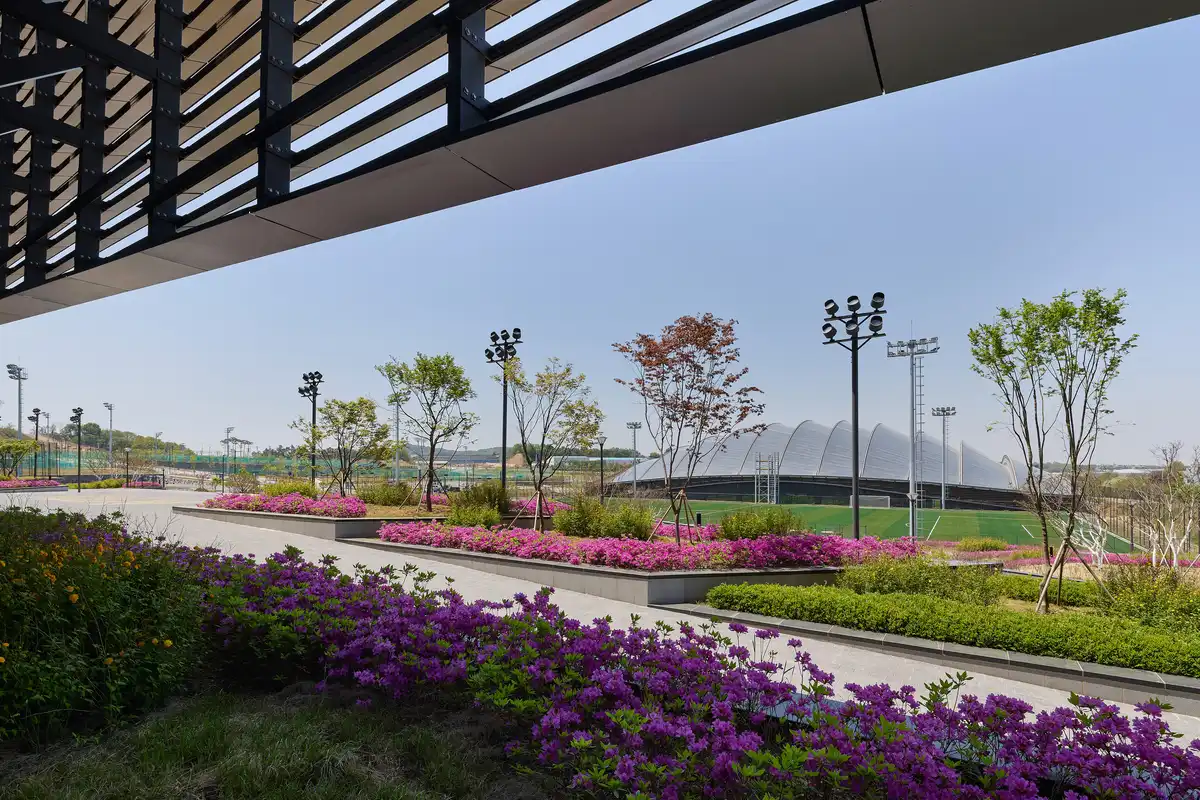
Technology has been integrated with similar care. The design anticipates data-led coaching, tracking and operational management through systems that can support athlete monitoring over time. From lighting and sensor applications to infrastructure that can accommodate future technical upgrades, the Korean Football Park can evolve with developments in sports science and training practice.
The Korean Football Park gives the country’s football programme a new campus that combines elite performance with public presence. It is a project shaped by collaboration, grounded in landscape and designed to serve athletes, institutions and supporters for decades to come.
Korean National Football Centre, South Korea – Building Information
Korean National Football Centre, South Korea, 2020 – 2025
Client: Korea Football Association, (KFA)
Location: Cheonan-shi, Chungnam-do, Korea
Building site: 450,427㎡
Programme: Campus Masterplan and Urban Branding Strategy, 1 Outdoor Stadium with management facilities (1000-1500 Seats), 1 Indoor Stadium with support facilities, The National Team health and resort facility, Museum for Korean Football, supporting training fields and recreation, youth hostel and retail.
Status: Competition 1st place / under construction (expected completion 2025)
Credits
UNStudio: Ben van Berkel, Gerard Loozekoot with Maurizio Papa, Harlen Miller, Crystal Tang
and Alistair Williams, Francesco Balducci, Kayla Manuel, Liva Sadovska, Luigi Olivieri, Martijn Dahrs, Rebekah Tien, Suhan Na, Yangkenan Li, Yonghyun Jeong, Zirong Zhao
Advisors:
Amsterdam ArenA – Stadium Logistics and Sports Science: Henk Markerink, Sander van Stiphout, Max Reckers
Photography © Rohspace
Korean National Football Centre building South Korea images / information received 300626 from UNS architects studio
Location: Cheonan-shi, Chungnam-do, South Korea.
Seoul Buildings
Contemporary Seoul Architectural Selection
Tamburins Seongsu Flagship Store, Seoul
Architects: The System Lab
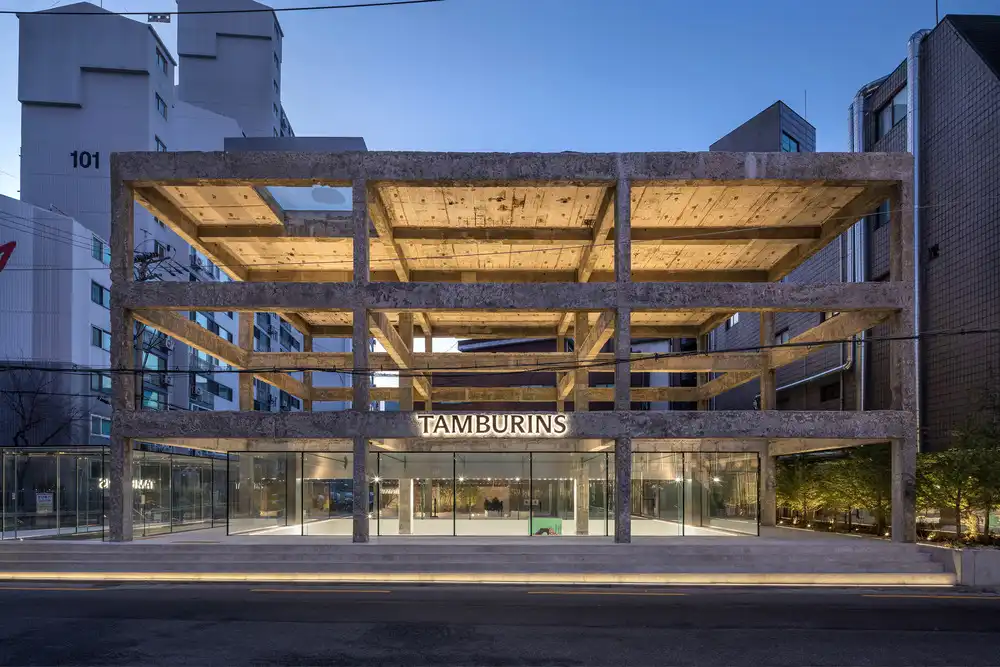
photo : Joonhwan Yoon
Hannamdong 4 Residences, Seoul
Architects: UNStudio
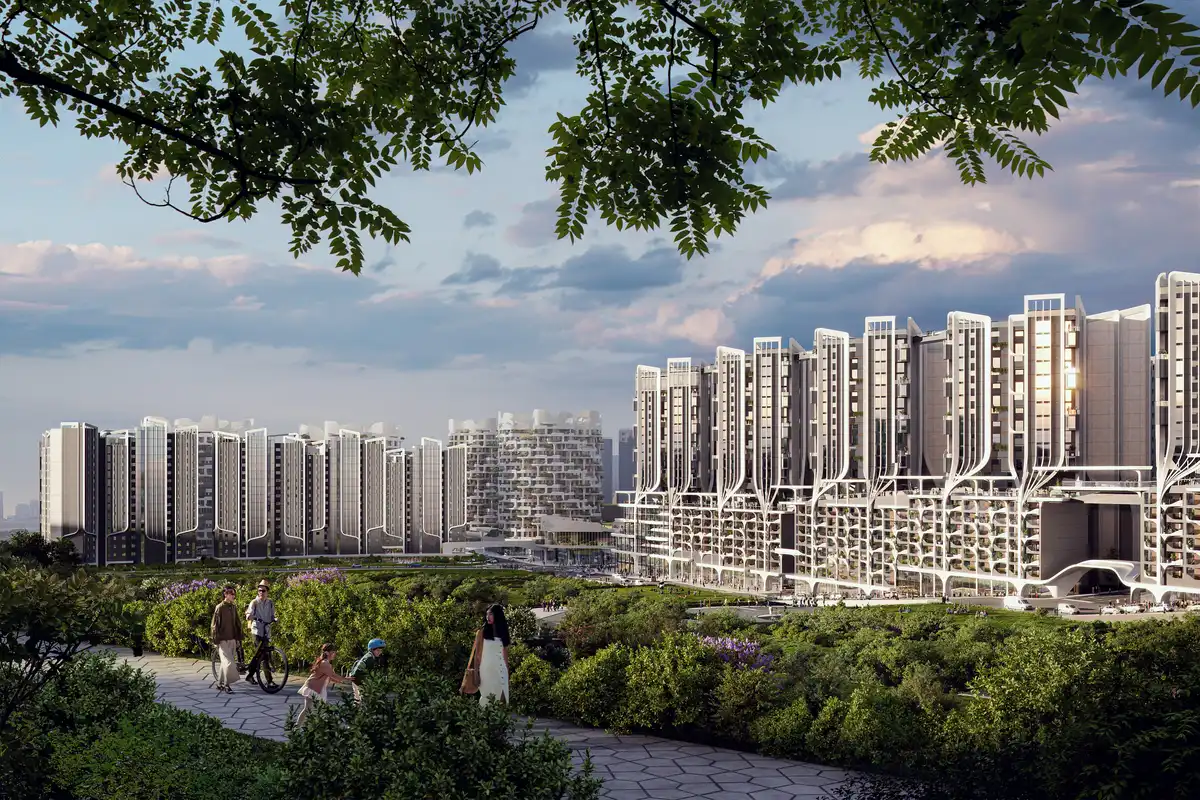
render : Flying Architecture and UNStudio
++
South Korea Architecture Designs
South Korean Architecture Designs – chronological list
Comments / photos for the Korean National Football Centre building designed by UNS – UNStudio Architects page welcome.