Rehabilitation of The Former Carme School in Barcelona
13 May 2026
Architects: Sulkin | Marchissio
Location: Bellit Street, Caldes de Montbui, Barcelona, Catalunya, Spain

Photos by Marta Vidal
English text (scroll down for Spanish):
The proposal for the rehabilitation of The Former Carme School is conceived as an integrated urban operation, in which public space and architecture are articulated as a single system capable of integrating the site, strengthening its relationship with the city, and generating new scenarios for collective use. The project does not merely intervene in the existing buildings, but rather redefines the relationships between architecture, urban voids, and circulation, understanding architecture as a social infrastructure in the service of collective life.
Public Space as a Structuring Element
The new public square is conceived as the heart of the complex and as the main device for urban connectivity. Its configuration enhances access from Bellit Street, where a clearly legible route is established, linking the auditorium, the existing building, and the arrival at the square. This semi-covered threshold functions as a space of climatic and urban transition, reinforcing the civic character of the access and its condition as a shared space.
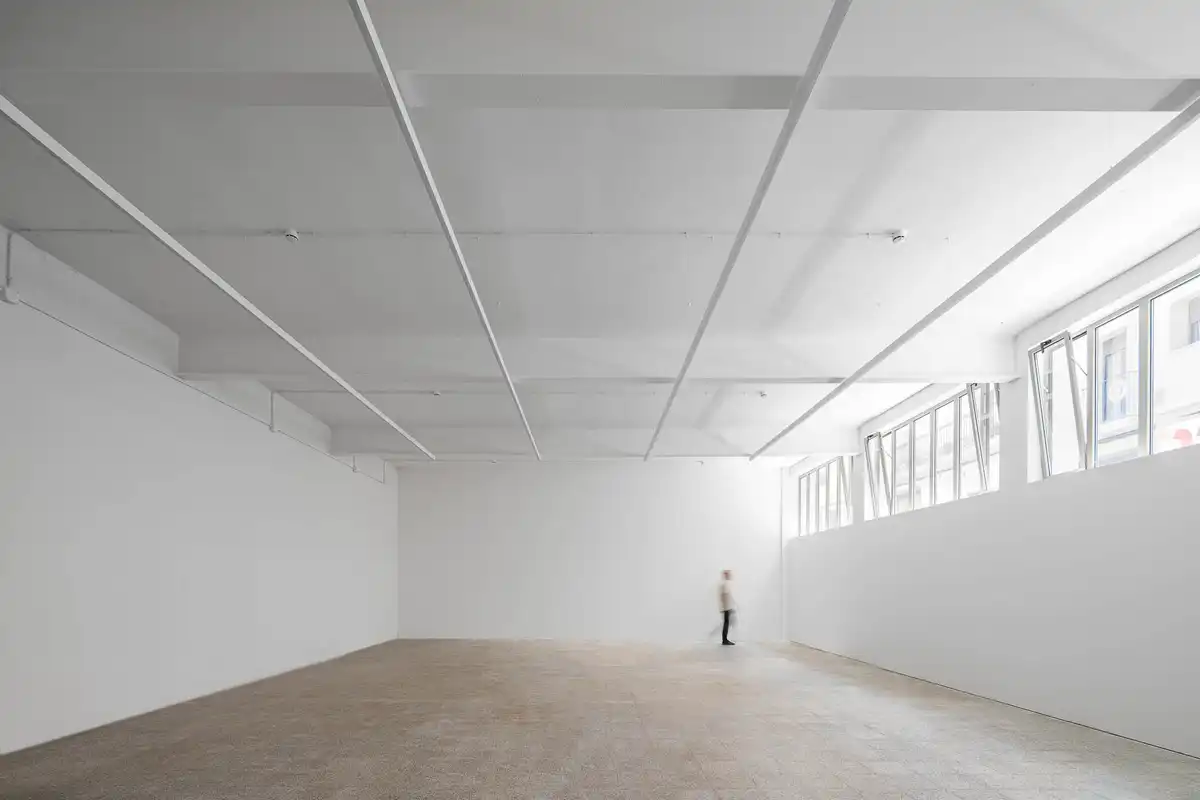
The modification of the auditorium wall level improves the visibility of the square from the street, emphasizing its open and inclusive character. Universal accessibility is ensured by means of a ramp from Canals Street, directly connected to the workshops and classrooms of Building C, and naturally integrated into the overall circulation system of the complex.
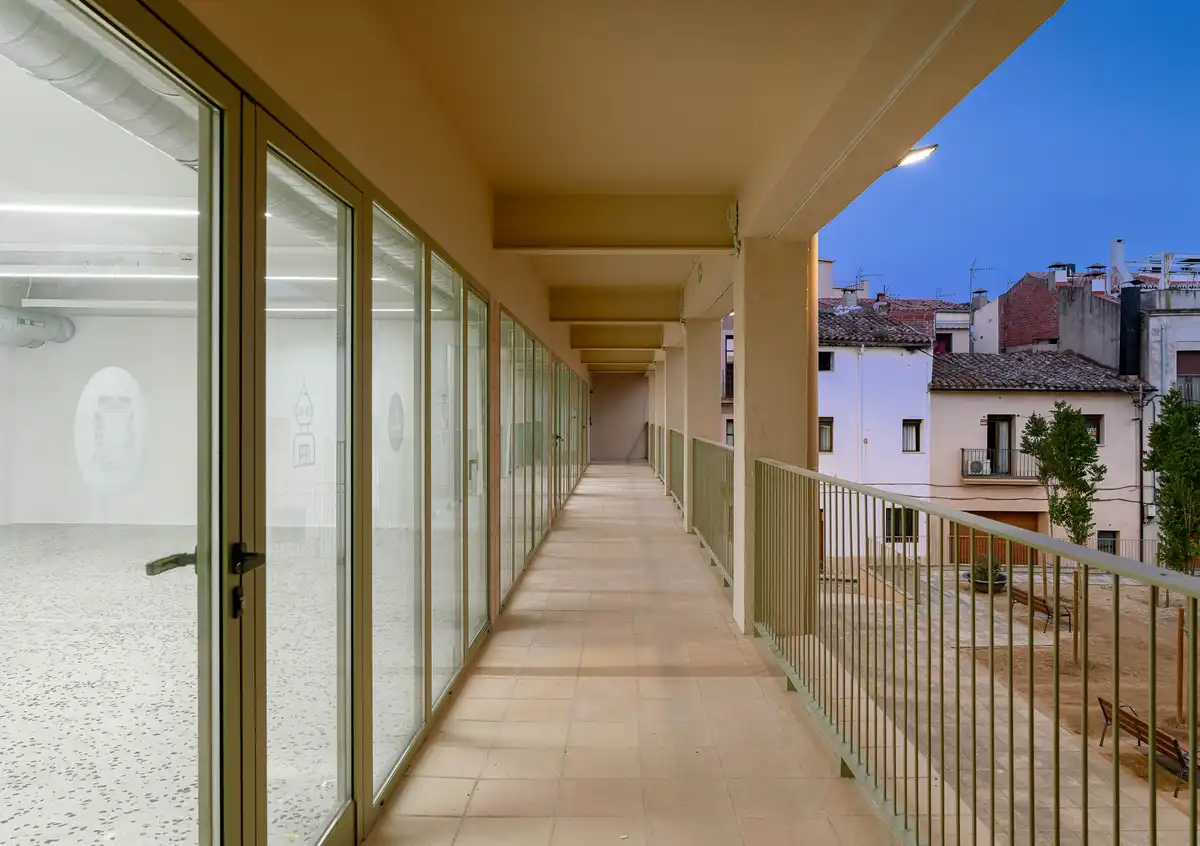
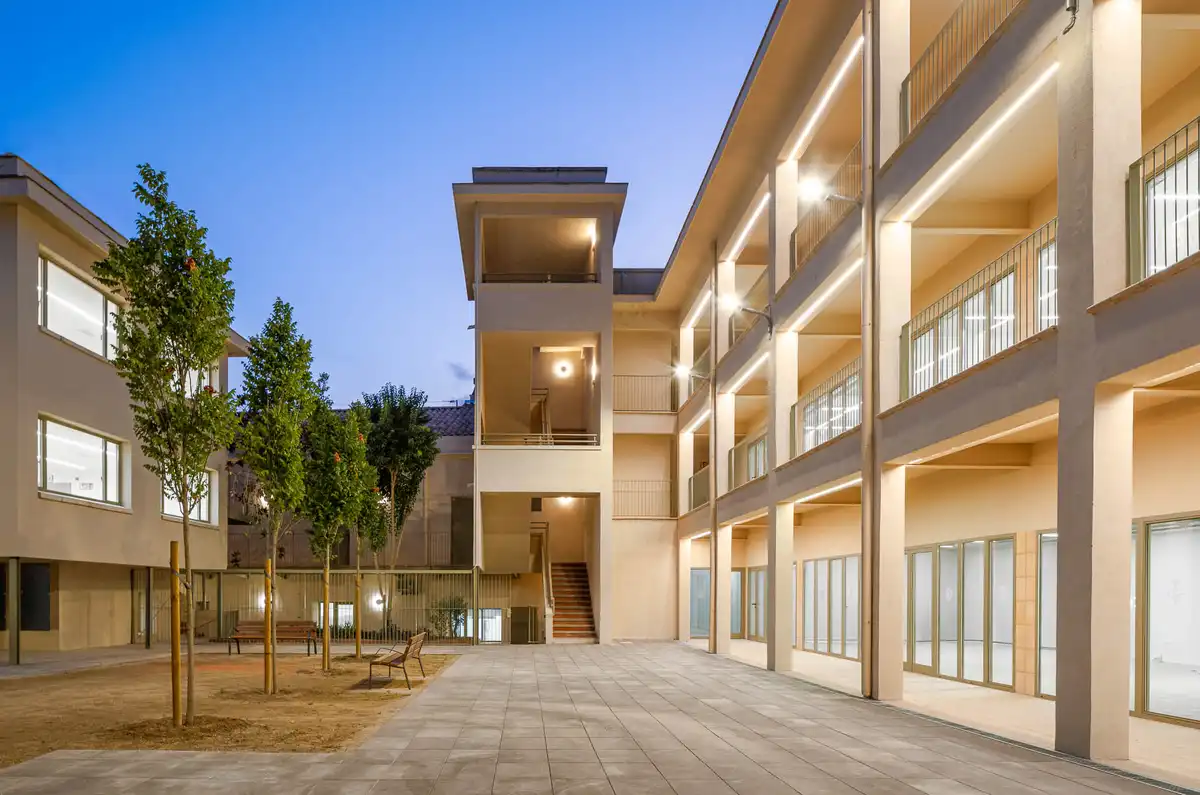
The square is organized in direct relationship with the uses of the surrounding buildings, which open onto it through porches and galleries. These intermediate spaces blur the boundary between interior and exterior, intensifying social interaction and extending building activity into the public realm.
Architecture as a Framework for Activity and Interaction
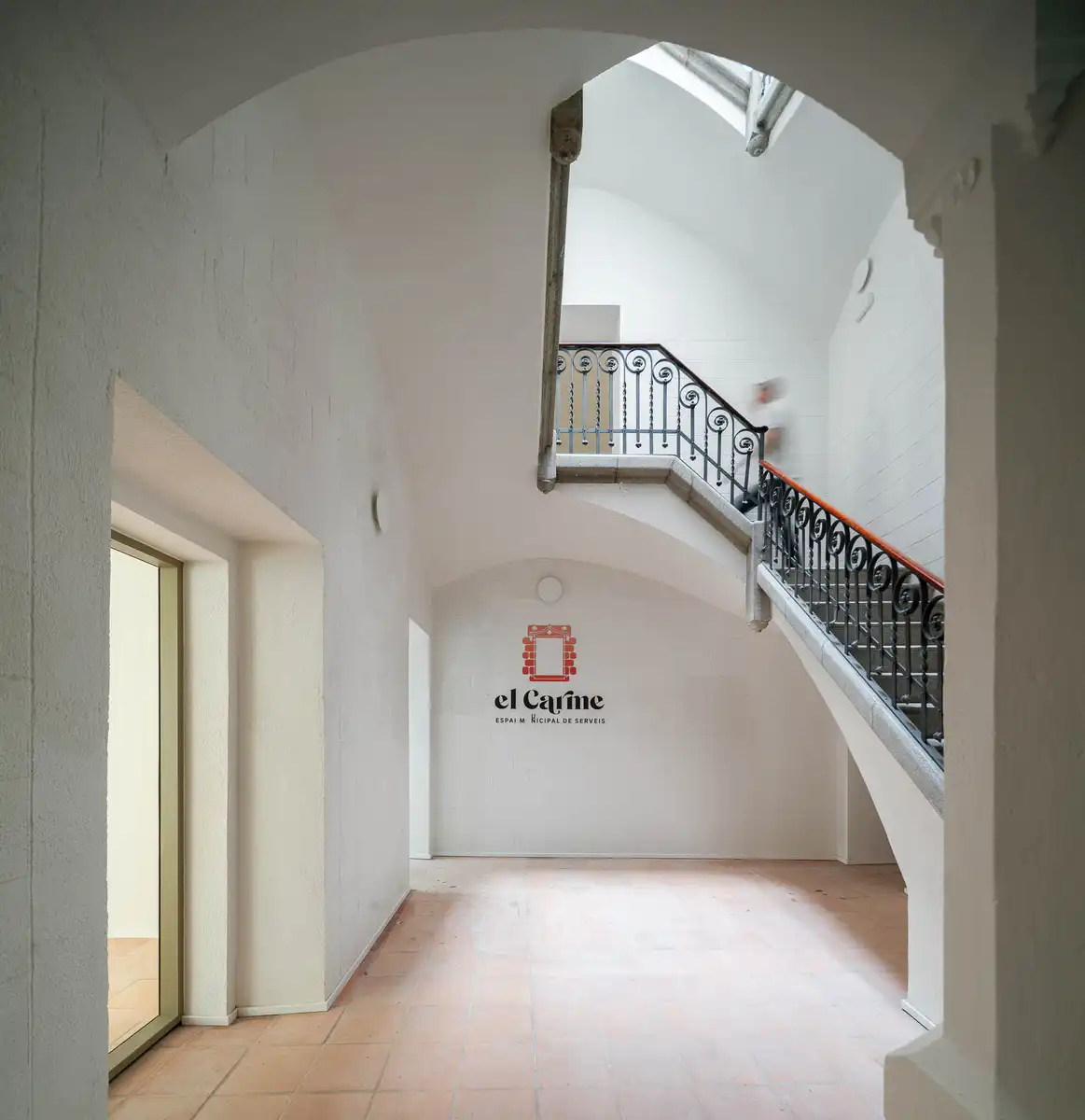
The intervention proposes a deep interior transformation, aimed at providing the buildings with flexible spaces capable of accommodating diverse programs and adapting to future scenarios of use. The inner courtyard of Building A is redefined as a central space for communication and interaction, activated both at ground level and through the first-floor gallery, reinforcing spatial and visual continuity throughout the complex.
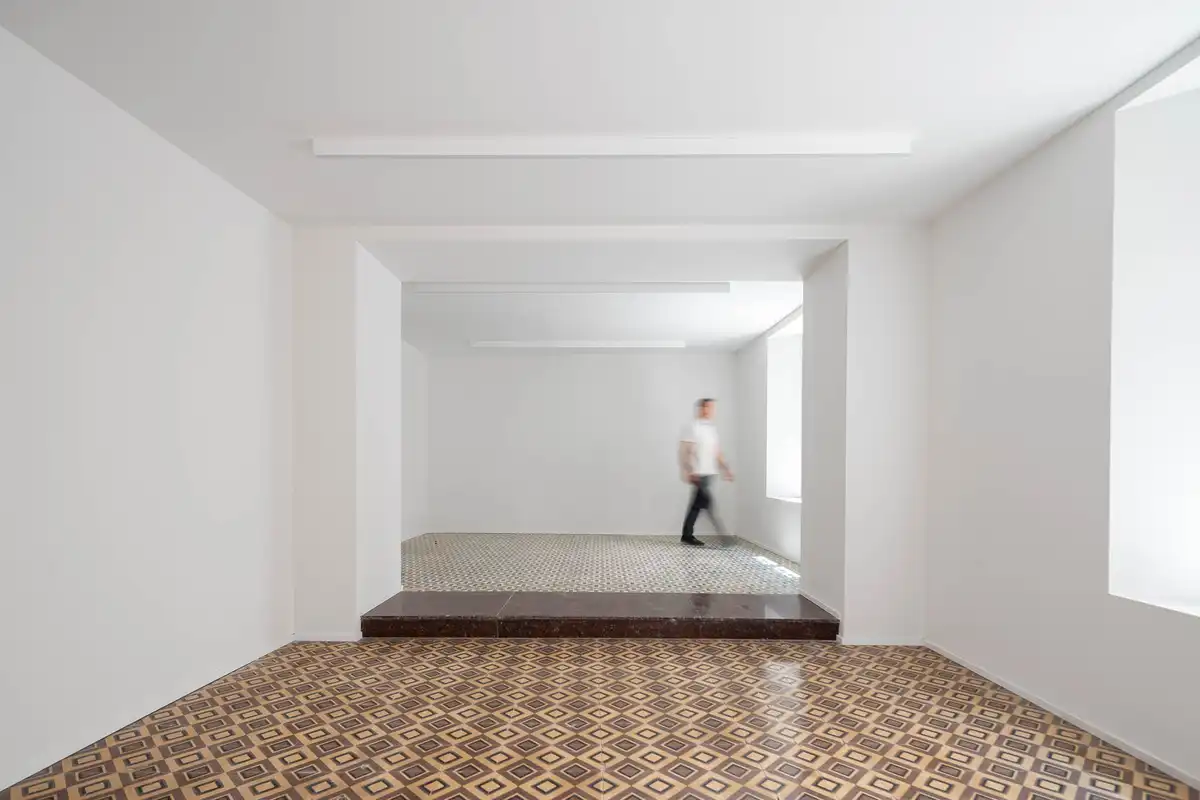
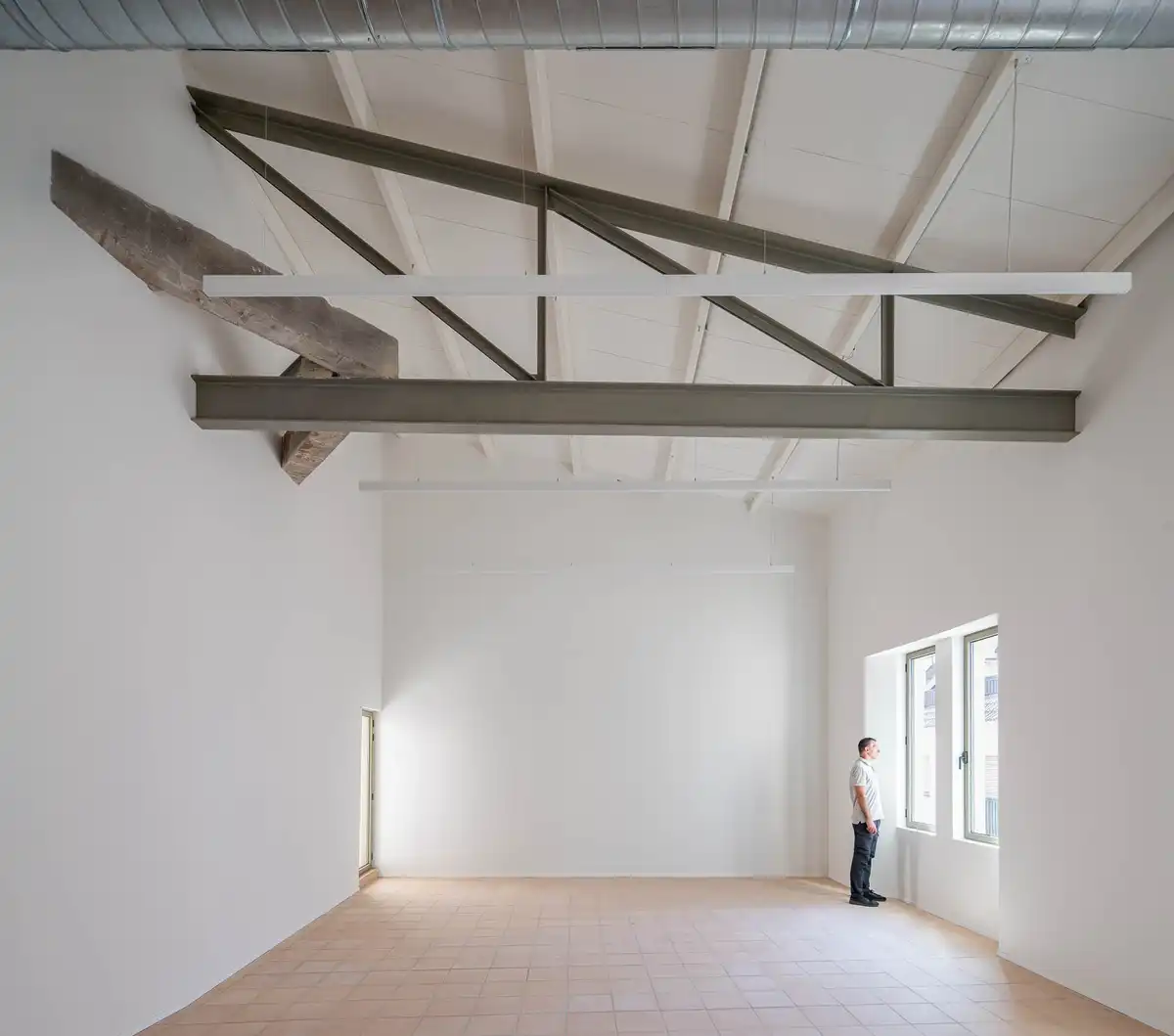
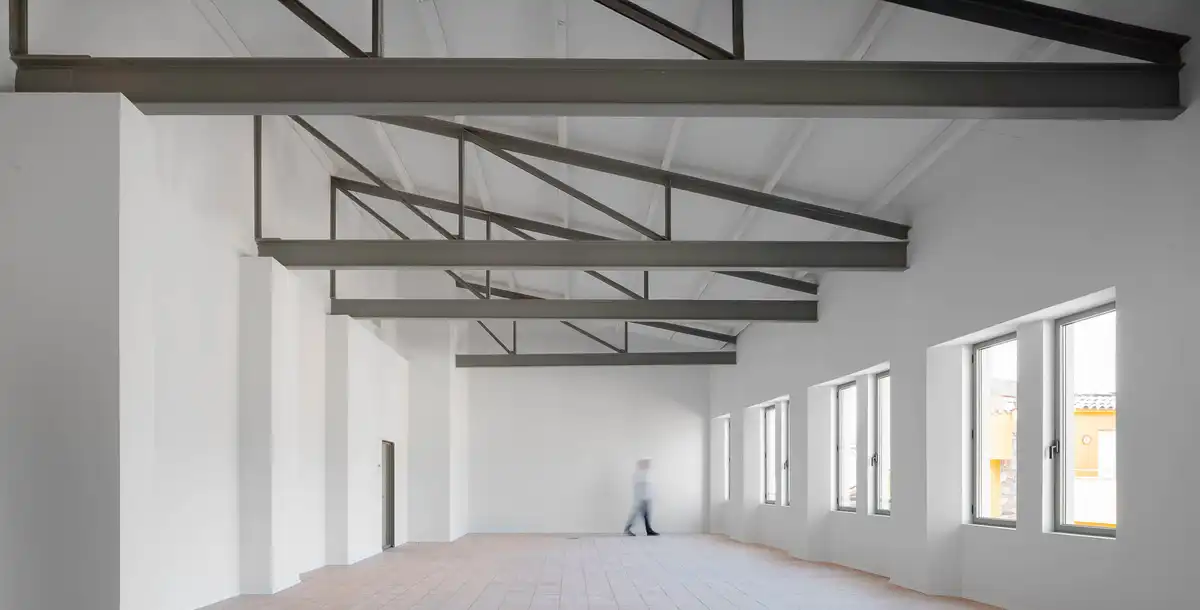
The project is based on respect for the identity of the existing building, maintaining its openings and fully preserving all listed elements. The intervention is completed by the replacement of the roof, the reinforcement of the steel structure, and the improvement of the building envelope, understood as an opportunity to optimize thermal performance and interior comfort.
The new volume of Building B introduces an intermediate scale, more intimate and domestic, which enhances the quality of the square and encourages everyday appropriation. The recovery of the lower terrace expands the range of possible uses and establishes new visual and functional relationships with the surroundings, without altering the existing structure.
Functional Organization and Spatial Clarity
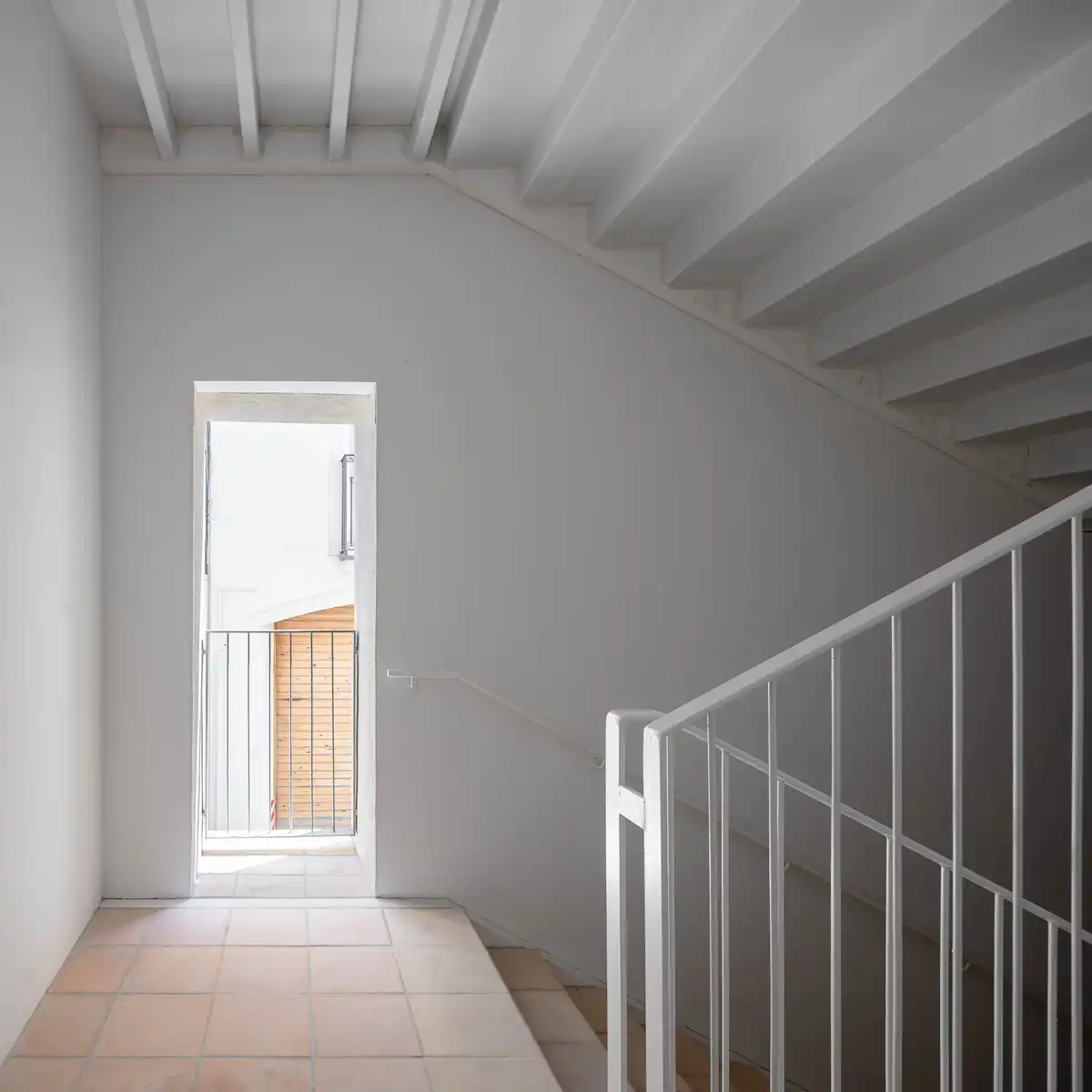
The organization of the complex is based on a clear stratification of uses, with the ground floor concentrating the most public and active programs, while the upper levels accommodate more specific uses. This arrangement enhances the legibility of the complex, the independence of access routes, and the coexistence of diverse activities.
The proposal prioritizes clarity of circulation, universal accessibility, and spatial flexibility, understanding architecture as an open framework capable of evolving over time and strengthening its relationship with the city and collective life.
Spanish:
La propuesta se concibe como una operación urbana integrada, en la que espacio público y arquitectura se articulan como un único sistema capaz de integrar el lugar, reforzar su relación con la ciudad y generar nuevos escenarios de uso colectivo. El proyecto no se limita a intervenir sobre los edificios existentes, sino que redefine las relaciones entre arquitectura, vacío urbano y recorridos, entendiendo la arquitectura como una infraestructura social al servicio de la vida colectiva.
El espacio público como elemento vertebrador
La nueva plaza pública se plantea como el corazón del conjunto y como el principal dispositivo de conexión urbana. Su configuración potencia el acceso desde la calle Bellit, donde se define un recorrido claramente reconocible que enlaza el auditorio, el edificio existente y la llegada a la plaza. Este umbral semicubierto actúa como espacio de transición climática y urbana, reforzando el carácter cívico del acceso y su condición de espacio compartido.
La modificación de la cota del muro del auditorio mejora la visibilidad de la plaza desde la calle, enfatizando su vocación abierta e inclusiva. La accesibilidad universal se resuelve mediante una rampa desde la calle de Canals, directamente vinculada con los talleres y aulas del Edificio C, integrándose de forma natural en el sistema general de recorridos del conjunto.
La plaza se organiza en relación directa con los usos de los edificios perimetrales, que se abren hacia ella mediante porches y galerías. Estos espacios intermedios diluyen el límite entre interior y exterior, intensificando la interacción social y extendiendo la actividad de los edificios hacia el espacio público.
Arquitectura como soporte de actividad y relación
La intervención propone una transformación interior profunda, orientada a dotar a los edificios de espacios flexibles, capaces de acoger programas diversos y adaptarse a futuros escenarios de uso. El patio interior del Edificio A se redefine como un espacio central de comunicación y relación, activado tanto en planta baja como en la galería de la planta primera, reforzando la continuidad espacial y visual del conjunto.
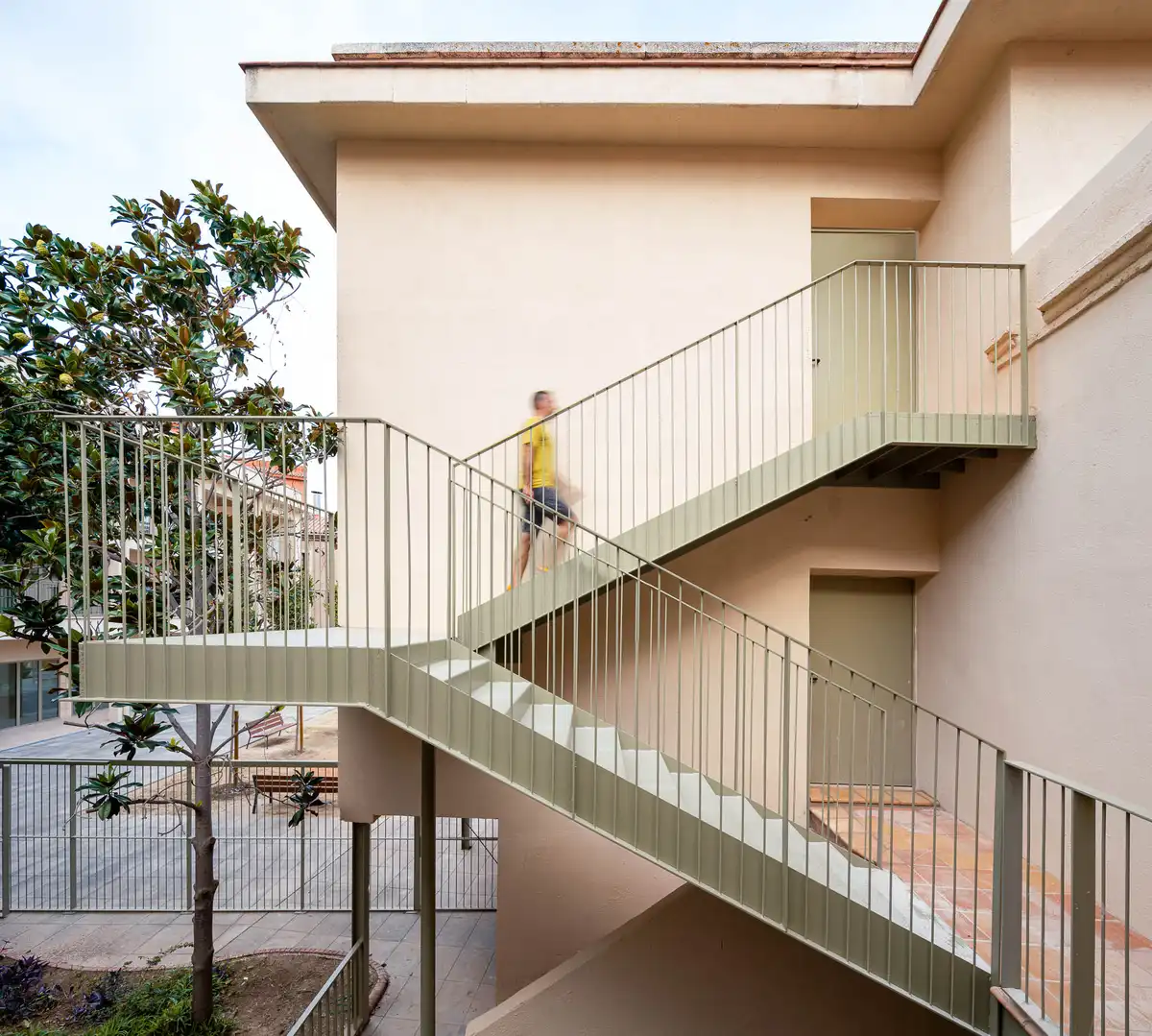
El proyecto parte del respeto por la identidad del edificio existente, manteniendo sus oberturas y preservando íntegramente los elementos catalogados. La actuación se completa con la sustitución de la cubierta, el refuerzo de la estructura metálica y la mejora de la envolvente, entendida como una oportunidad para optimizar el comportamiento térmico y el confort interior.
La nueva volumetría del Edificio B introduce una escala intermedia, más próxima y doméstica, que cualifica el espacio de la plaza y favorece su apropiación cotidiana. La recuperación de la terraza inferior amplía las posibilidades de uso y establece nuevas relaciones visuales y funcionales con el entorno, sin alterar la estructura existente.
Organización funcional y claridad espacial
La organización del conjunto se basa en una estratificación clara de usos, donde la planta baja concentra los programas más públicos y activos, mientras que los niveles superiores acogen usos de carácter más específico. Esta disposición favorece la legibilidad del conjunto, la independencia de accesos y la coexistencia de actividades.
La propuesta prioriza la claridad de los recorridos, la accesibilidad universal y la flexibilidad espacial, entendiendo la arquitectura como un marco abierto, capaz de evolucionar en el tiempo y de reforzar su vínculo con la ciudad y con la vida colectiva.
The Former Carme School in Barcelona, Spain – Building Information
Architects: Sulkin | Marchissio – https://sulkinmarchissio.com/
Architects responsible for the project and construction management: Nestor Sulkin, Walter Marchissio, Fabio Estremera, Juliana Deschamps, Javiera Garvenet
Office contact email: [email protected], [email protected]
Project location: Bellit Street, Caldes de Montbui
Year of completion: 2024/2025
Built/Rehabilitated area: 1,603.37 sqm, Covered area: 319.84 sqm, Uncovered area: 1,526 sqm
Other participants:
María Tinto, Francisco Carnovale. Technical staff
Construction: Rehabilitation
Structural engineering: Static
Photographer: Marta Vidal
The Former Carme School, Barcelona, Spain images / information 130526 from Architects Sulkin | Marchissio
Location: Bellit Street, Caldes de Montbui, Barcelona, Catalunya, North East Spain, south western Europe.
Barcelona Property Designs
Barcelona Architectural Designs – latest buildings
Barcelona Architecture
Casa ACAP, Catalunya, Das
Architects: Alventosa Morell arquitectes
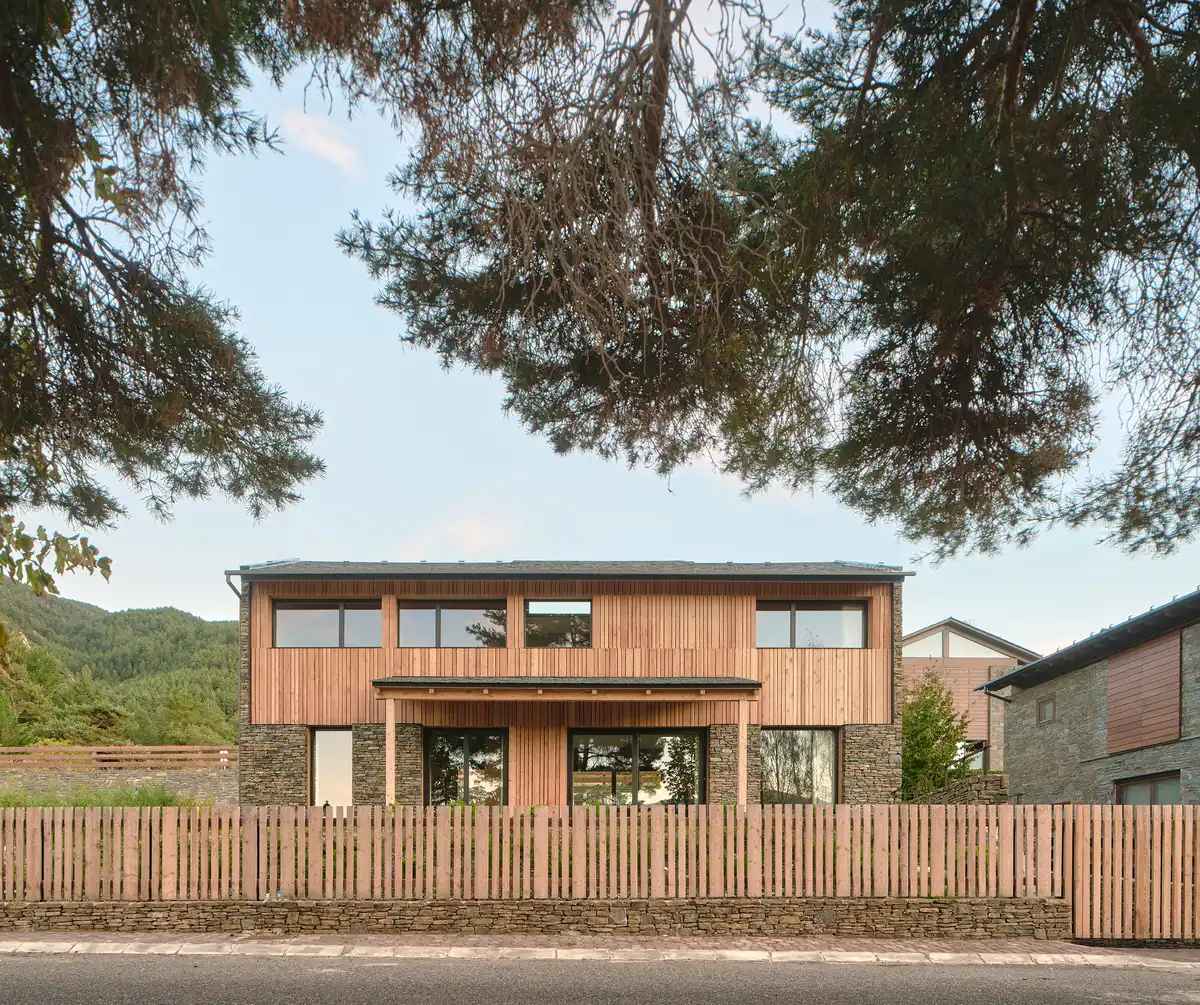
photo : Adrià Goula
Casa GE, Seva, comarca of Osona
Architecture: Alventosa Morell Arquitectes
Barcelona Architecture Walking Tours by e-architect guides for pre-booked visiting groups
++
Catalan Buildings
Catalan Architecture – recent selection from e-architect:
Carbon-negative pavilion for ACCIONA Energía
Architects: Institute for Advanced Architecture of Catalonia (IAAC)
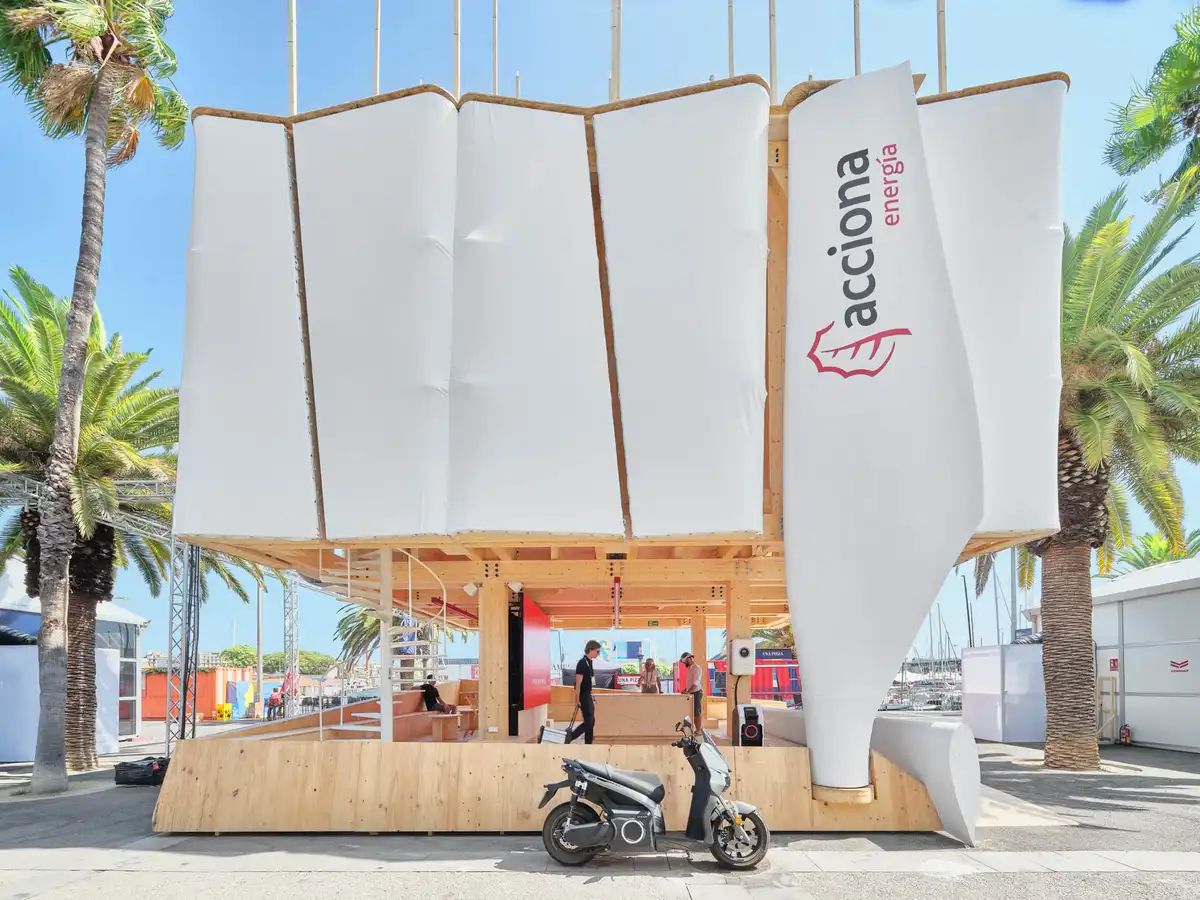
photo : Adrià Goula
ACCIONA Energía Pavilion building, Moll de la Fusta
Comments / photos for the The Former Carme School, Barcelona, Catalunya design by Sulkin | Marchissio Architects, Spain, page welcome.