How Property Presentation Went Digital: What Sells a Building in 2026
26 June 2026
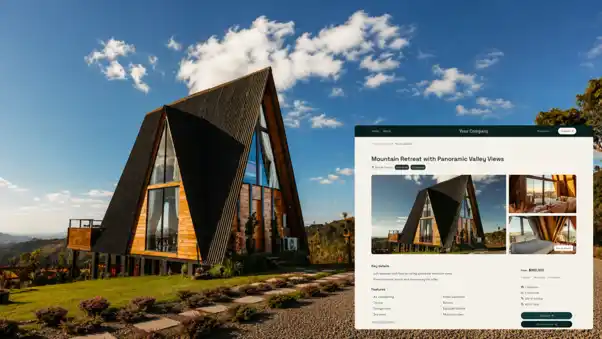
A building can take years to design and months to photograph well. Then it gets sold through five phone snaps on a portal.
There is a strange gap in how the property world treats design. Enormous care goes into the building itself. The proportions, the materials, the way light moves through a space, the relationship between the structure and its setting. Then, when it comes time to present that building to the people who might buy it, all of that effort is often flattened into a handful of badly lit photos and a price on a crowded listings portal.
For anyone who cares about architecture, that gap should be uncomfortable. The digital presentation of a property has become the first and sometimes only encounter a buyer has with it. In 2026, how a building is shown online is no longer an afterthought to the design. It is part of the design’s reception. And increasingly, it is what sells.
The screen is the new site visit
Most buyers now meet a property on a screen long before they stand in front of it, if they ever do at all. International buyers in particular may commit to a viewing, or even a purchase, having only experienced the building digitally. The remote, photograph-led nature of property buying has only deepened in recent years.
This means the digital representation of a building carries an enormous amount of weight. A poorly presented listing does not just fail to sell a property, it actively misrepresents the work that went into it. A beautifully designed home shown through dark, compressed images on a generic template tells the buyer nothing about the quality of what they are looking at. The architecture deserves better, and so does the seller.
Presentation is part of the value
Architects understand instinctively that how something is presented shapes how it is perceived. A model under good lighting, a rendering with the right atmosphere, a portfolio laid out with care. These are not decoration. They are how the quality of the underlying work becomes legible to someone who was not in the room when it was made.
The same logic applies to selling property. A spacious, well-organised listing page with high-resolution galleries, room-by-room detail, floor plans, and a clear sense of the space does justice to the building. It lets the design speak. A cramped portal listing, by contrast, strips all of that away and reduces a considered piece of work to a thumbnail and a number. The presentation is not separate from the value. For a remote buyer, the presentation is most of what they can perceive of the value at all.
Speed and access matter as much as beauty
Good presentation is not only about images. It is also about how easily a buyer can explore and respond. Research in the property industry consistently shows that buyers gravitate towards whoever responds to them first and most easily. A listing that lets someone browse on their own time, filter for what matters to them, and reach out instantly through the channel they prefer will convert interest that a slower, more closed setup simply loses.
This is where a dedicated property website outperforms a portal profile. The seller controls the experience end to end. The building is presented on its own terms, in its full context, alongside an easy and immediate way to make contact. Nothing competes for attention, and nothing stands between the buyer’s interest and the seller’s inbox.
The tools have caught up
For a long time, presenting property to this standard meant commissioning a bespoke website, which put it out of reach for individual agents and smaller developers. That has changed. Purpose-built platforms like Midtide are designed specifically for property professionals, with high-quality templates that present listings cleanly, a property CMS that handles galleries and floor plans, search and filters, multi-language and multi-currency support for international audiences, and built-in lead capture. A polished, professional property site can now be live in a fraction of the time and cost it once took.
The result is that the quality of a building’s digital presentation no longer depends on the size of the budget behind it. A single architect selling one carefully designed house can present it as well as a major developer can.
Designing for the screen, not just the street
None of this diminishes the building itself. The physical design will always come first. But the reality of how property is bought now means the digital presentation has become an extension of the architecture, the version of the building most people will ever experience.
Treating that presentation as carefully as the design itself is not vanity. It is what allows the work to be seen, understood, and valued by the people it was ultimately made for. In 2026, a building that is worth designing well is worth presenting well too.
Midtide is a website builder built specifically for real estate agents and property professionals, with high-quality templates, listing galleries, and multi-language support. Plans start from $16/month at midtide.co.
Comments on this guide to How property presentation went digital – what sells a building in 2026 article are welcome.
Home Renovation

Bathroom Renovation Ideas for Home
Exterior improvements improve looks
New vaulted style of floor cuts concrete usage
++
Architecture Design
Comments / photos for the How property presentation went digital/i> page welcome.