Building Smarter Homes from the Inside Out
20 June 2026
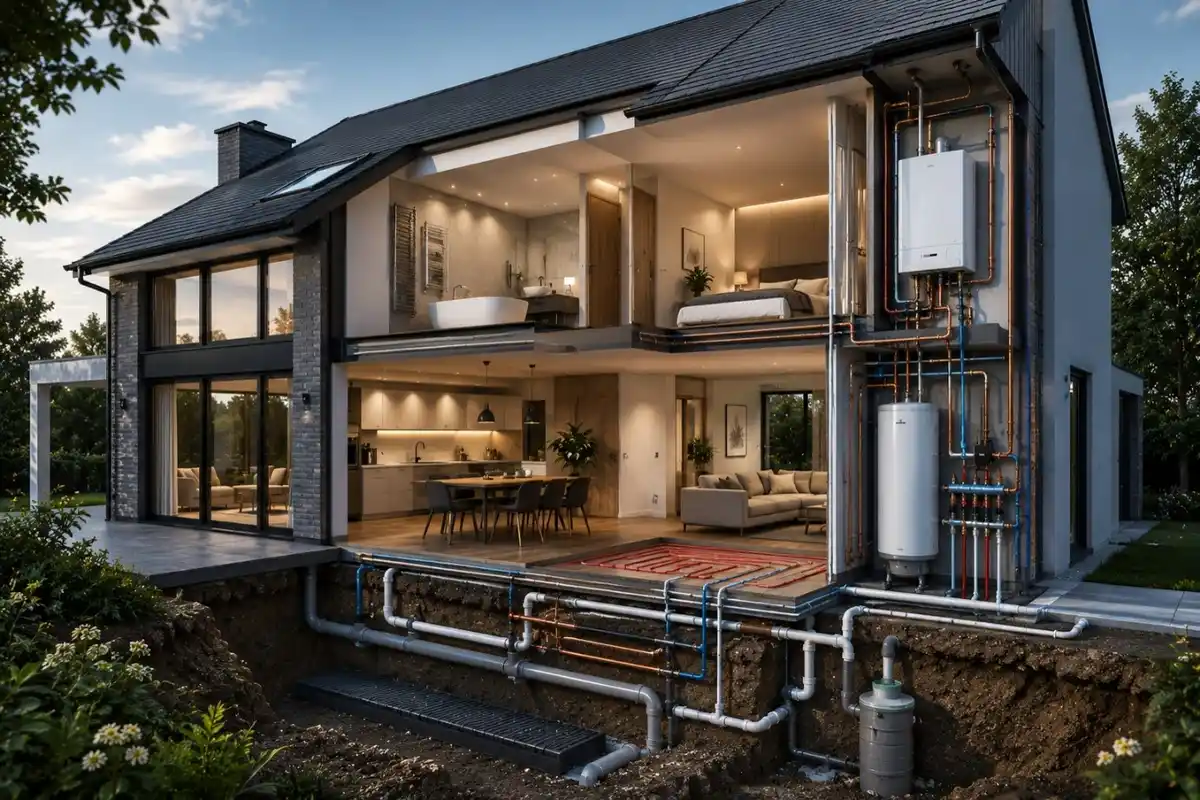
Modern residential architecture is no longer defined solely by exterior form or interior aesthetics. Increasingly, the performance of a home depends on what lies beneath the surface—its plumbing, heating, and water systems. These hidden infrastructures play a critical role in shaping comfort, efficiency, and long-term sustainability.
As homes become more technologically advanced and energy-conscious, architects and engineers are placing greater emphasis on integrating building services from the earliest design stages. This “inside-out” approach ensures that mechanical systems work in harmony with spatial layouts, materials, and environmental performance goals.
Integrated Plumbing Systems in Contemporary Design
Plumbing is no longer treated as an afterthought concealed behind finished surfaces. Instead, it is now a core consideration in residential planning, influencing everything from spatial efficiency to sustainability outcomes.
Many homeowners and developers rely on RCB Plumbing in Sutton for professional plumbing and heating services, including boiler installations, system upgrades, leak detection, bathroom plumbing, underfloor heating, and smart heating controls. With Gas Safe registered engineers and fixed-price service models, modern plumbing systems are designed to support energy-efficient living while ensuring reliable long-term performance in both new-build and renovated homes.
When integrated properly, plumbing becomes part of the building’s architectural logic rather than a separate technical layer.
The Role of Building Services in Architectural Planning
In contemporary housing design, early coordination between architects and building services engineers is essential. Plumbing routes, heating systems, and water efficiency strategies are now considered alongside structure, insulation, and daylight planning.
Key design considerations include:
- Concealed pipework strategies
- Efficient hot water distribution
- Space-saving plant room design
- Zoned heating systems
- Accessibility for maintenance
- Integration with renewable technologies
This level of planning ensures that services support rather than disrupt architectural intent.
Water Efficiency and Sustainable Living
Sustainability in modern homes extends beyond energy performance to include responsible water use. Efficient plumbing design plays a key role in reducing environmental impact while maintaining everyday comfort.
Common strategies include:
- Low-flow fixtures and fittings
- Dual-flush sanitation systems
- Rainwater harvesting integration
- Leak detection technology
- Greywater reuse systems
These solutions help reduce water consumption while supporting broader environmental design goals.
Smart Heating and Plumbing Controls
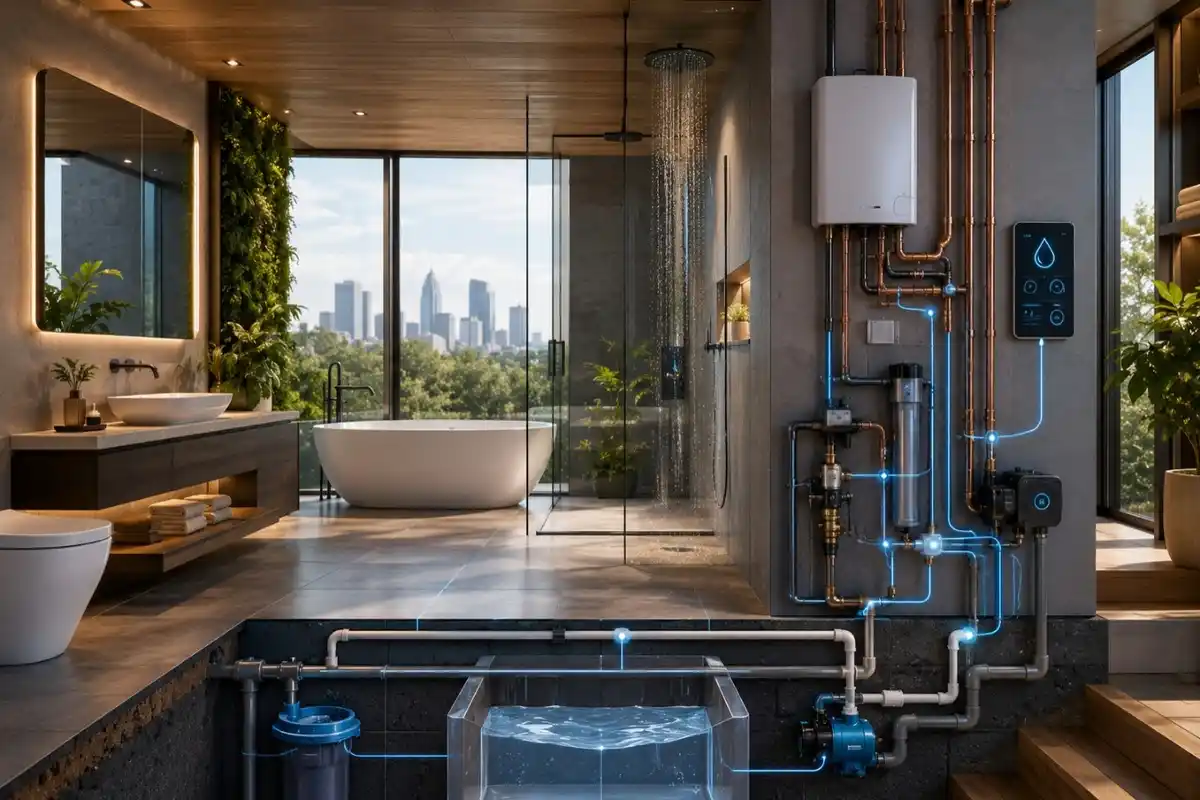
Digital technology is transforming how homeowners interact with their building systems. Smart controls allow precise management of heating and water systems, improving both comfort and efficiency.
Modern systems offer:
- Remote temperature control
- Zoned heating management
- Real-time energy monitoring
- Automated scheduling
- Predictive maintenance alerts
These innovations allow homes to respond dynamically to user behaviour and environmental conditions.
Designing for Long-Term Maintenance and Flexibility
A key principle of modern building design is adaptability. Plumbing systems must be designed not only for immediate performance but also for long-term maintenance and future upgrades.
Best practices include:
- Accessible service routes
- Modular system layouts
- Standardised fittings
- Future-ready pipework configurations
- Clear maintenance access points
This approach reduces disruption during repairs and ensures systems remain functional as technologies evolve.
The Connection Between Comfort and Infrastructure
Comfort in residential architecture is directly linked to the reliability and efficiency of underlying building systems. A well-designed plumbing network ensures consistent water pressure, stable heating performance, and improved indoor living conditions.
When plumbing and heating systems are properly integrated, homes benefit from:
- Greater thermal comfort
- Reliable hot water delivery
- Reduced energy waste
- Improved system lifespan
- Lower maintenance costs
These benefits reinforce the importance of considering infrastructure as part of the overall design strategy.
The Future of Smarter Residential Buildings
As residential architecture continues to evolve, building services will play an increasingly central role in shaping design outcomes. The integration of smart technologies, renewable energy systems, and efficient plumbing infrastructure will define the next generation of homes.
Future-focused design will likely prioritise:
- Fully integrated smart home ecosystems
- Hybrid heating and water systems
- AI-driven energy optimisation
- Increased use of sustainable materials
- Greater system transparency and monitoring
This shift reflects a broader movement towards homes that are not only visually appealing but also highly efficient and responsive.
Final Thoughts
Building smarter homes requires a shift in perspective—from treating plumbing and building services as hidden necessities to recognising them as essential components of architectural design. By integrating these systems from the outset, architects and engineers can create homes that are more efficient, more comfortable, and better aligned with modern living standards.
As the built environment continues to evolve, the most successful residential projects will be those that are designed from the inside out—where infrastructure and architecture work together as a unified system rather than separate elements.
Comments on this guide to Building smarter homes from the inside out article are welcome.
Properties
Property Management Posts
Property management company supports architectural projects
Hiring a rental property management company
5 top vacation rental property management companies
++
Residential Property Design
Contemporary Property Designs – architectural selection:
Comments / photos for the Building smarter homes from the inside out advice page welcome.