Bell’s Yard Office in Greater London
1 May 2026
Architecture: Russian For Fish
Location: Greater London, England, UK
Photos: Peter Landers
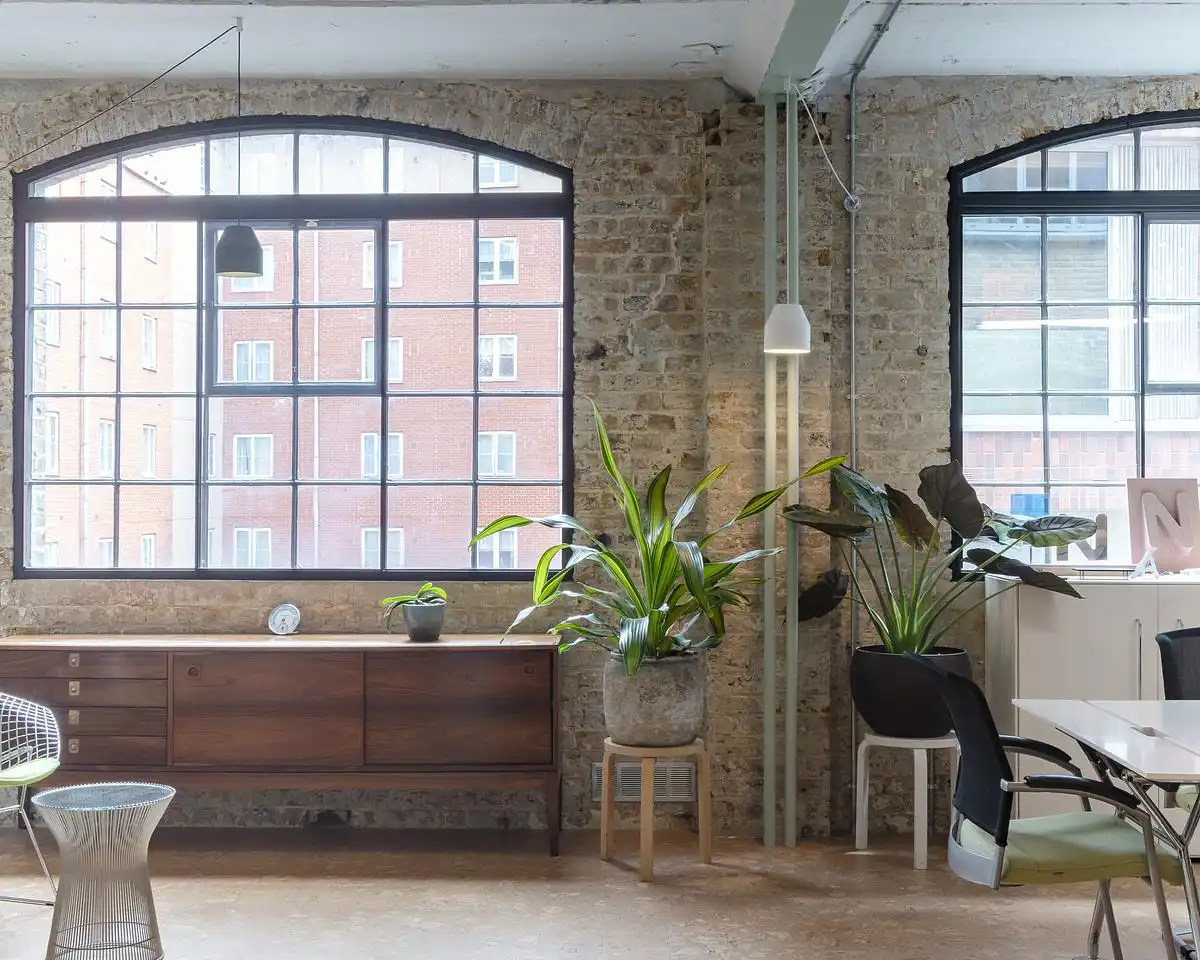
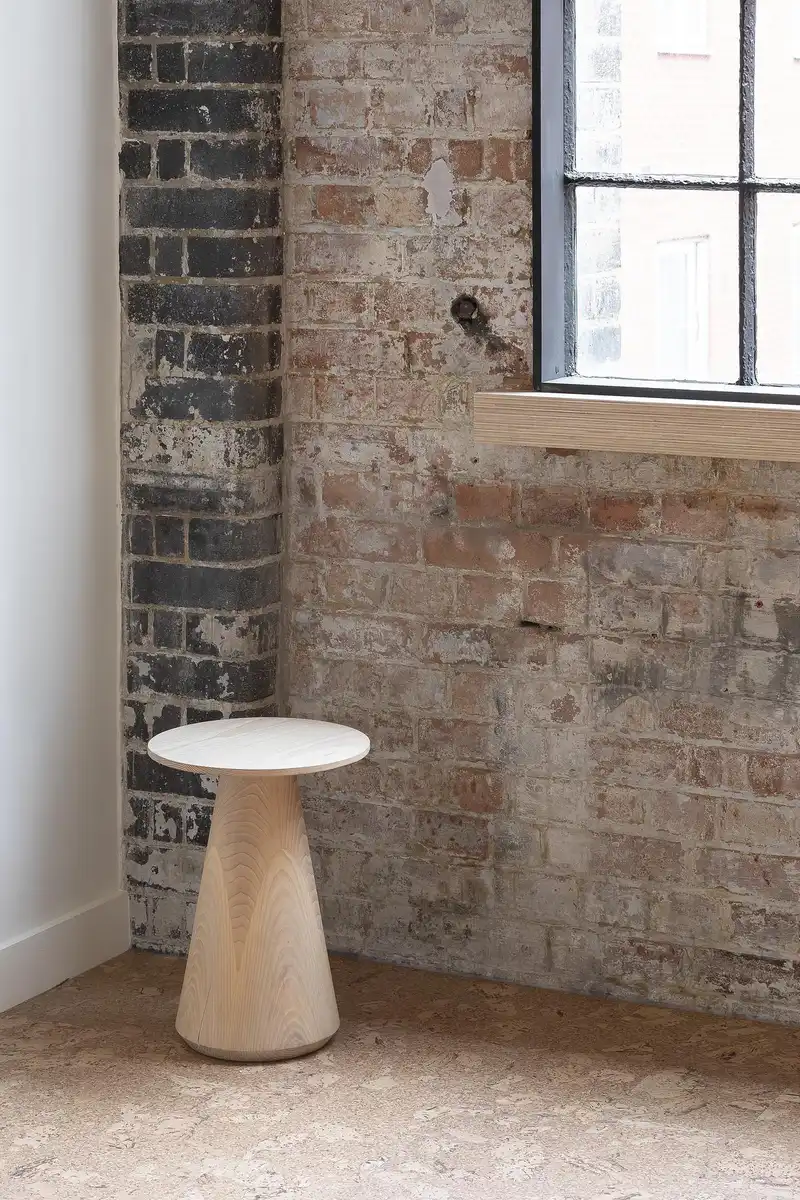
The refurbishment of Bell’s Yard reimagines a former industrial workspace as a calm, material-led studio—one that balances openness, flexibility and a quiet sense of warmth. The project began with a process of uncovering, stripping away the previous fit-out to reveal the raw fabric beneath: brick, concrete and steel, with all their texture and character intact.
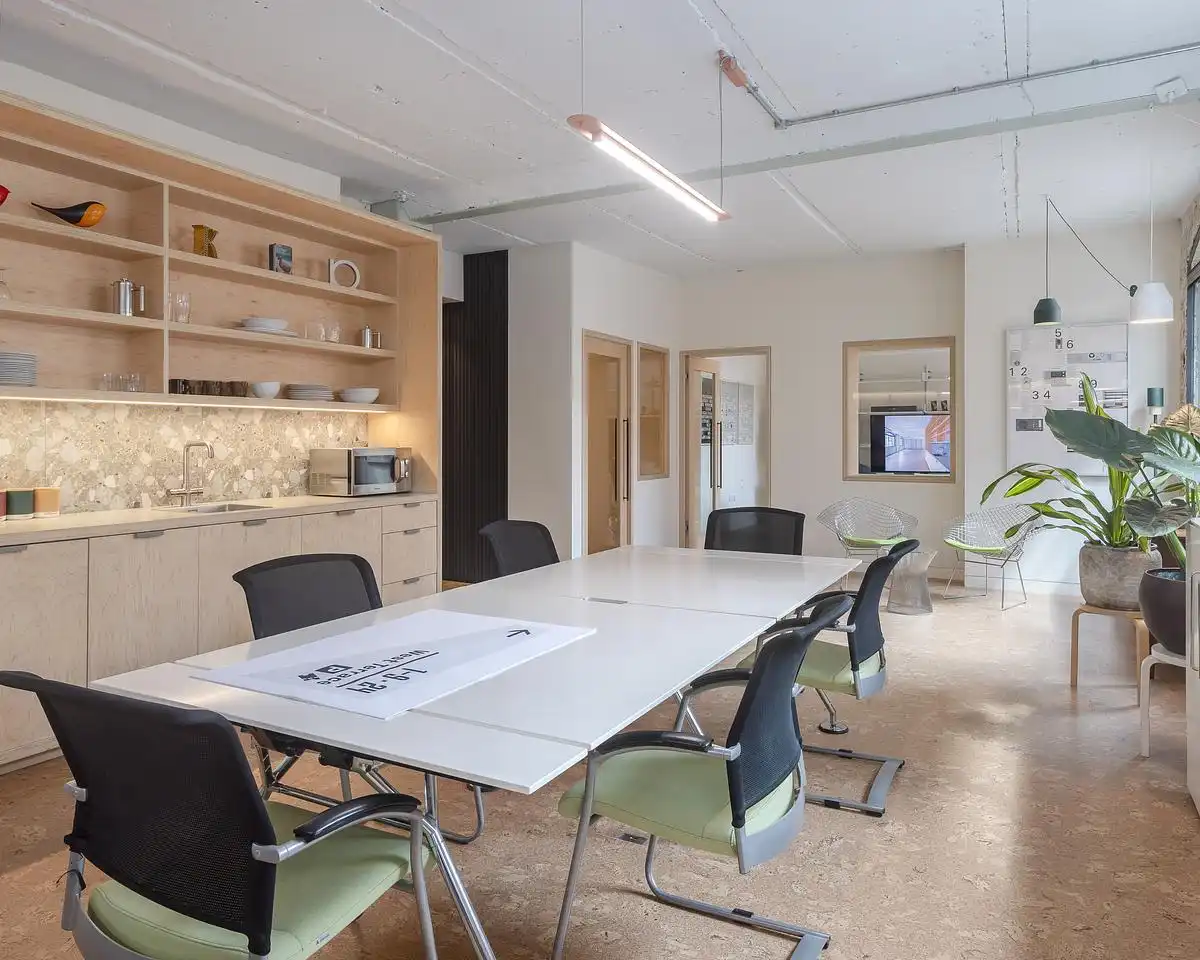
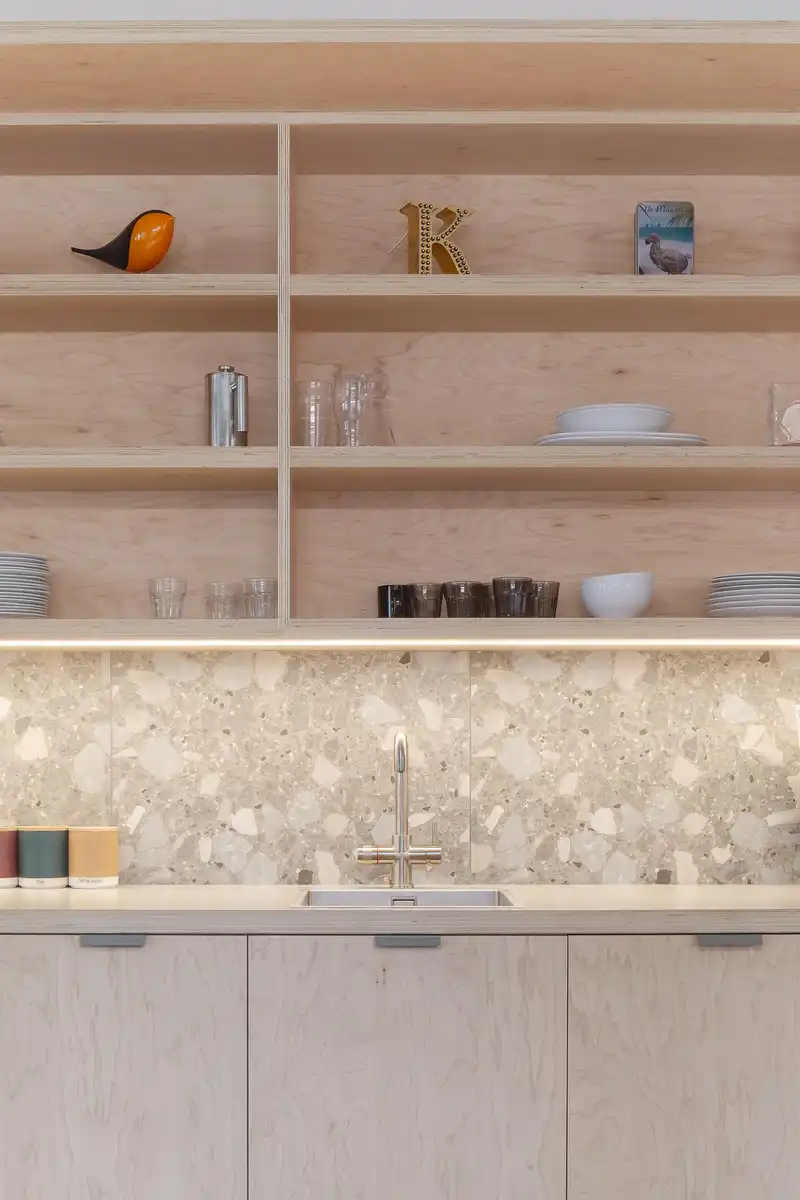
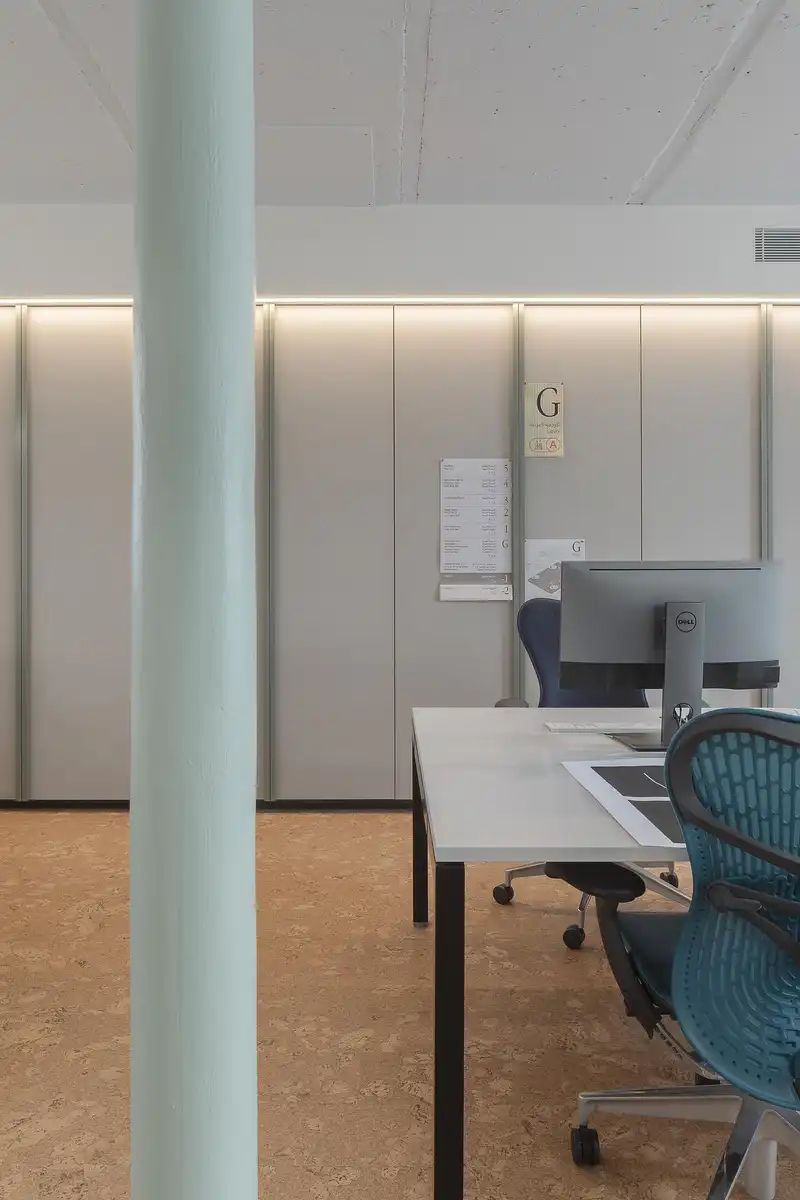
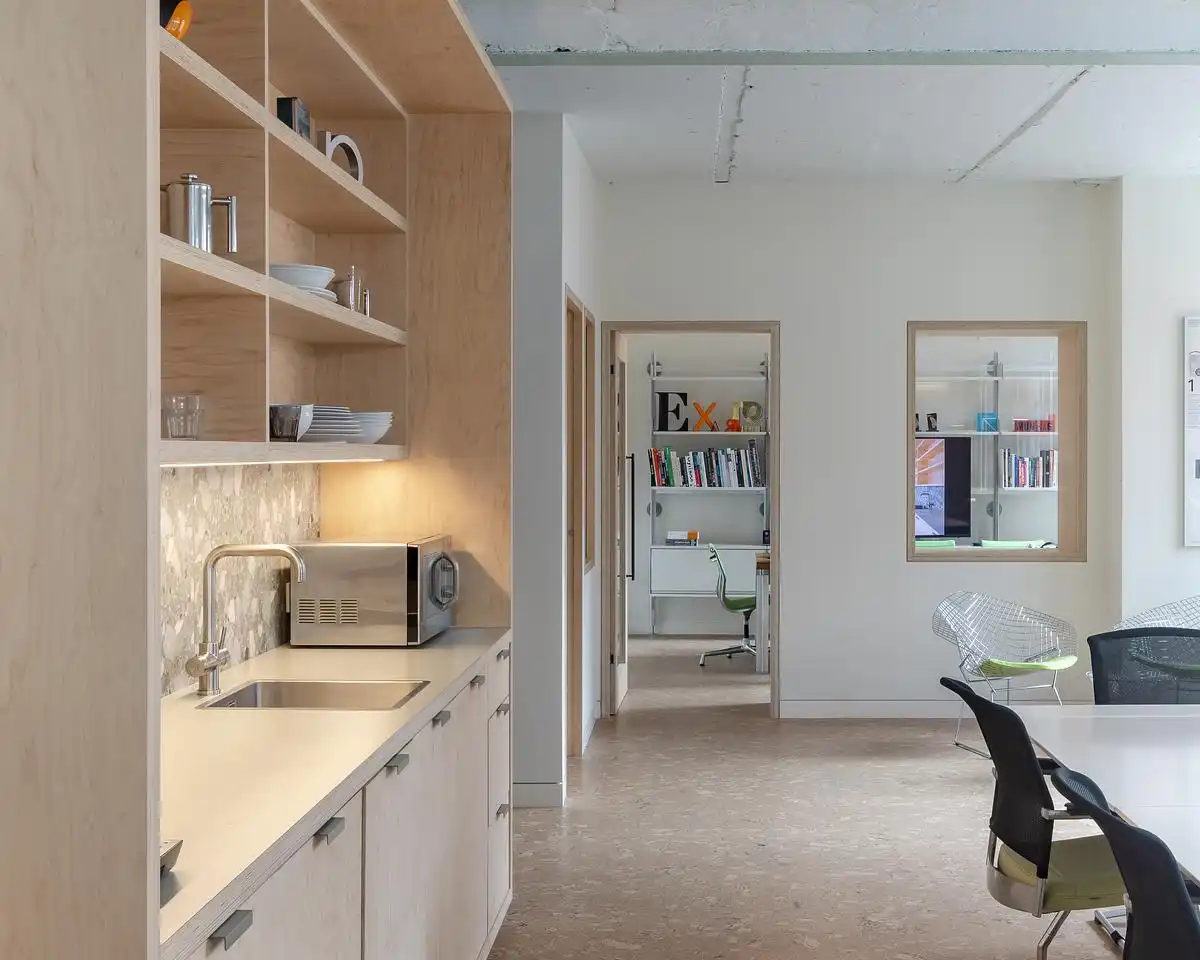
Rather than building over this, the design works with it. New elements are introduced lightly, using natural materials to soften the edges of the space. A continuous cork floor brings warmth underfoot and absorbs sound, allowing the studio to remain calm even as activity ebbs and flows. Timber joinery in pale plywood adds a layer of tactility and craft, shaping storage, kitchen and meeting rooms as part of a cohesive whole.
The plan remains open and adaptable, with a series of informal zones that support different ways of working. A large communal table sits at its heart—part workspace, part gathering point—while smaller areas offer quieter moments of focus. Enclosed meeting rooms are inserted with care, maintaining visual connections and a sense of shared space.
Developed in close collaboration with Endpoint and contractor Bryn Griffiths, the project is shaped as much by conversation as by construction—resulting in a studio that feels intuitive, flexible and easy to inhabit.
Given Bell’s Yard’s transformation from an industrial workspace, how did RUSSIAN FOR FISH balance preserving the ‘raw fabric’ with creating a ‘warm, flexible studio’? What was the overarching design philosophy guiding this refurbishment?
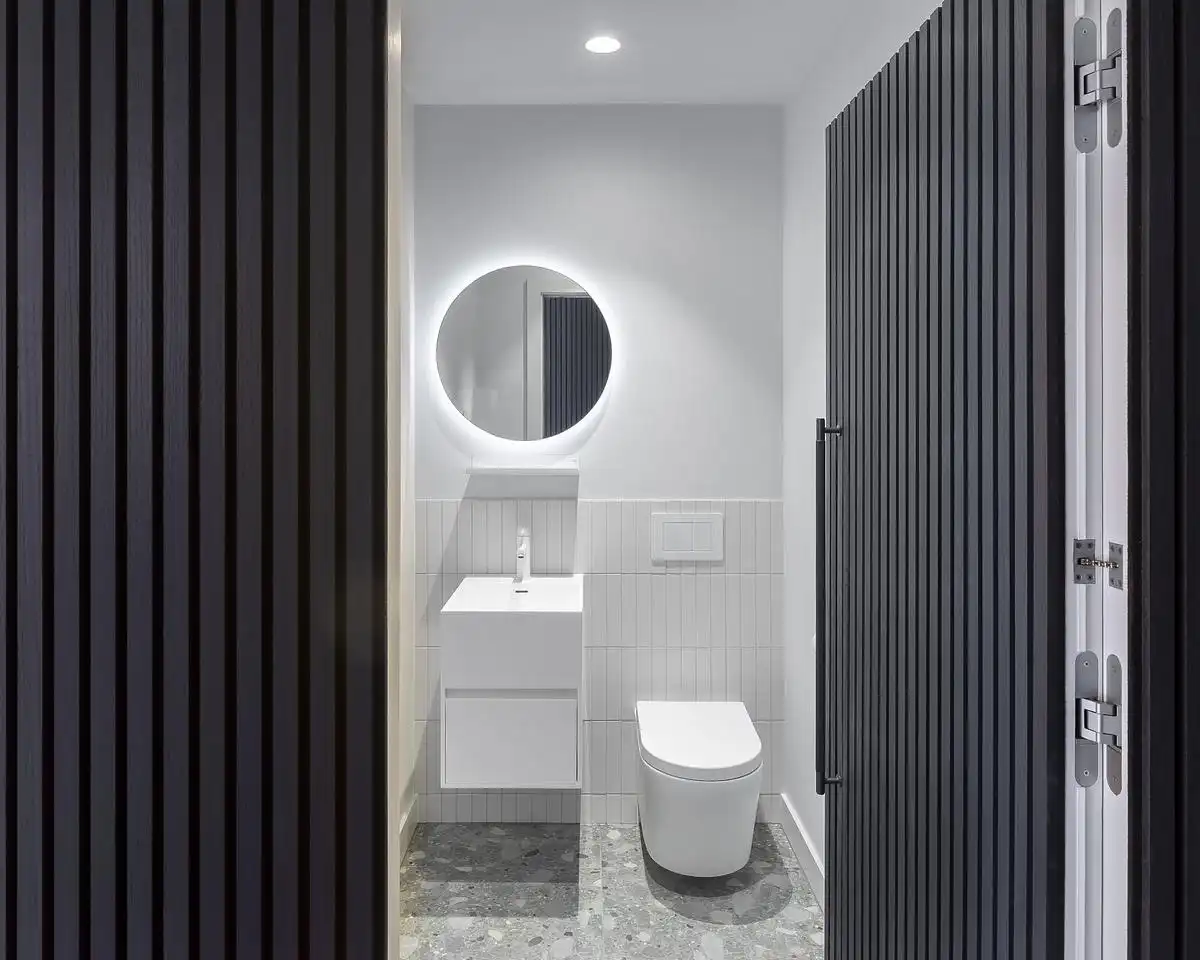
The approach to Bell’s Yard was rooted in recognising the inherent quality of the existing building fabric. Rather than concealing it, the project began with a process of subtraction—removing the previous fit-out, including plasterboard linings and suspended ceilings, to reveal the structure and material character beneath.
The aim was to preserve this ‘raw fabric’ wherever possible, allowing the space to retain its industrial identity. New interventions were introduced only where necessary, and with a focus on complementing rather than competing with the existing.
Warmth and flexibility were achieved through the careful layering of natural materials. Timber and cork were selected for their tactile qualities and acoustic performance, softening the space both visually and atmospherically. These materials help to mediate between the robustness of the exposed brick and concrete and the more domestic qualities required for a comfortable working environment.
Flexibility was addressed through a series of loosely defined zones rather than fixed partitions. Where enclosure was needed, such as for meeting rooms, these were crafted in plywood with internal windows to maintain long views and a sense of connection across the studio.
The overarching philosophy was one of restraint and respect—working with what was already there, and introducing just enough to support a warm, adaptable and collaborative workspace.
The description highlights the layering timber and cork. Could you elaborate on the specific choices of these materials and how they contribute to the desired ‘warm’ and flexible atmosphere, both aesthetically and functionally?
Timber and cork were chosen for their ability to introduce warmth without competing with the existing fabric. Against the backdrop of exposed brick, concrete and steel, these materials provide a softer, more tactile counterpoint—bringing a sense of balance to the space.
Cork, used as a continuous floor finish, plays both an aesthetic and functional role. Its natural variation and subtle tonal richness help to unify the plan, while its acoustic properties absorb sound and improve comfort in what is an otherwise hard, reverberant environment. Underfoot, it introduces a quiet softness that supports everyday use.
Timber, particularly in the form of birch plywood joinery and partitions, adds a layer of precision and craft. Its pale tone reflects light and keeps the space feeling open, while its grain brings a sense of warmth and familiarity. The use of timber also allows elements such as storage, kitchen and meeting rooms to read as part of a coherent language rather than as separate interventions.
Together, these materials help to mediate between the building’s industrial character and the needs of a contemporary workplace—creating an atmosphere that feels calm, warm and adaptable, while remaining honest to the original structure.

How does the flexible studio aspect manifest in the design of Bell’s Yard, and what considerations were made to ensure the space is highly adaptable and user-centric for its occupants?
Flexibility at Bell’s Yard is embedded in the way the space is used rather than how it is divided. The studio is organised as an open plan, with a series of informal zones that allow different modes of working to sit comfortably alongside one another.
A range of work settings are woven through the space—from larger shared tables to smaller, quieter spots for focused work or informal meetings. At its centre, a large communal table, imagined almost as a ‘dining table’, encourages gathering and shared activity, while more tucked-away areas offer moments of retreat.
Acoustic comfort is key to making this openness work. The cork floor softens the space significantly, absorbing sound so that conversations can happen in parallel without competing. This allows the studio to remain calm and usable, even when fully occupied.
Where privacy is needed, two meeting rooms are carefully inserted. Detailed in plywood with internal windows, they maintain long views and a visual connection across the space, reinforcing a sense of community even when working separately.
The result is a studio that feels intuitive and adaptable—supporting different rhythms of work, while remaining open, connected and easy to inhabit.
As the architect, what do you believe is the most impactful aspect of Bell’s Yard’s refurbishment, and how does this project reflect RUSSIAN FOR FISH’s broader approach to adaptive reuse and workspace design?
One of the most impactful aspects of Bell’s Yard is the way it brings together a shared understanding between client, contractor and architect. Working closely with Endpoint, whose own work sits within the design industry, there was a clear and informed brief from the outset. This was supported by an ongoing collaboration with contractor Bryn Griffiths, with whom we have a long-standing working relationship. This continuity allowed for a highly considered and well-resolved outcome.
Our role was to listen carefully and translate the functional needs of the studio into a spatial response that feels calm and intuitive. The workspace needed to accommodate fluctuations in occupancy and intensity—moments of focused work alongside periods of high activity, meetings and collaboration—without becoming overwhelming.
The resulting design prioritises clarity, flexibility and ease of use. Through an open plan, carefully balanced acoustics and a restrained material palette, the space is able to absorb these shifts in rhythm while maintaining a sense of calm.
This project reflects Russian For Fish’s broader approach to adaptive reuse and workplace design: working with the existing fabric, collaborating closely with clients and makers, and creating environments that are both practical and quietly expressive—supporting the everyday realities of how people work.
Design: Russian For Fish – www.russianforfish.com
Photography: Peter Landers
Bell’s Yard Office, Greater London, England images / information received 010526
Location: Greater London, England, UK
South London Home Designs
London Architecture Links – chronological list
Edwardian Home Renovation & Extension, Richmond, southwest London
Design: Footprint Architects
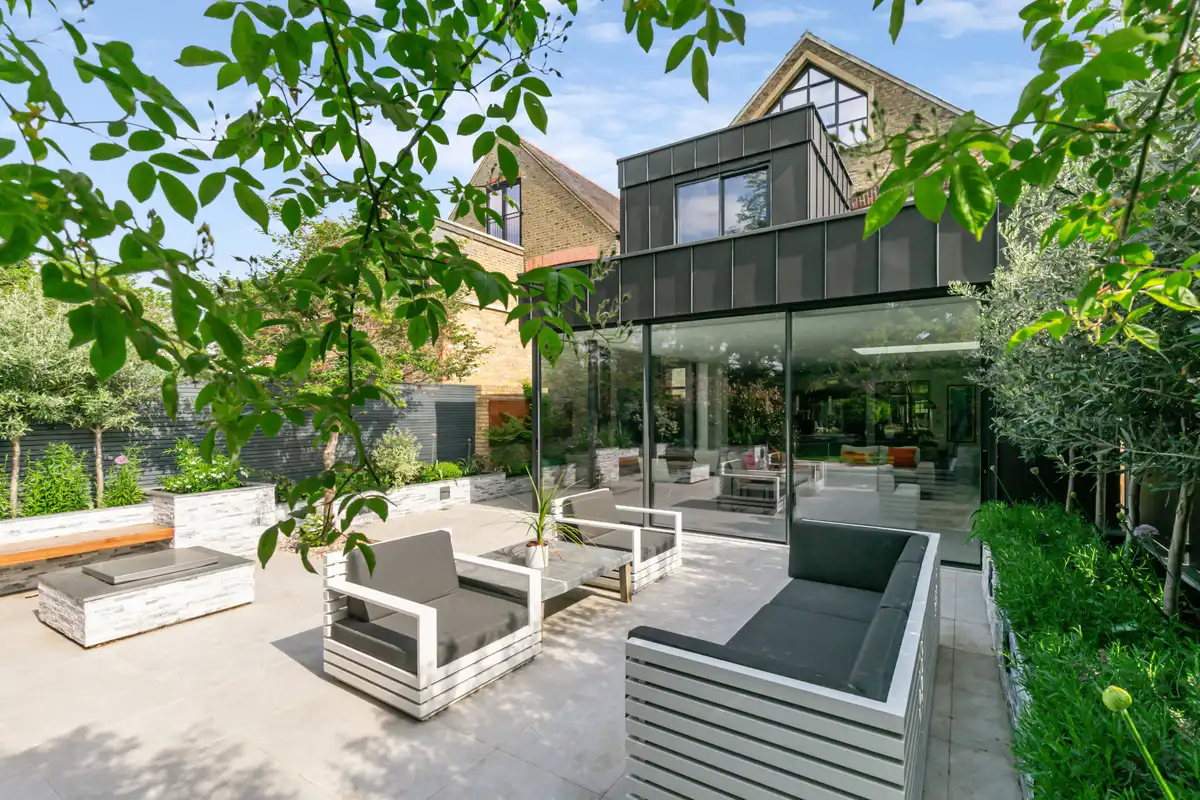
photo : Click Media Group
House31, Balham, Borough of Wandsworth
Architecture: Cox Architects
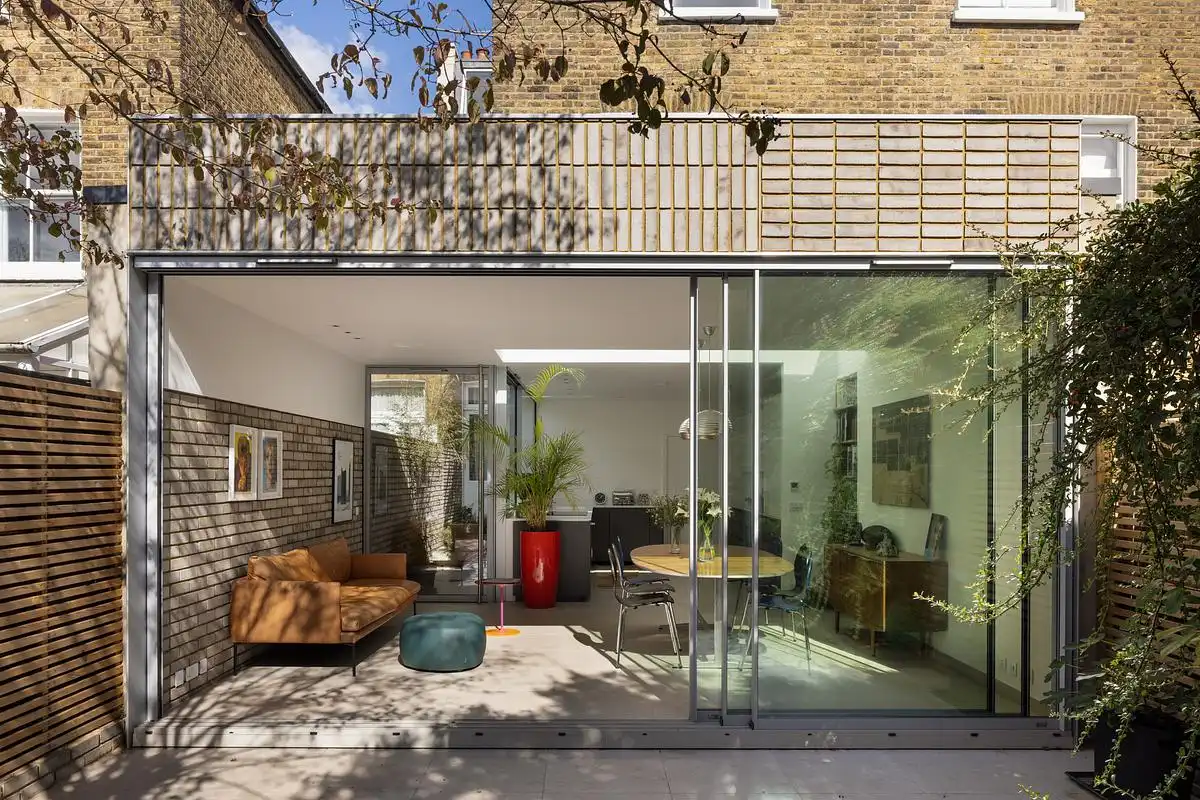
photo : Matt Clayton Photography
++
Architecture in London
London Architecture Walking Tours by e-architect
Comments / photos for the Bell’s Yard Office, Greater London, England building design by Russian For Fish, United Kingdom, page welcome.