MORE Office Renovation Beijing Langyuan Station
11 June 2026
Design: TAOA
Location: Langyuan Station, Beijing, China
Photos by Tao Lei
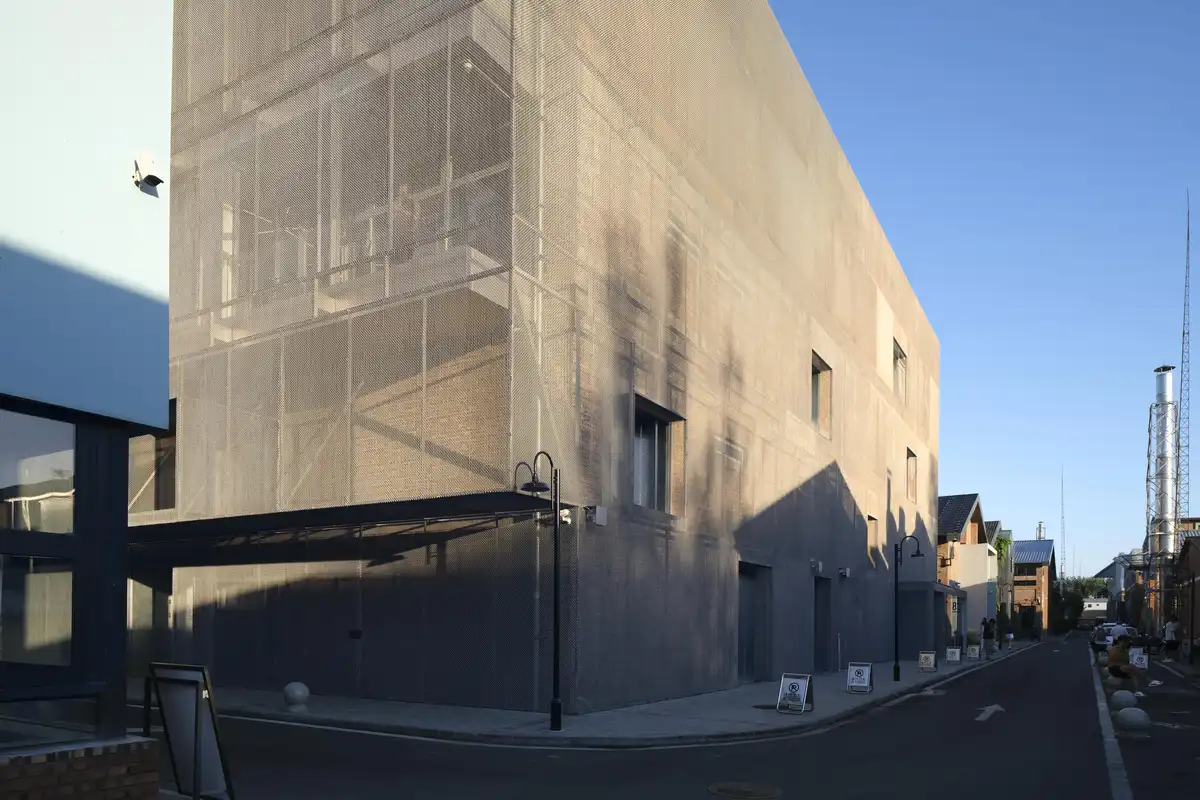
Langyuan Station was formerly a Beijing textile warehouse built in the 1960s. Transformed from an old industrial site, it has become a cultural and creative industry park where historical traces coexist with contemporary vitality. Today, the park is home to numerous companies in China’s film industry, as well as a wide range of emerging commercial brands and lifestyle venues.
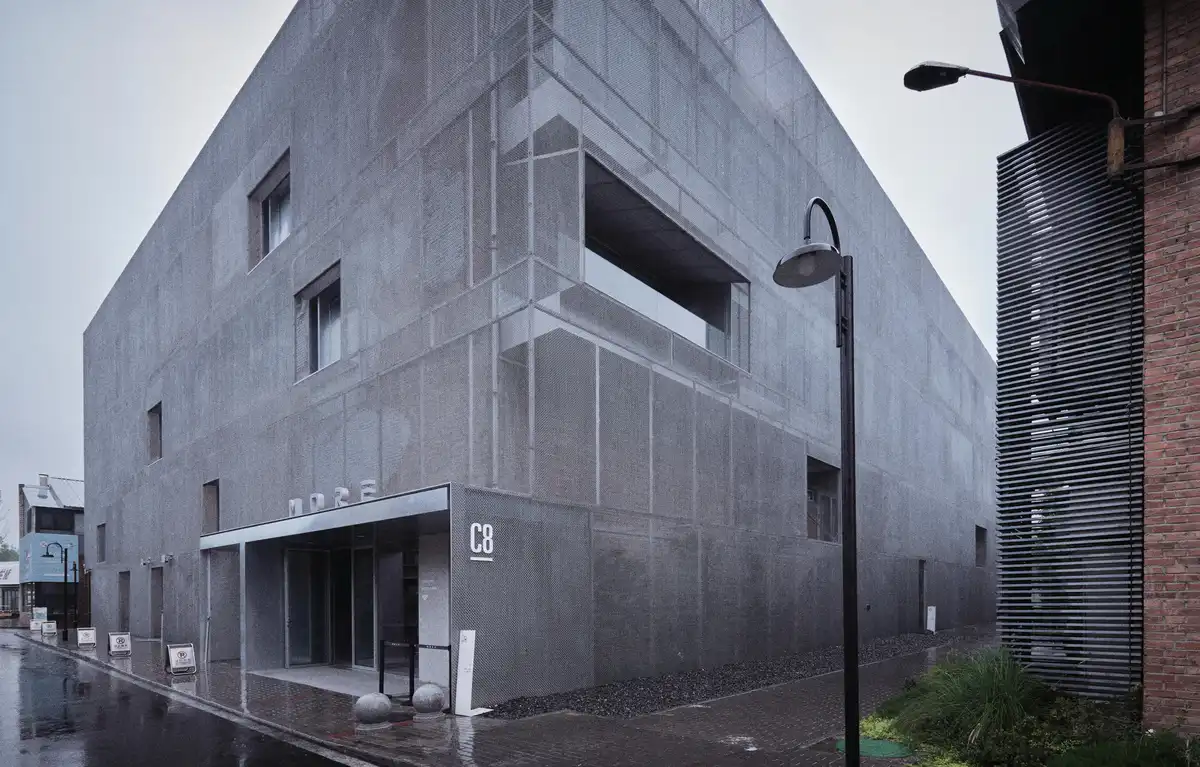
MORE, a well-known Chinese visual effects production company, selected an entire large red-brick warehouse within Langyuan Station as its new workplace in response to the company’s growth. The interior of the warehouse had already been converted by the park’s management into three standard floors with a steel-frame structure, while the original red-brick exterior walls were fully preserved. The red-brick envelope, deep-plan floor plates, dense column grid, and generous warehouse scale together formed the existing conditions to which this office building renovation had to respond.
Film production requires not only creativity but also an intense mode of work. As a creative company with approximately 400 employees, MORE’s primary goal was to provide its staff with a comfortable, pleasant, and intellectually free working environment. Another important principle of the project was to create a spatial experience rich in variation and spiritual quality within a relatively limited construction budget. The existing site conditions, the company’s particular mode of operation, and the search for appropriate low-cost materials became the three starting points of the design. These three factors were integrated into the space as mutually reinforcing conditions.
From the beginning, our focus was placed on how people work, encounter one another, and perceive time and place within the building. In the standard floor plates, defined by great depth and a dense column grid, the program was divided into two spatial types in order to achieve greater spatial freedom:
independent rooms and open spaces. Functions such as the cinema, motion-capture studio, meeting rooms, finance and administration offices, and restrooms were defined as independent rooms, while work areas, dining areas, and lounges were kept entirely open. The original boundaries of the floor plates were broken down, and the arrangement of functions no longer took the column grid as its primary reference, nor was it constrained by it.
The independent room boxes are formed in two ways: some are luminous boxes enclosed by polycarbonate panels, while others are simple timber boxes made of plywood and glass. These enclosed functions were first freely positioned in appropriate locations, leaving the remaining large areas as continuous open space.
Seen from a God’s-eye view, the spatial organization of the entire building resembles a firework in bloom: the vertical circulation of the atrium forms the core, while the independent rooms and surrounding workstations scatter outward like radiating sparks. As a whole, the project has a clear core and a complete spatial structure. From the individual’s perspective, however, the spatial experience is rich, diverse, and free, with a tension created by the layering of spaces. To better achieve this spatial layering, metal mesh with varying degrees of transparency became one of the primary materials. The translucency of this more industrial material defines different interfaces while preserving interaction between spaces, creating a series of spatial volumes that are tangible yet without rigid boundaries.
The spatial strategy of freely radiating outward from the center aims to maintain efficient internal communication while expressing flexibility and freedom. The alternation of different spatial forms organizes the everyday states of working and resting into an ordered mixture.
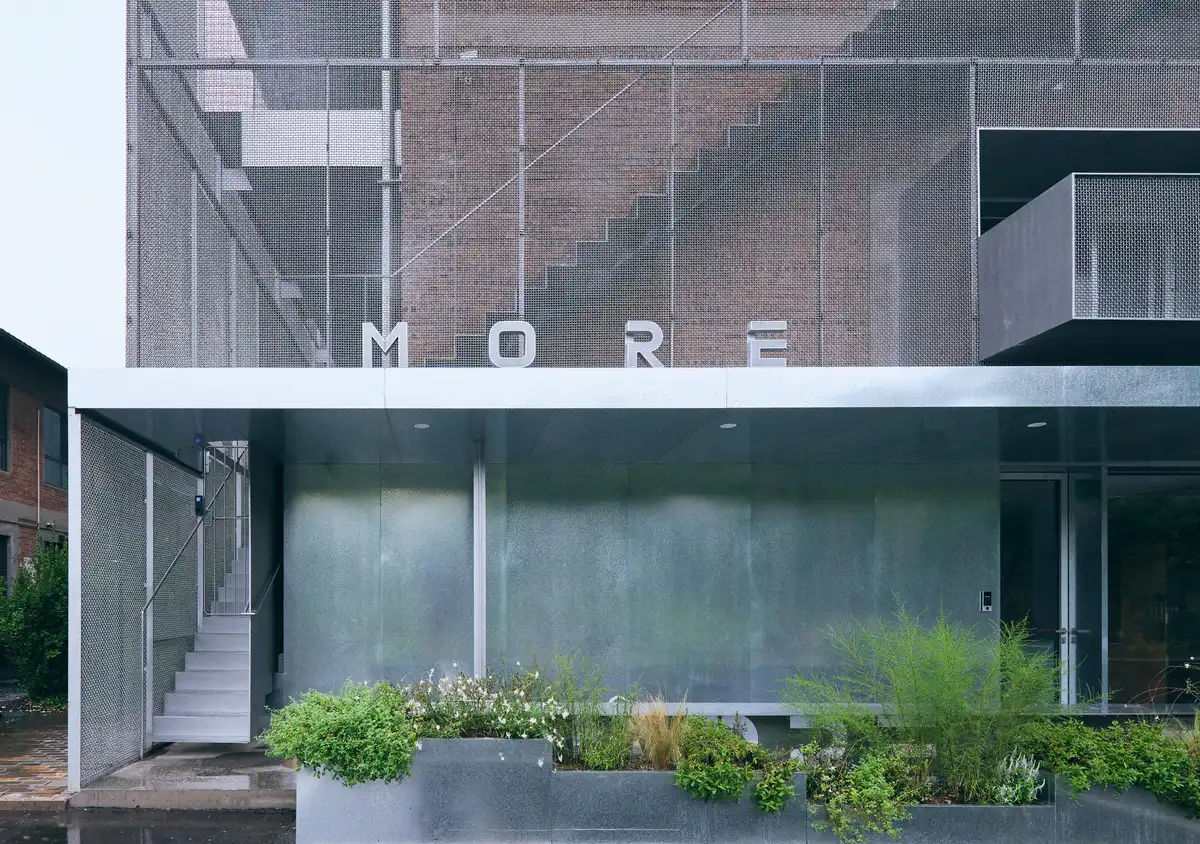
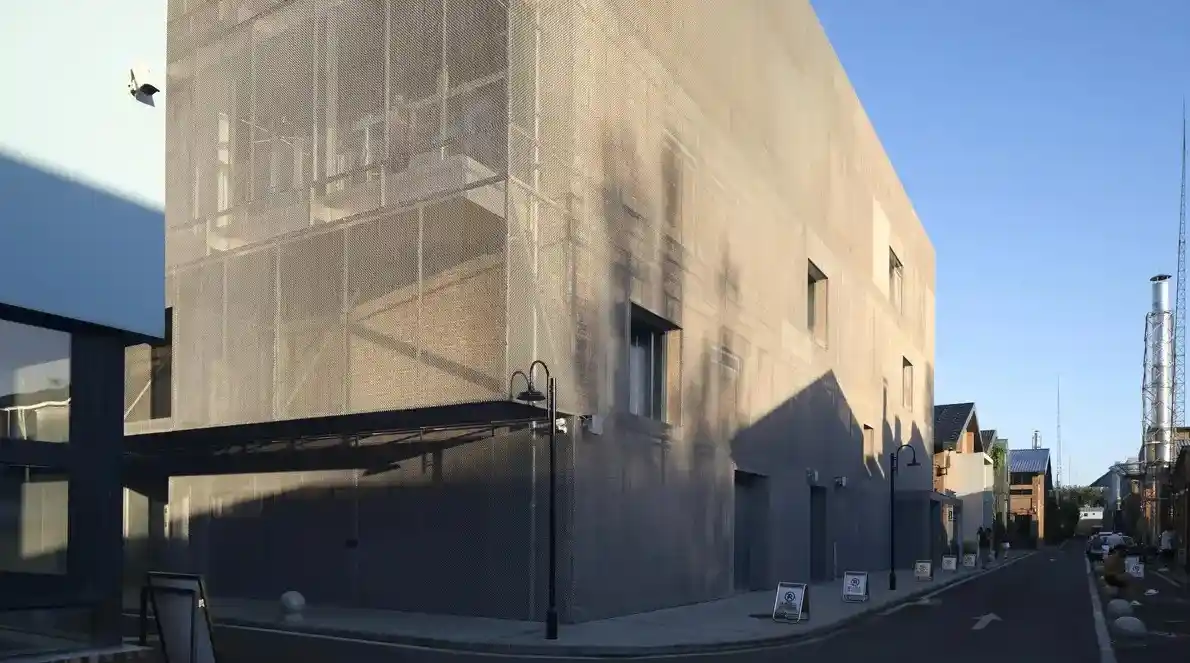
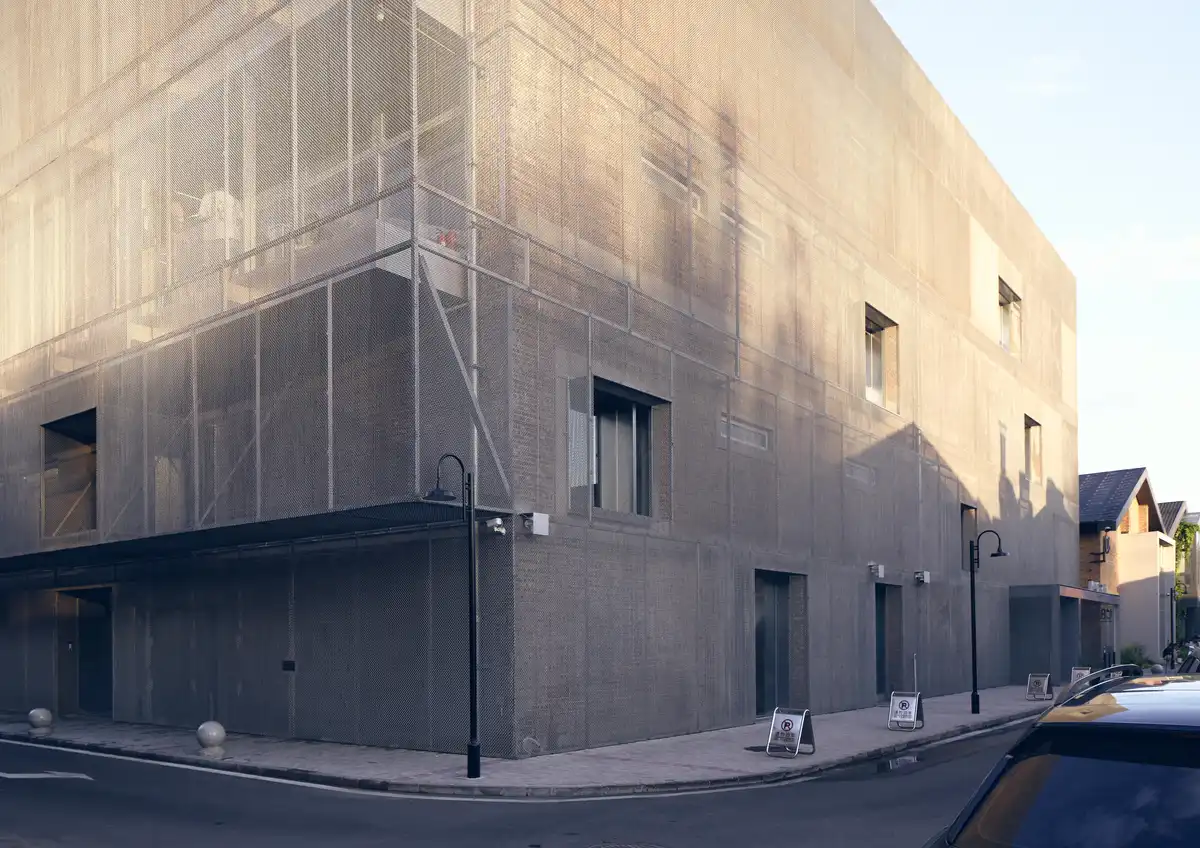
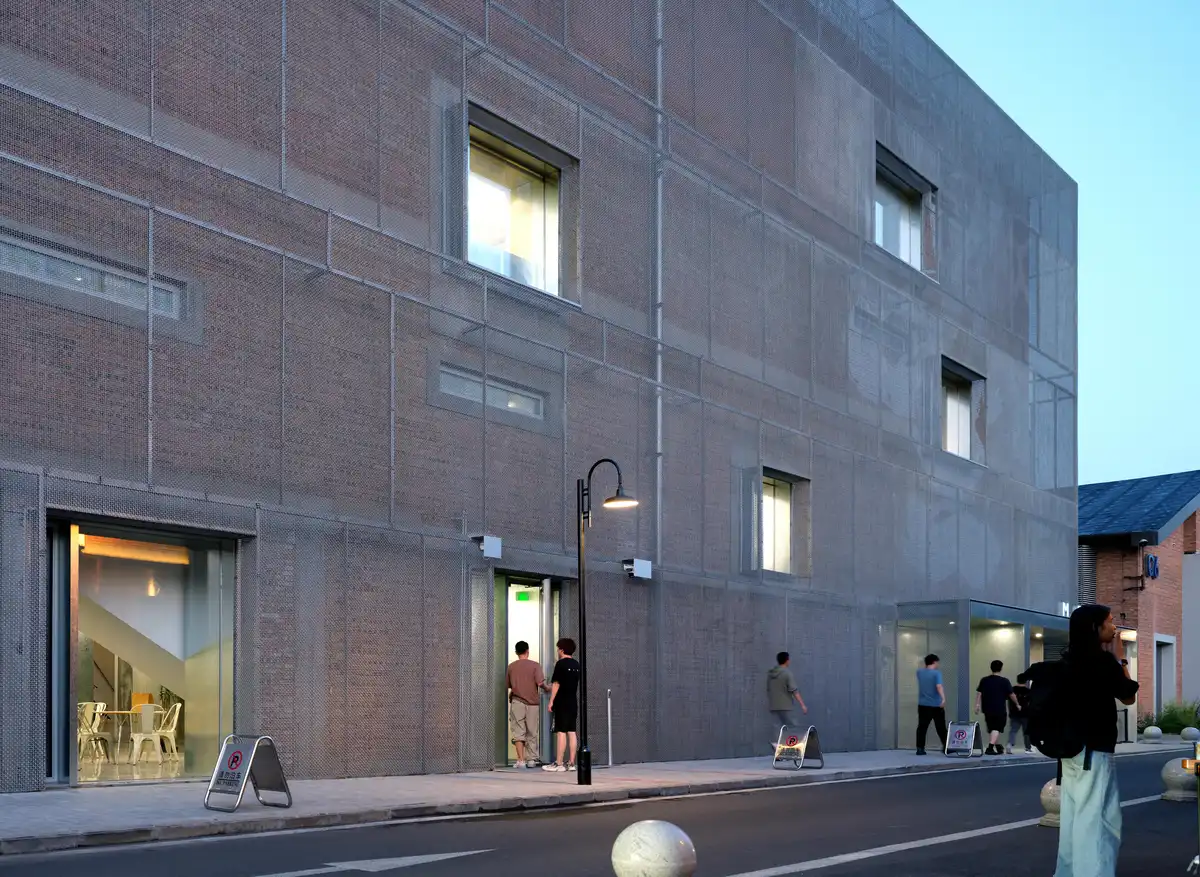
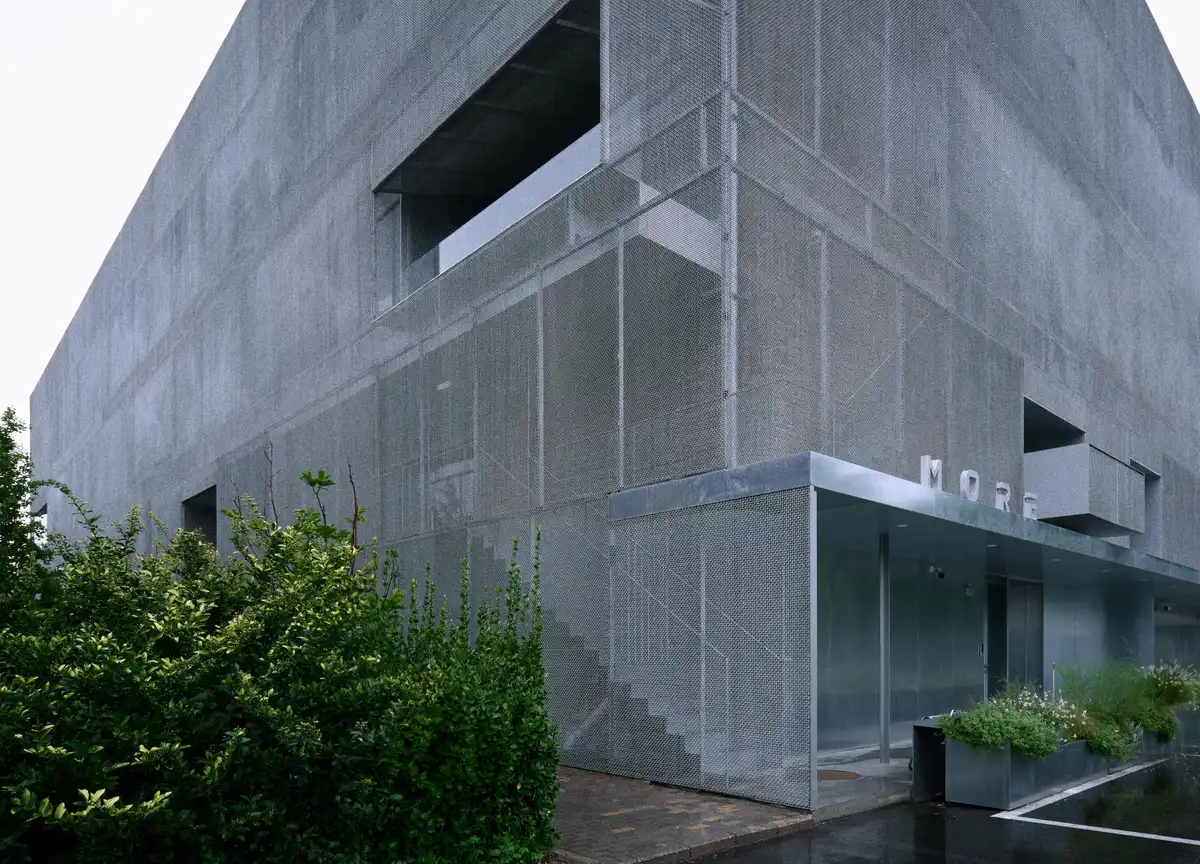
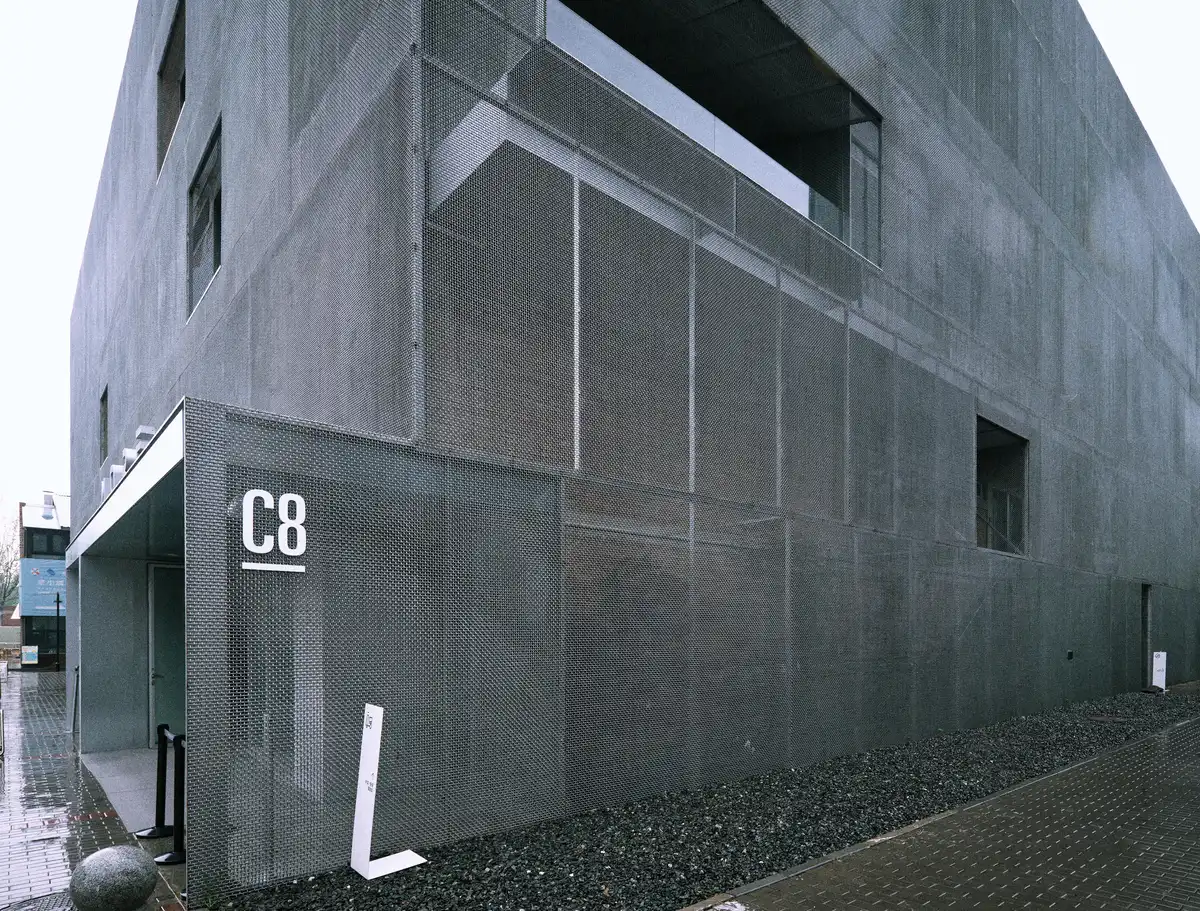
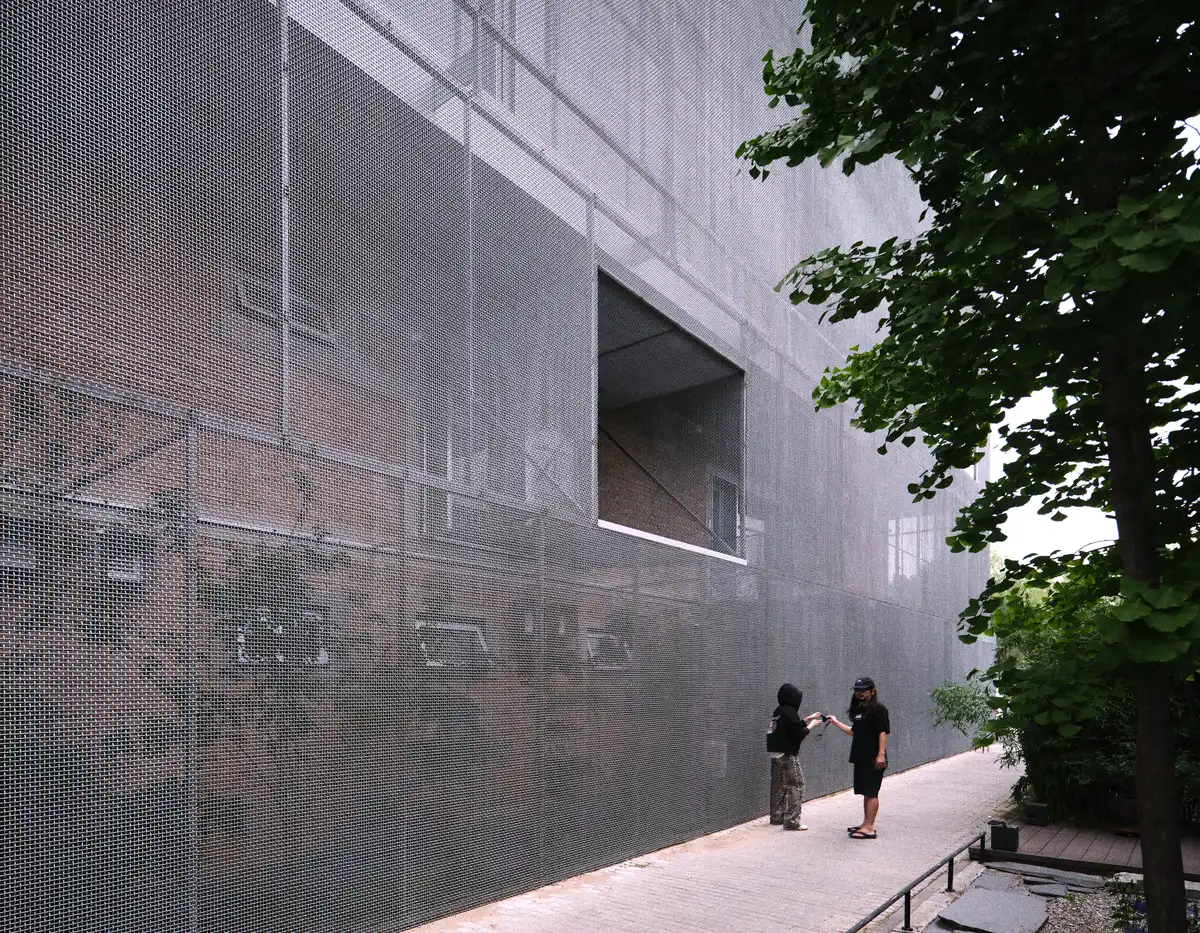
The red-brick exterior wall is part of the building’s history, preserving the traces of time. In response to the needs of the interior space, new openings were moderately introduced into the original brick walls. In order for the building to retain an authentic memory of time while acquiring new meaning, the brick walls and glass windows were together wrapped by a layer of industrial metal mesh. Between the metal mesh and the red brick, an interstitial space was formed, accommodating planting and outdoor fire stairs.
The metal mesh creates a softened boundary for this layer and gives the building a contour that is both real and illusory. Its reality comes from its response to function and construction: the original brick walls, newly inserted glass windows, outdoor fire stairs, and planted interstitial zone are integrated into a single exterior layer. Its illusory quality comes from the semi-transparency and woven character of the metal mesh itself. At different times of day, from different angles and distances, the building’s transparency, light and shadow, and silhouette all shift. Behind the seemingly complete and powerful metallic form, the original red-brick walls, stairs, and greenery remain faintly visible.
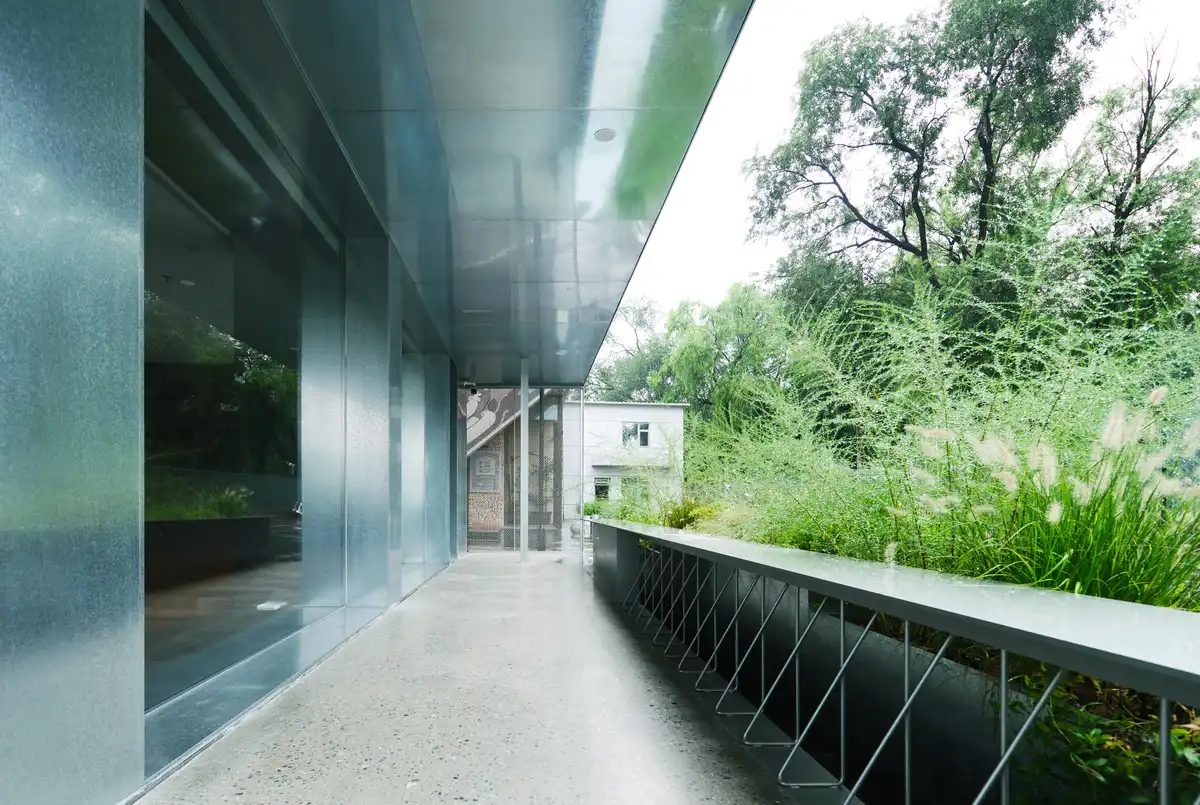
We hoped that the red brick of the old factory would not appear merely as a preserved backdrop, nor be completely covered by a new skin. Instead, together with the metal mesh, glass, stairs, and planting, it re-enters the everyday use of the building. Movement, daylighting, ventilation, and exterior perception all take place within this interstitial layer. Industrial remains and contemporary use, historical traces and daily activity, are thus superimposed. The building’s exterior form is no longer simply the direct envelope of the interior space, but the result of the combined action of function, structure, and traces of time, forming a coherent yet richly varied expression between old and new.
This renovation of an industrial relic does not attempt to affirm the value of the old building through a contrast between old and new, nor does it turn history into a symbol to be viewed. Rather, we hope to allow the building to re-enter time and continue to be used within it. The value of the old factory ultimately returns to the specific site, structure, materials, light, and human activities. Only when red brick, column grid, metal mesh, skylight, staircases, and everyday work establish new relationships can the past be more than merely preserved; within a clear spatial organization, it continues to accommodate an open, fluid, and free mode of working life. This also responds to the particular identity of the art district, where industrial remains and fashion, history and contemporaneity overlap. Between old and new, the project seeks a self-consistent architectural expression.
Renewing an industrial relic and creating a relaxed, fashionable, yet historically grounded atmosphere is an attempt at urban regeneration and cultural upgrading.
MORE Office Renovation Beijing Langyuan Station, China – Building Information
Project Information:
Project Name: MORE Office Renovation
Project Type: Renovation, Office, Architecture, Interior
Design Scope: Architecture, Interior, Landscape, Soft Furnishing
Design Firm: TAOA
Company Website: www.i-taoa.com
Official WeChat Account: TAOA
Xiaohongshu (RED) Account: TAOA陶磊建筑
Instagram: taoarchitecture
Design Year: 2024
Completion Year: 2025
Design Team:
- Principal Architect: Tao Lei
- Full Design Team: Tao Lei, Chen Zhen, Cui Xiang, Tao Ye, Sun Lang, Zhang Mengying, Zhang Xiaohuan, Wang Shuchen, Jiang Linlin (Intern)
Project Location: Langyuan Station, Chaoyang District, Beijing, China
Site Area: 2,102㎡
Building Area: 5,565㎡
Photography Copyright: Tao Lei
Written Content: Tao Lei
Construction Documents for Architecture, Façade, and Interior Finishes: TAOA Team (Chen Zhen, Cui Xiang, Tao Ye, Sun Lang, Zhang Mengying, Zhang Xiaohuan, Wang Shuchen)
Collaborators:
- Structure: Zhang Xuanlin, Li Yi
- Lighting: TAOA Team
- Construction: Sixiangyingzao
Client: MORE
Client Contact: Chen Xiangzheng
Materials:
Woven metal mesh, snow-pattern galvanized panels, PC sunlight panels (polycarbonate panels), aluminum mesh, micro-perforated metal panels, steel panels, aluminum panels, PVC woven flooring, multilayer plywood
MORE Office Renovation Beijing Langyuan Station, China images / information received 110626
Location: Langyuan Station, Beijing, People’s Republic of China, Eastern Asia.
Architecture in Beijing
Beijing Architecture Designs – chronological list
Beijing Architecture Designs – recent selection on e-architect:
Tiffany Façade Beijing
Architects: MVRDV
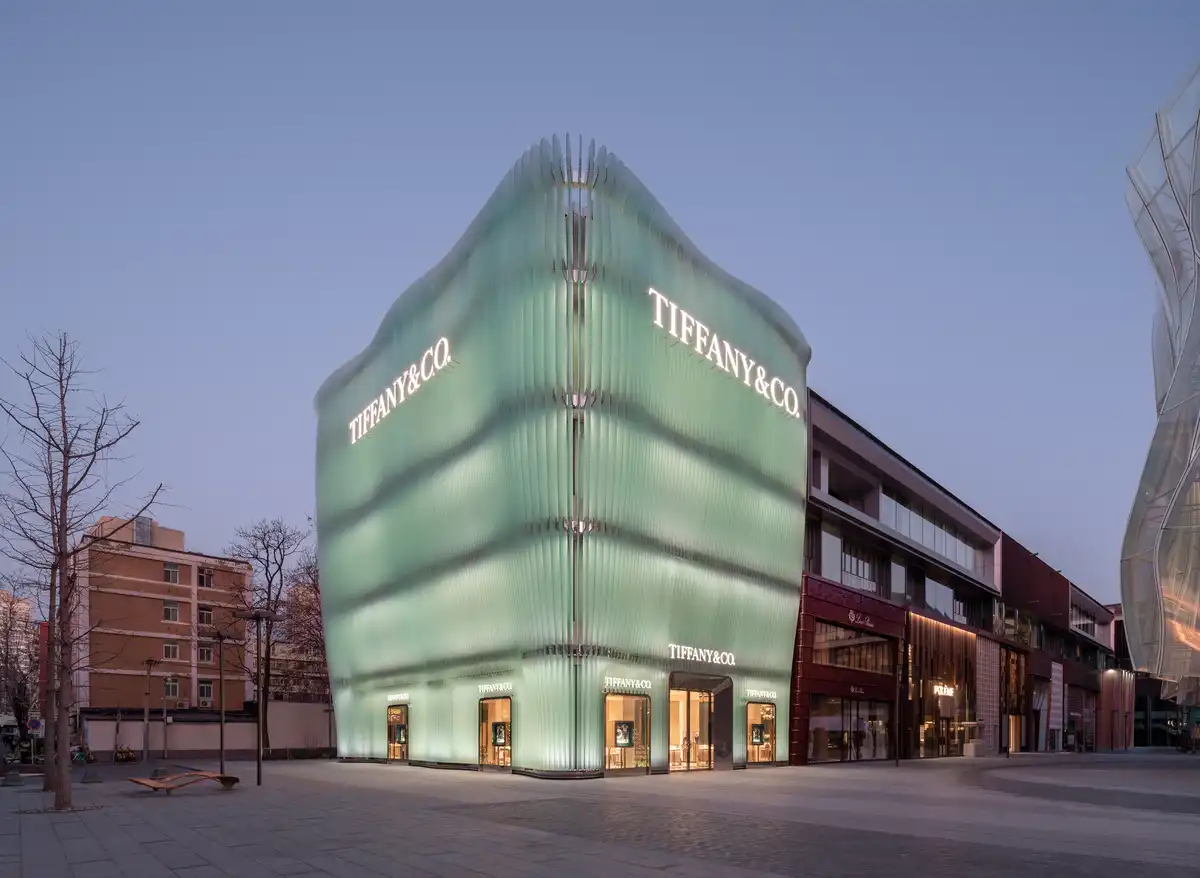
photo © Tiffany & Co.
Capital International Exhibition & Convention Centre
Design: Zaha Hadid Architects
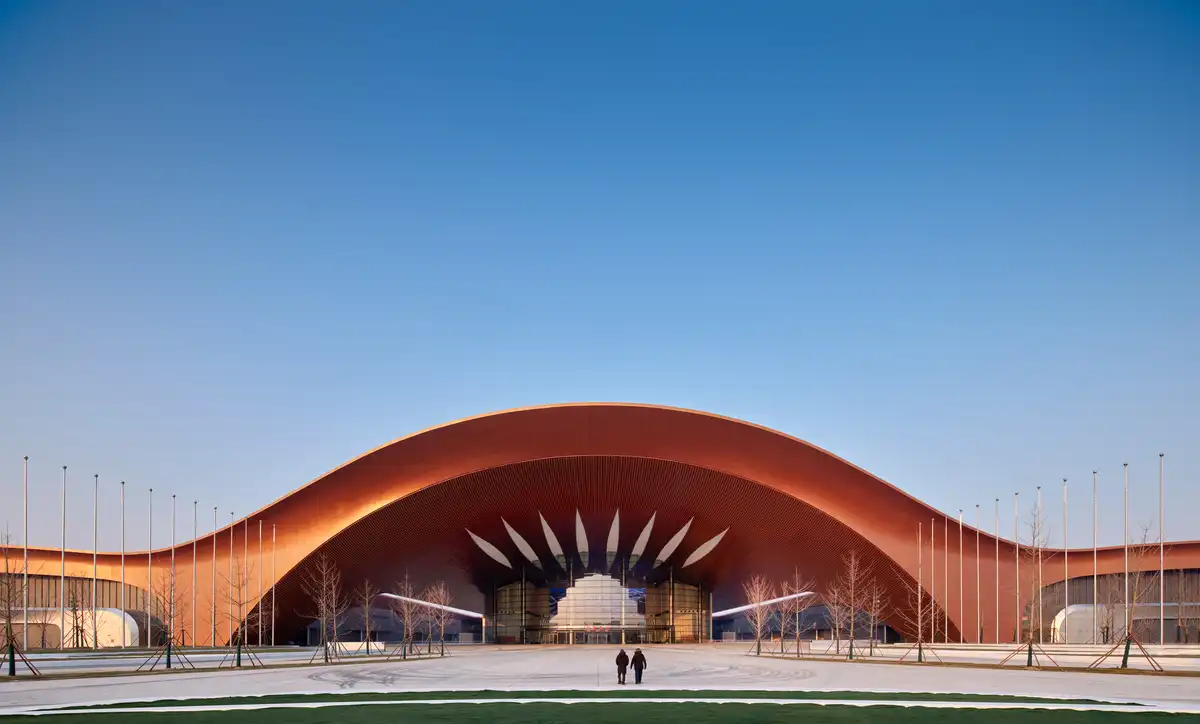
photo : Virgile Simon Bertrand
Sub-Centre Library
Design: Snøhetta
++
China Architectural Designs
China Architecture Designs – chronological list
Comments / photos for the MORE Office Renovation Beijing Langyuan Station, China designed by page welcome.