Spatial Renewal and Exhibition Design for Shanghai Automobile Museum
15 June 2026
Architects: SLT Design
Location: Jiading, Shanghai, China
Photos: Ingallery
Realm of Evolution
Spatial Renewal and Exhibition Design for the Technology Gallery, Shanghai Automobile Museum
When automotive technology enters spatial narrative, history, the present, and the future converge within a shared time and space.
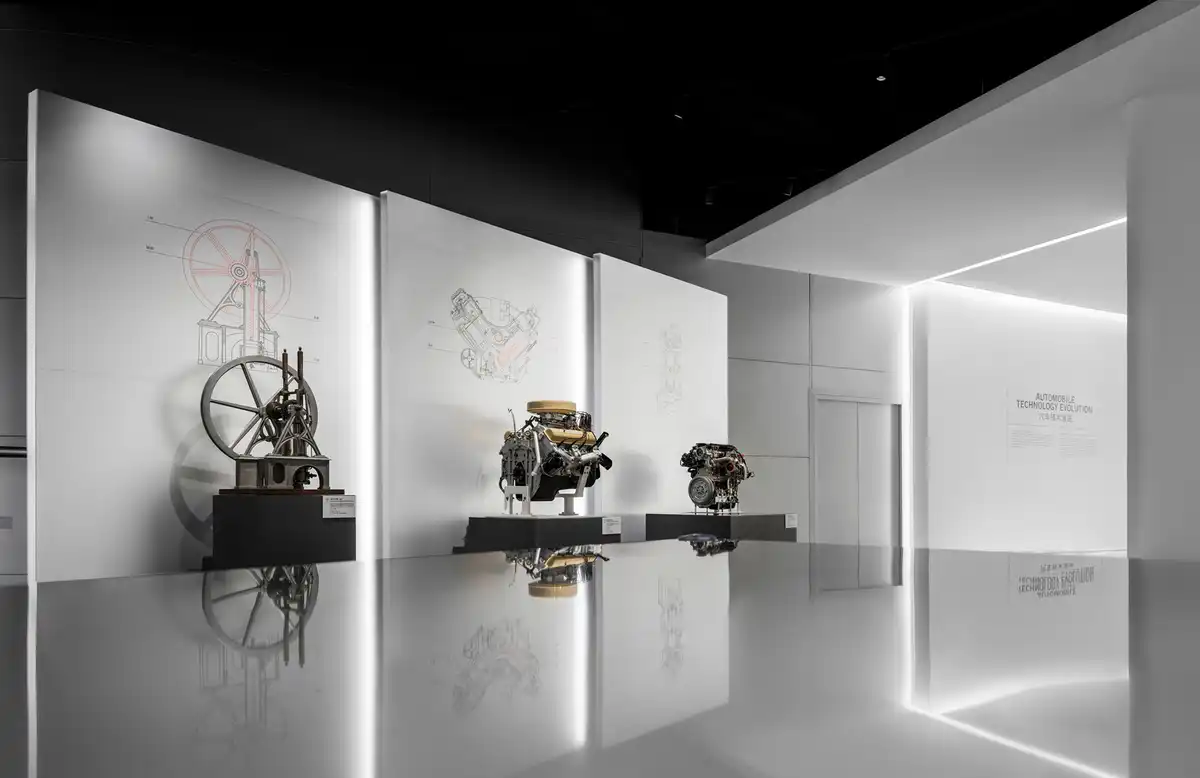
Located in Jiading, Shanghai Automobile Museum is China’s first professional automobile museum. For its third-floor Technology Gallery, SLT Design developed an integrated spatial and exhibition system under the theme “Realm of Evolution,” presenting the future trajectories of the automotive industry through scenario-based storytelling.
Covering approximately 2,450 square metres, the design scope includes spatial planning, graphic standards, and a manual for the iterative renewal of branded exhibits. With polygonal and geometric elements as its visual foundation, the gallery constructs five thematic experience zones that combine temporal logic with immersive engagement.
The project proposes a multidimensional view of time and space, where each technological node relates to both the past and the future. From steam and combustion engines to electric power and hydrogen energy, technological evolution is never purely linear. The design moves beyond chronology to construct a three-dimensional field where visitors sense the tensions embedded in technological progress.
Here, space becomes the field force of technological narrative, rather than merely a container for exhibits.
Development
The Vertical Axis of Technological History
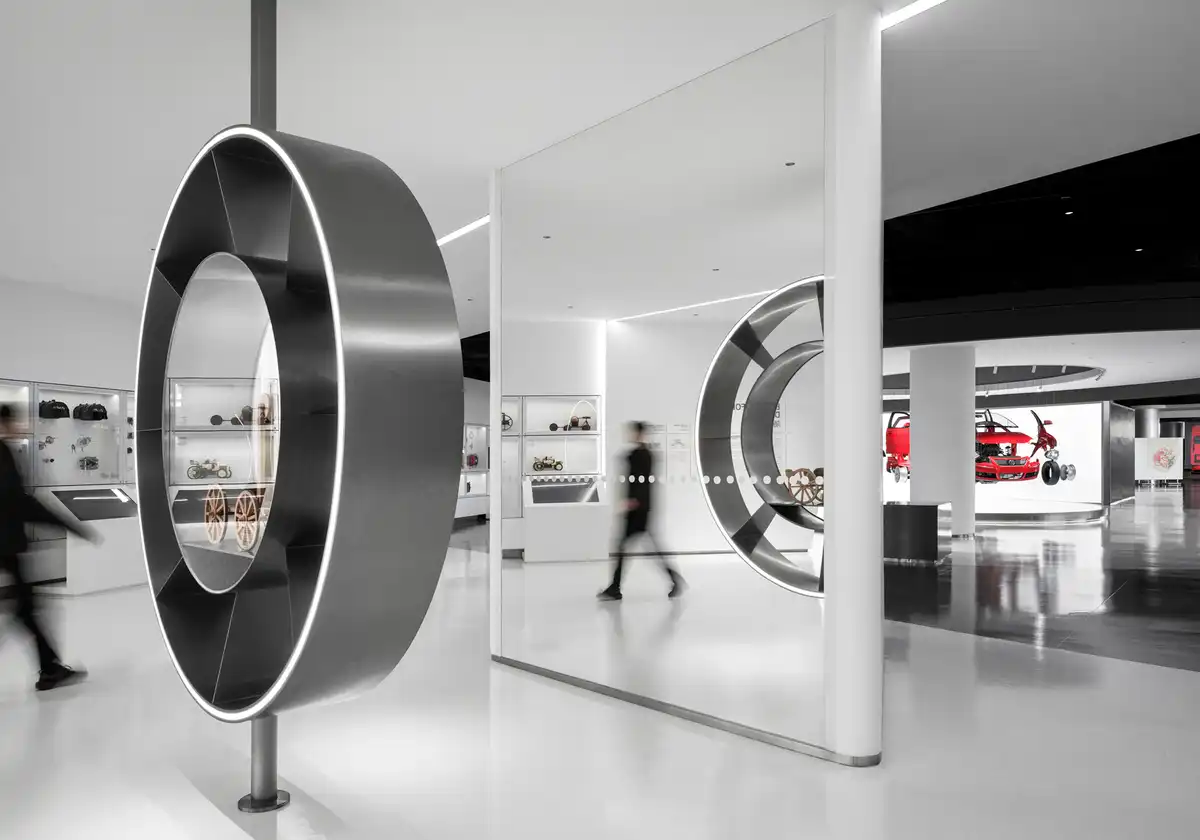
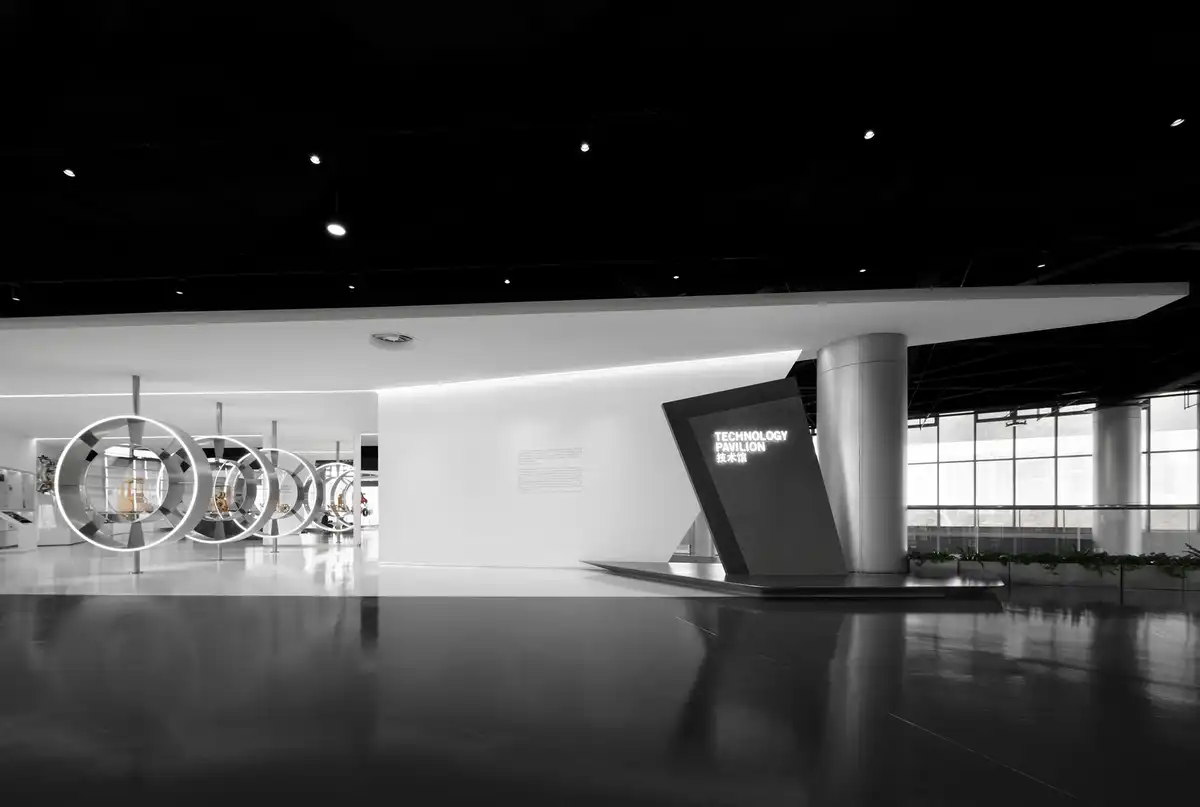
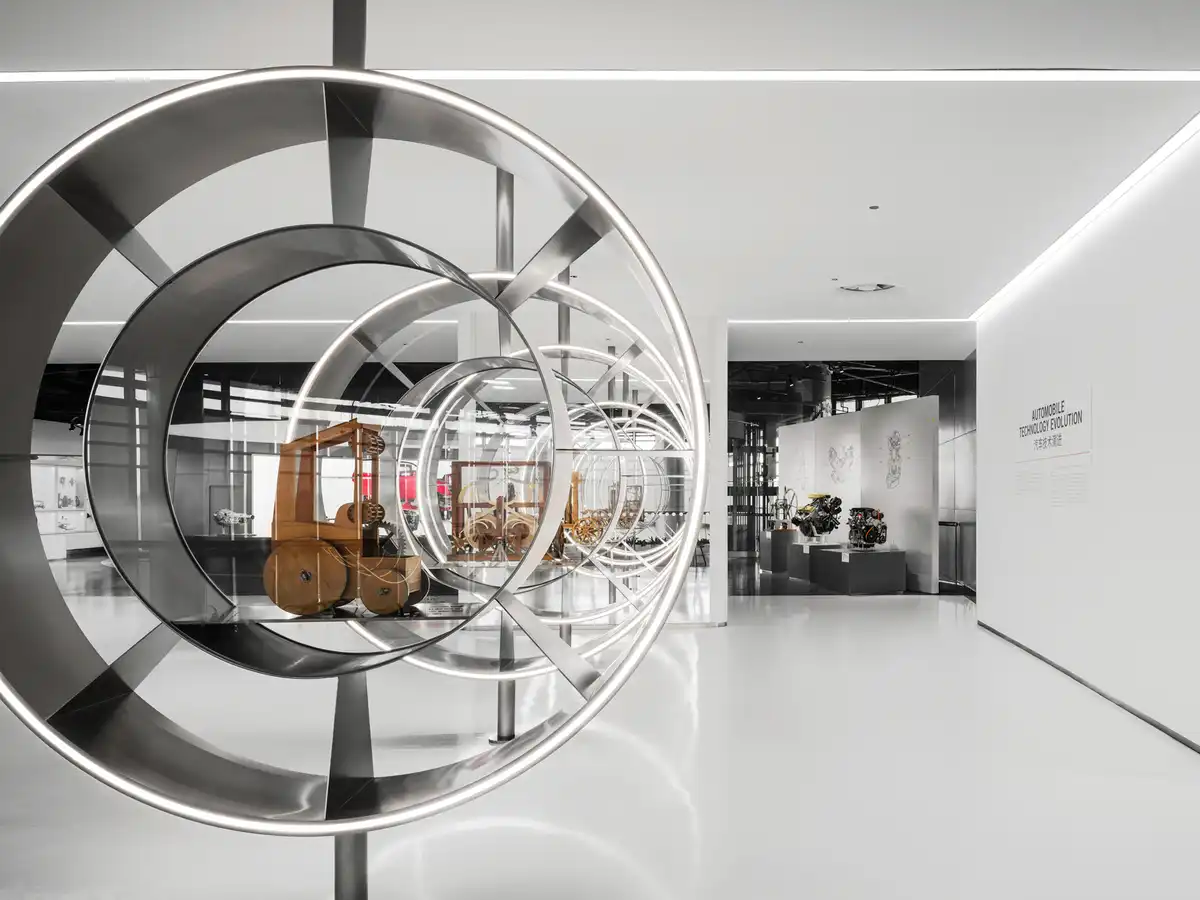
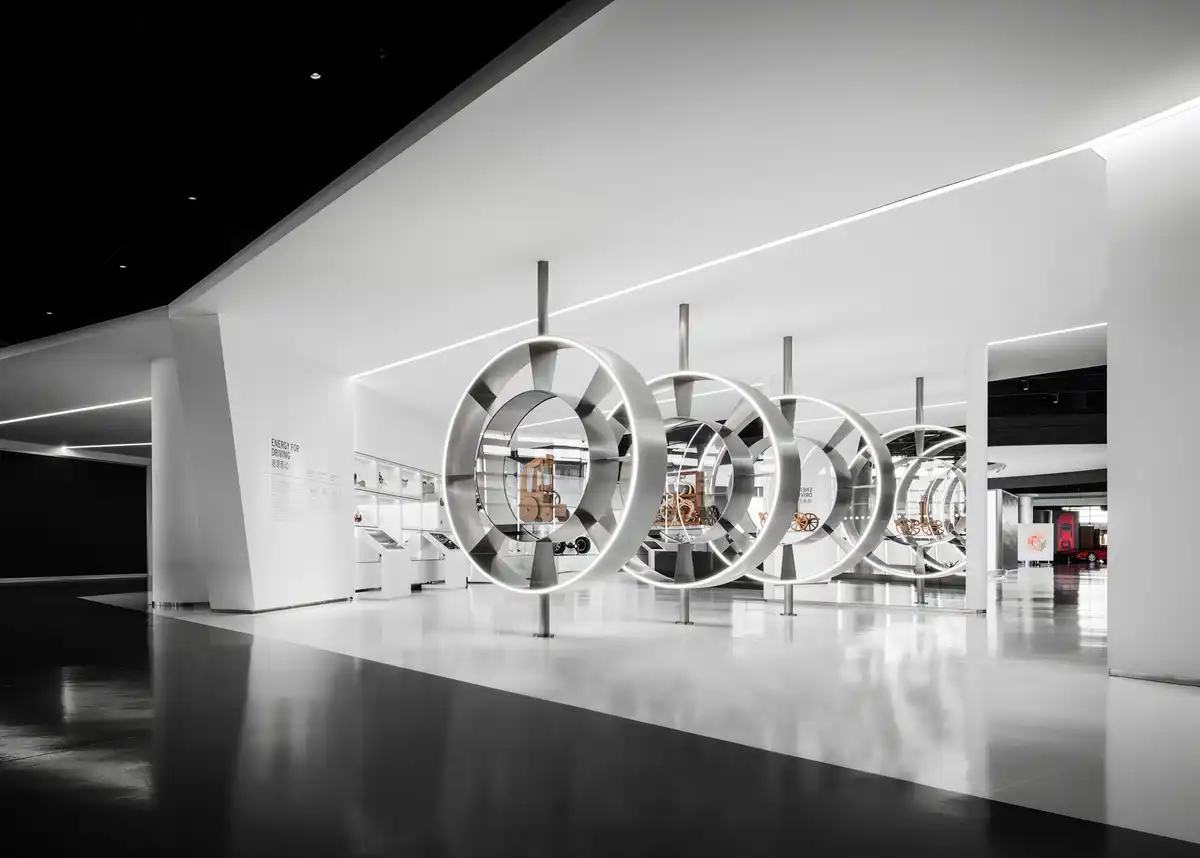
At the entrance, a shift in materiality marks the beginning of an experiential journey. Mirrored stainless-steel rings and circular light bands overlap with one another. Each ring suggests the closed loop of an era, while together they generate forward momentum.
Connection
A Relational Network of Contemporary Technology
The exhibition takes the relationships between technologies as its curatorial structure. Interactive installations for autonomous-driving perception and V2X vehicle-road coordination help non-specialist visitors understand future mobility as an organic system, rather than a collection of isolated devices.
Evolution
An Open Boundary for Future Imagination
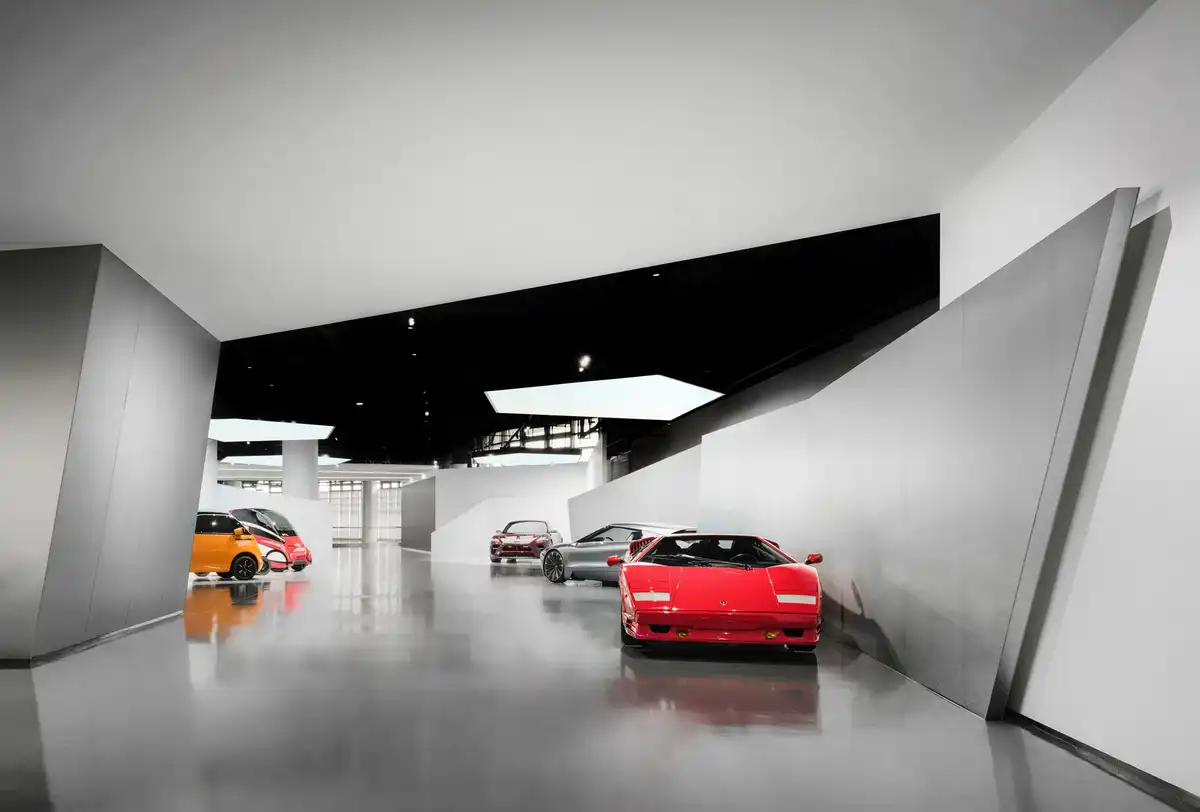
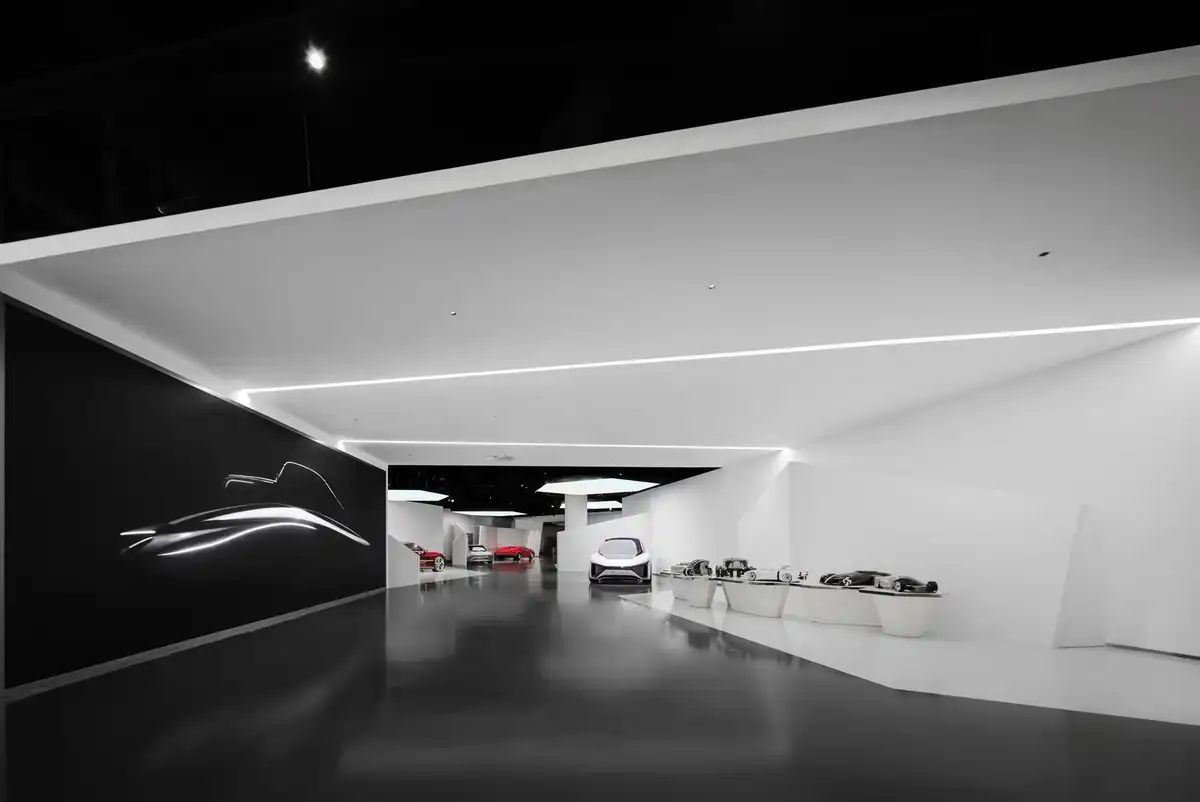
Polygonal display platforms are arranged as “concept islands,” contrasting with the circular language of the historical zone. Full-height folded walls extend the field of vision, while the floor remains deliberately open, leaving room for deeper collaboration with automotive brands.
Guided by the idea of evolution, temporal logic connects the entire spatial experience. History, the present, and the future become a perceptible trajectory of progression. The core task of the design is to align spatial order, exhibit relationships, information hierarchy, and functional integration around this narrative thread.
Time as Spatial Sequence
Time becomes the internal order that structures the spatial experience. As visitors move along the route, shifts in scale, rhythm, and scene draw them into the technological narrative, linking the zones beyond independent thematic areas.
Exhibits as Architecture
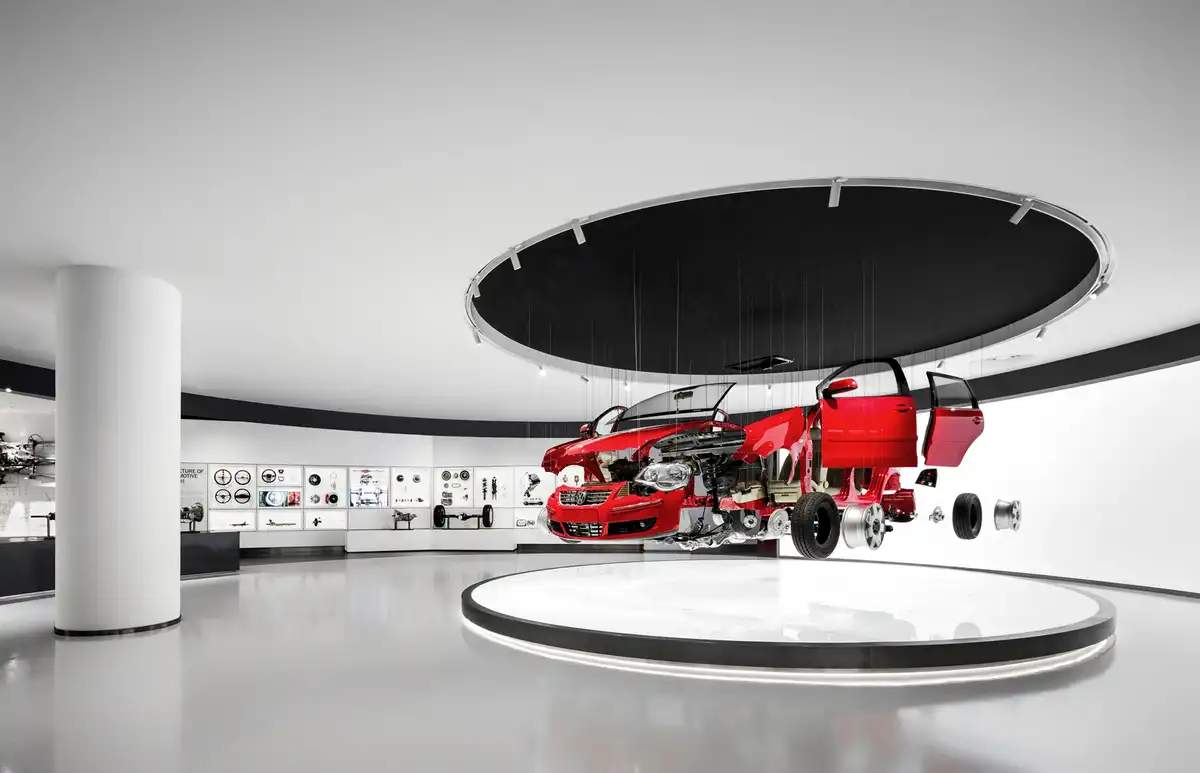
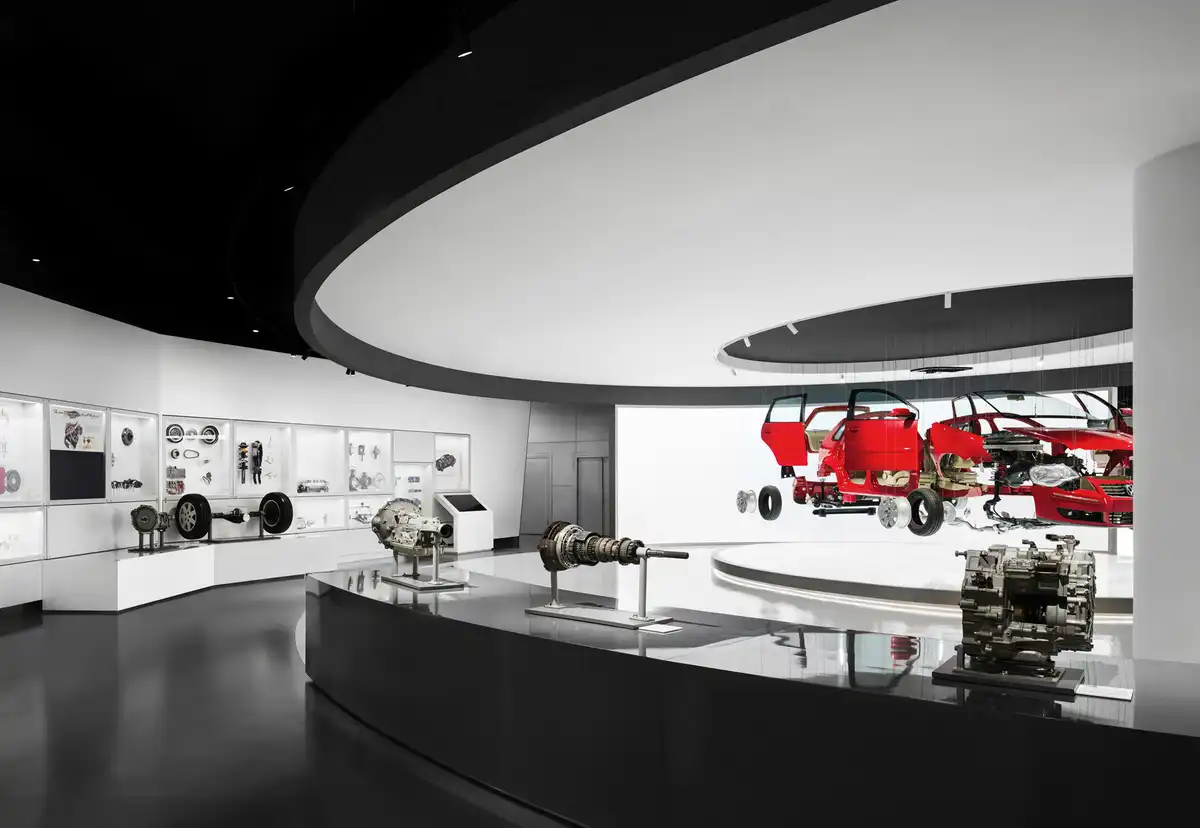
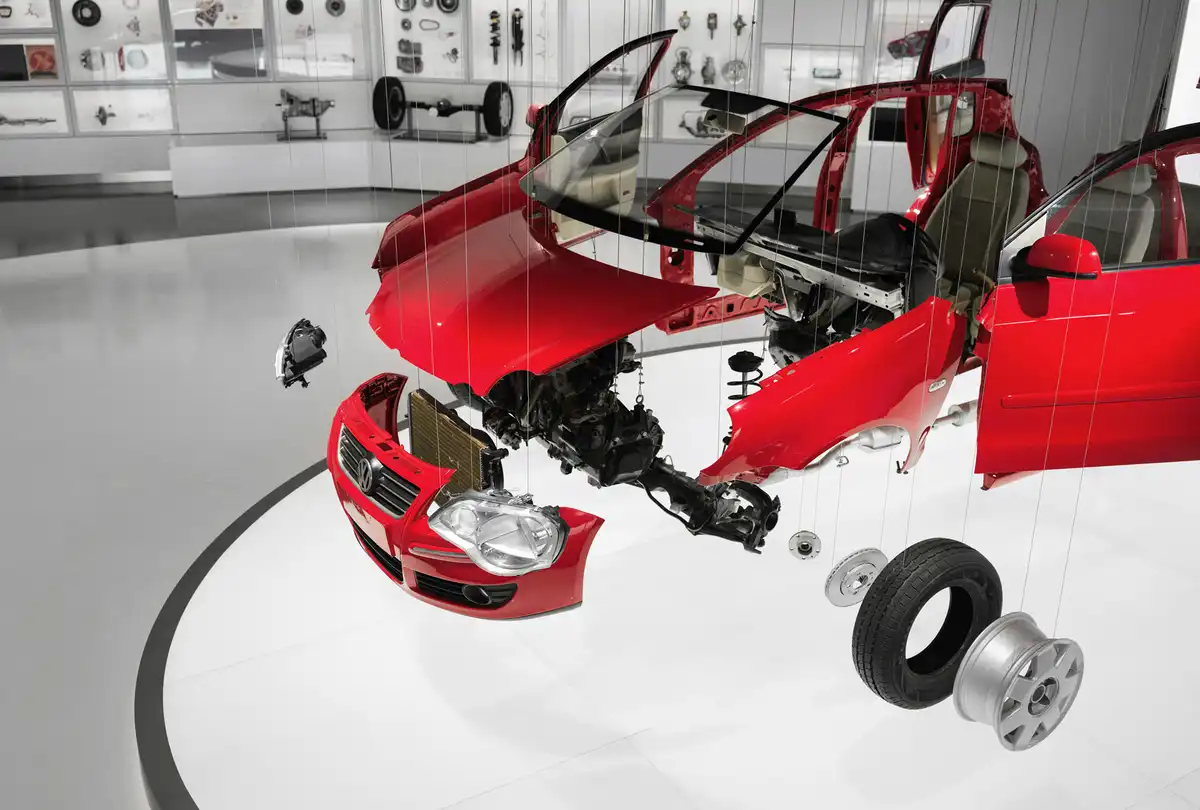
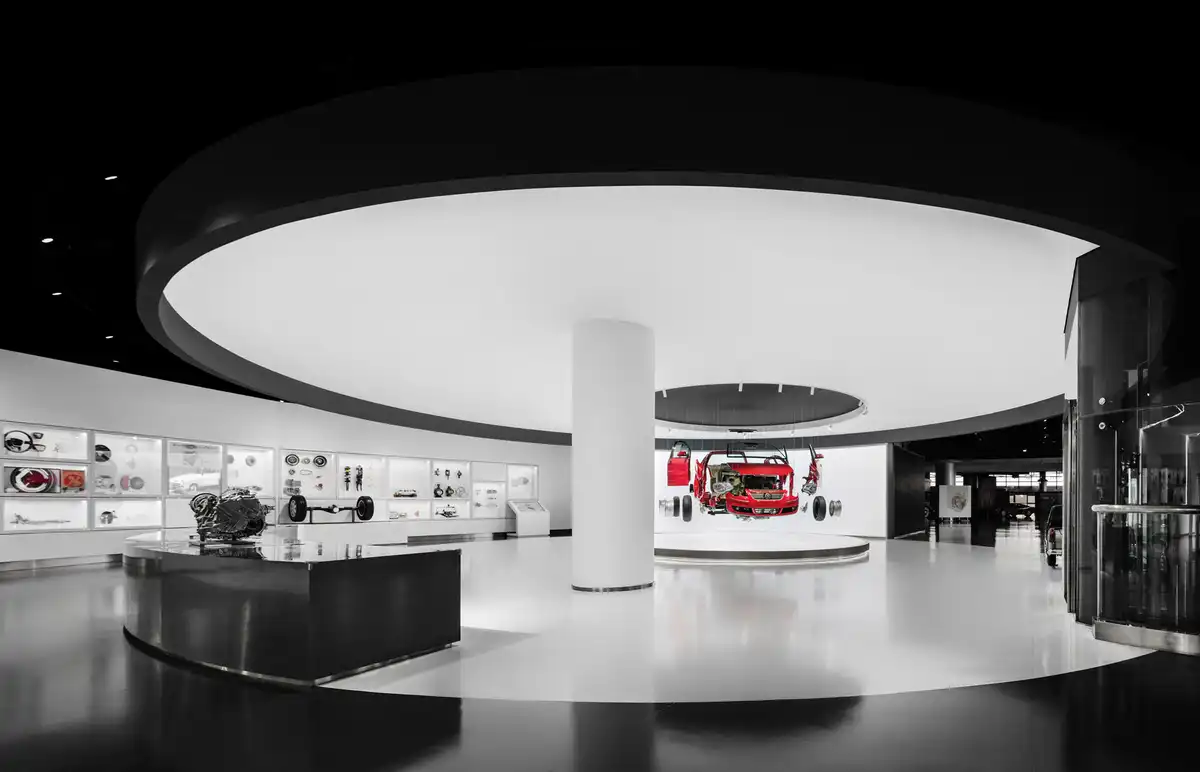
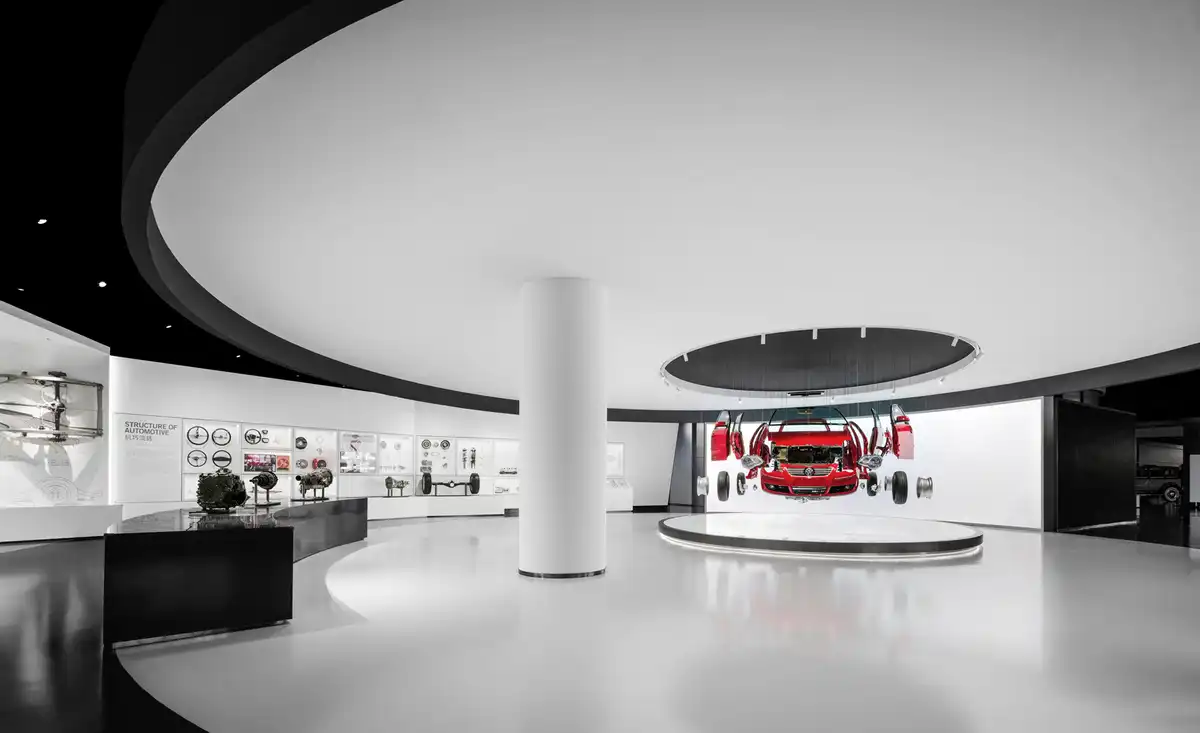
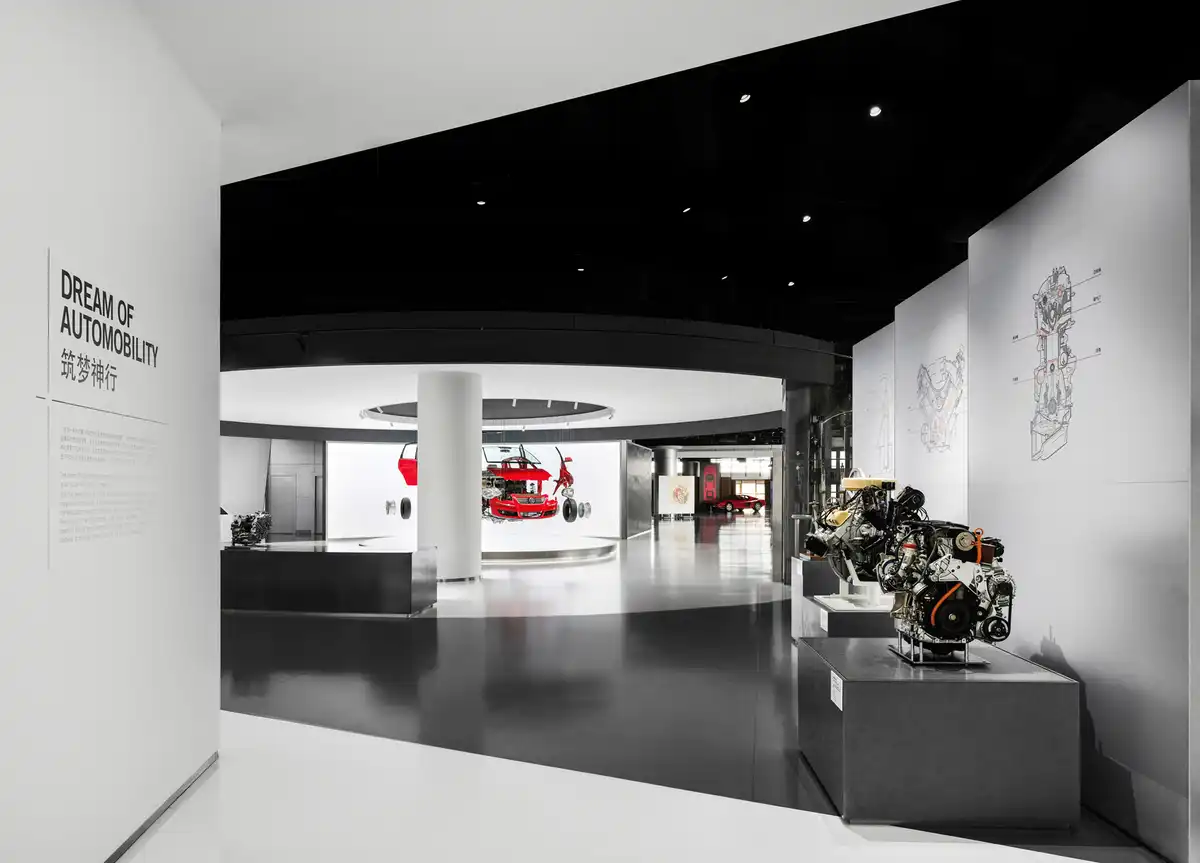
Exhibits are also constitutive elements of the space. The nested rings function both as display structures and as architectural language. The exploded POLO car defines spatial boundaries and guides circulation through its physical volume, dissolving the separation between container and content.
Structured Information
Each zone establishes a three-tiered information structure: a sensory layer formed by installations and moving images; a technical principle layer presented through A3/B3 graphic panels; and a professional-depth layer supported by C1 panels and interactive touchscreens. Spatial positioning and media type naturally direct visitors toward different levels of engagement.
Immersive Experience Design
The space itself becomes an extension of the exhibits. Light, materiality, scale, and sound construct an immersive field, amplifying the perceptual intensity of each display. The exhibition design does not simply guide visitors along a prescribed path; it allows the narrative to emerge naturally through movement and perception.
Zone 01 History Zone
Time As Spatial Sequenceautomobile Technology Evolution
Three nested rings, each 2.4 metres in diameter, form the visual core of the zone. Leonardo da Vinci’s self-propelled cart from 1495, Ferdinand Verbiest’s steam-powered vehicle from 1678, and the hydrogen-powered vehicle from 1804 are suspended within the rings at gradually rising heights, enabling a three-dimensional reading of the technological timeline.
On one side, a modular exhibition wall forms a “living archive matrix.” The exploded POLO car is suspended above a circular stage, with all body components expanded outward, bringing the sequence to a dramatic close.
Zone 02–04 The Present Zone
Energy · Intelligence · Connectivity
The Energy zone presents pure electric, hybrid, and hydrogen fuel cell systems side by side, revealing the underlying logic and technical boundaries of each route. The hydrogen fuel cell section also integrates carbon neutrality, extending the discussion into climate and energy policy.
The Intelligence zone centres on AI perception, positioning, and drive-by-wire technology within the concept of the “software-defined vehicle.” A comparative installation of mechanical control versus electronic control translates abstract engineering concepts into a tangible experience.
In the Connectivity zone, a V2X visual interactive terminal reveals real-time information flows between vehicles, roads, and the urban intelligence system, making it the gallery’s most interaction-intensive core zone.
Zone 05 Future Zone
Automotive Without Limits
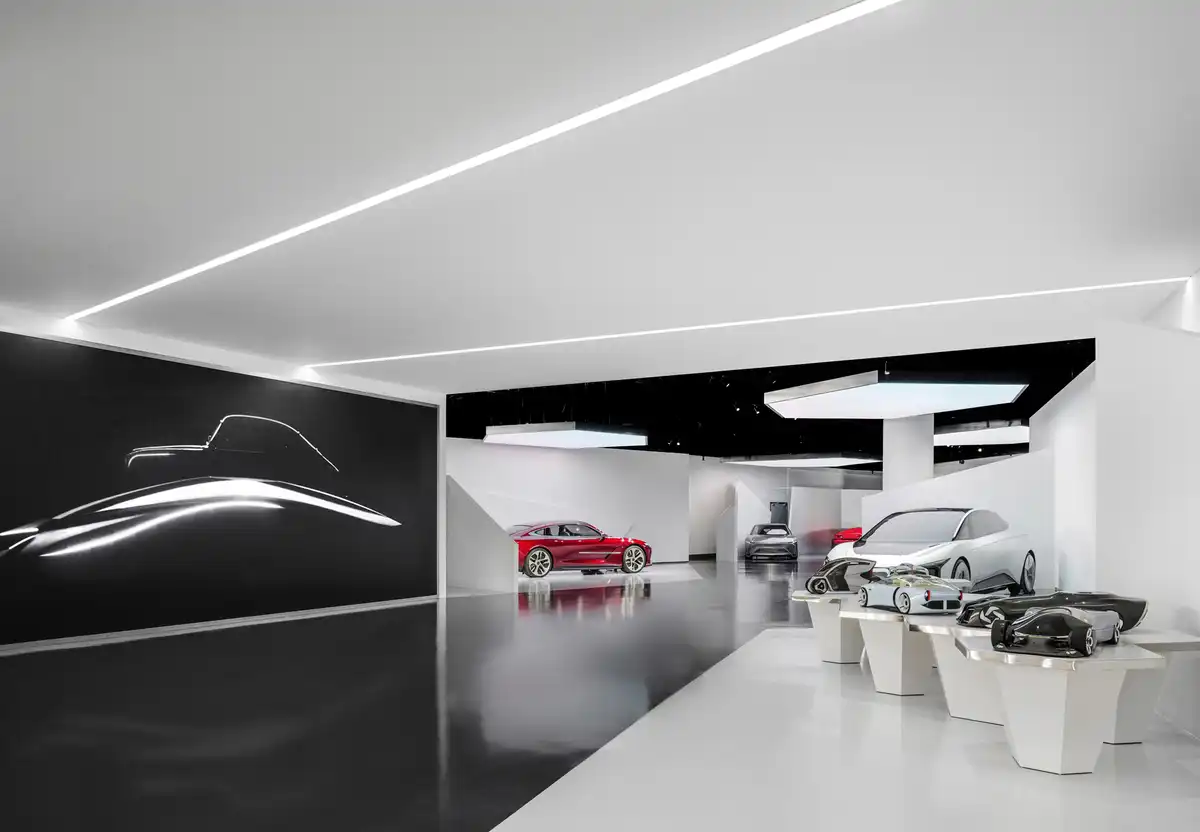
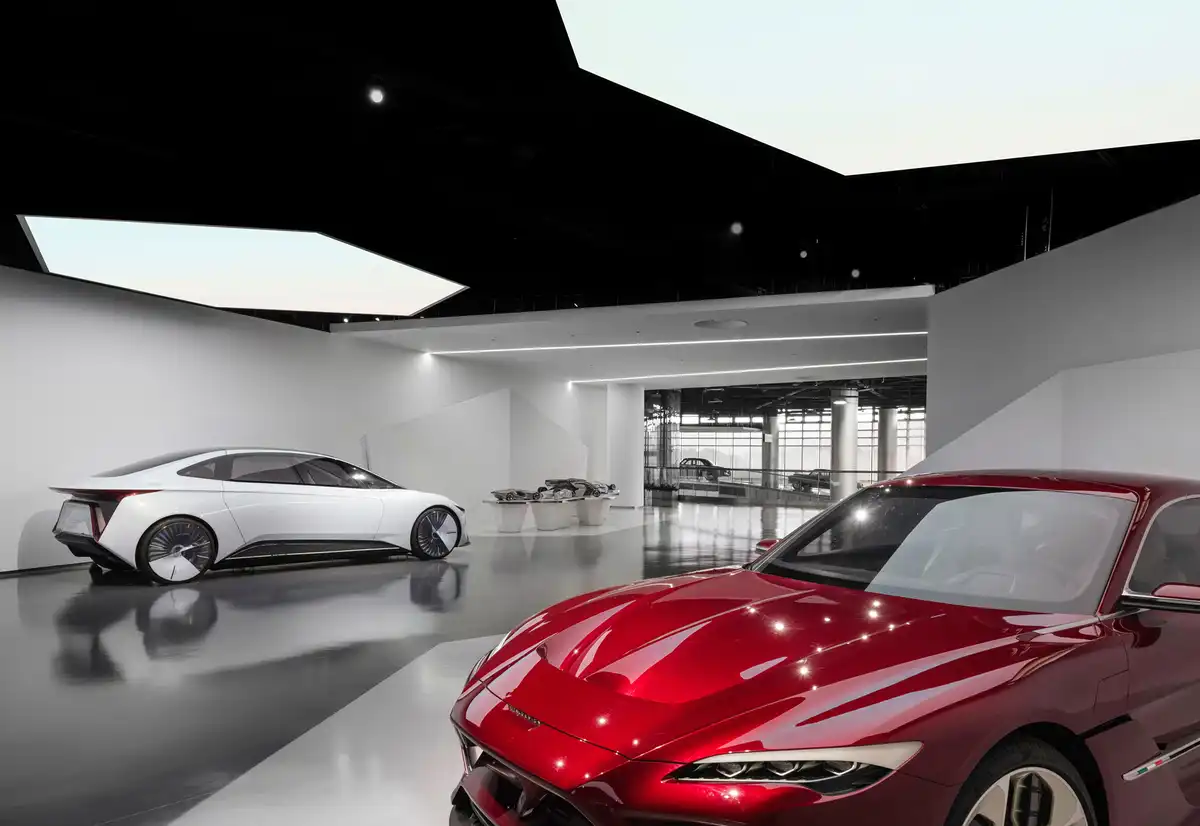
Folded lines and polygonal elements shape a future-oriented exhibition space. A geometric lighting ceiling turns light into a medium of spatial division. The tension between fullness and emptiness, enclosure and openness becomes a spatial metaphor for the future: still undefined, yet already perceptible.
Concept cars are displayed alongside a classic red supercar, lowering the threshold for professional interpretation and allowing visitors to perceive the evolving aesthetic language of automotive design.
Modular System
For the Technology Gallery, SLT has built a foundational “design operating system.” It includes brand application standards and guidelines for the iterative renewal of exhibits, ensuring a unified, professional, and sustainable exhibition language. Whether through exhibit replacement, brand entry, or technological upgrades, the space does not need to be rebuilt from scratch.
A+B+C
Modular Wall Display
The exhibition zones are based on a 1200 × 1200 mm modular grid. Display shelves, multimedia screens, vitrines, and other replaceable units form a flexible system. Supported by A/B/C graphic panels, the system accommodates print, touchscreens, video, physical objects, and other media formats.
VI
Graphic Guidance
“Development,” “connection,” and “evolution” are translated into three visual symbols corresponding to the gallery’s three major zones. Typography, colour, and layout rules are applied across all touchpoints, ensuring coherence while defining boundaries for third-party brand content.
Brand +
Brand Co-Creation Framework
A clear spatial protocol has been developed for automotive brands, design schools, and technology companies. It covers physical boundaries, media access standards, brand visual integration, and content update procedures. Through this framework, joint exhibitions can shift from occasional opportunities to a repeatable institutional capability.
Future-Proof Flexibility
As automotive technology continues to evolve, the gallery can update its content in step with new developments, systematically extending the lifecycle of the exhibition. Reserved AR markers, standardised screen dimensions, structured wall wiring, and flexible circulation planning all support future adaptation.
From traditional engines to intelligent driving, the Technology Gallery uses space to drive technological narrative, constructing the spatiotemporal evolution of the automotive industry as a coherent exhibition field. With dynamic technological iteration at its core, SLT has built a modular exhibition system and a flexible protocol framework, allowing the space to carry automotive history while gaining the vitality to evolve continuously.
Technology Gallery in the Shanghai Automobile Museum – Building Information
Architecture: SLT Design – https://i-slt.com/about/
Project Name: Spatial Renewal and Exhibition Design for the Technology Gallery, Shanghai Automobile Museum
Area: approx. 2,450 sqm
Completion: September 2024
Location: 7565 Boyuan Road, Jiading District, Shanghai
Design Team: Chen Ling, Shanshan Jiang, Chenxi Yang, Qian Zhang, Shuying Hua, Yaqian Cai, Ziyi Jiang
Client: Shanghai Automobile Museum
Photography Copyright: Ingallery
Technology Gallery, Shanghai Automobile Museum images / information received 150626
Location: Jiading, Shanghai, China.
Shanghai Architecture
Shanghai Architectural Designs – chronological list
Shanghai Architectural News – recent selection below:
Shanghai Pinghe School Jinding Campus, Shenqi Road, Pudong District
Architects: c+d studio
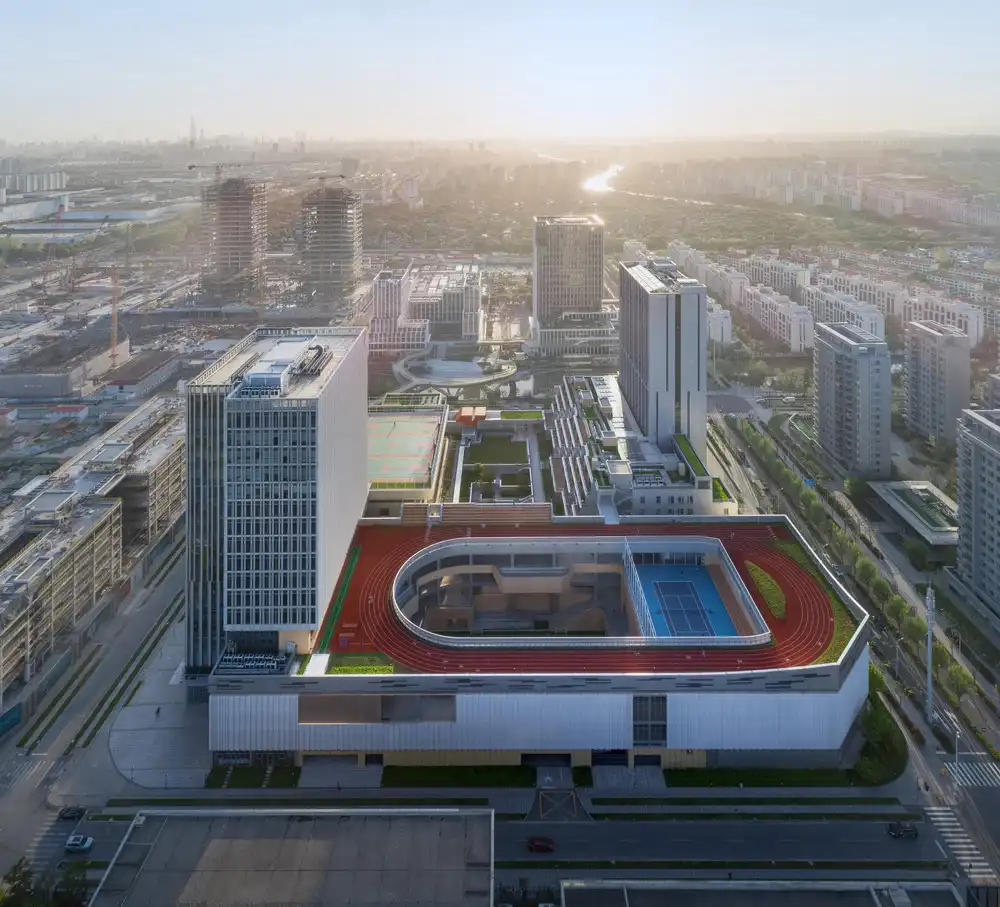
photo © Shan Liang
Huamu Lot 10 The Summit, next to Century Park and the Huangpu River
Architects: KPF
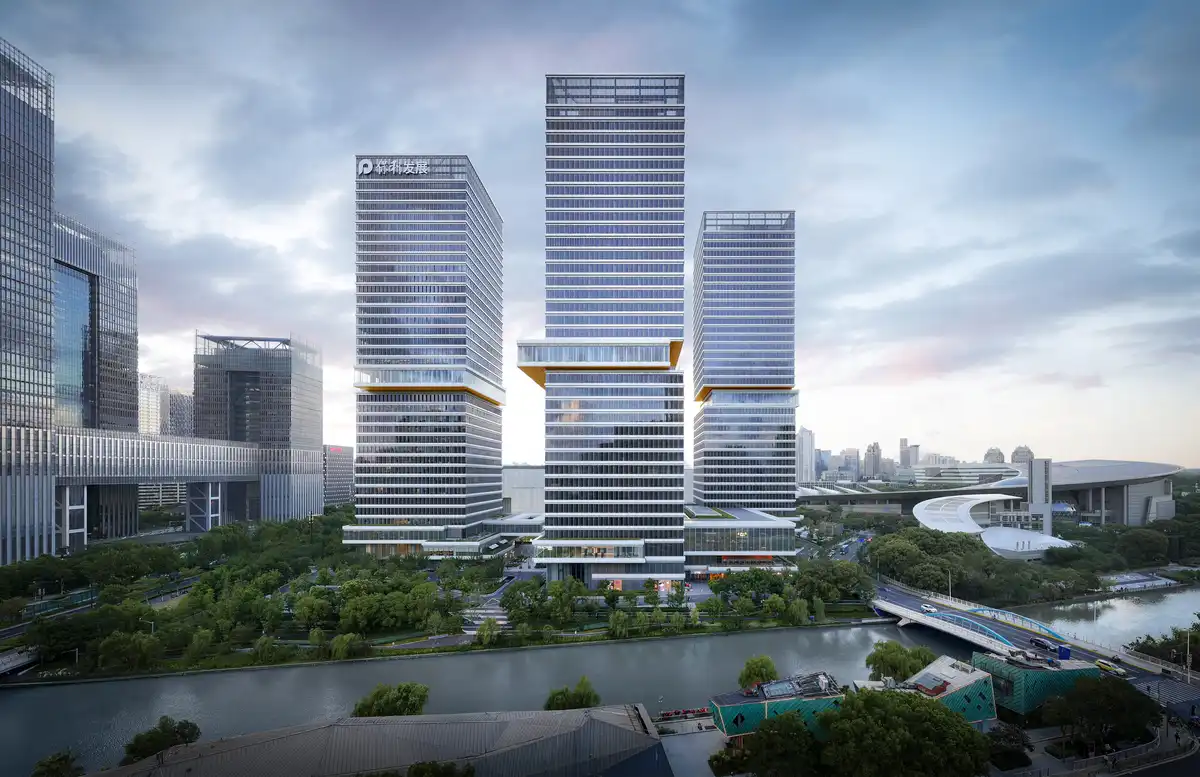
photo : Studio SZ Photo Justin Szeremeta Courtesy KPF
GATE M West Bund Dream Center
Architects: MVRDV
photo © Sanqian Visual Image Art
+++
Shanghai Building Tours by e-architect
Another Shanghai Arts building on e-architect:
Comments / photos for the Technology Gallery, Shanghai Automobile Museum designed by SLT Design page welcome.