Designing for Continuity: Reimagining Historic Homes for Modern Living
18 June 2026
Historic homes carry more than architectural value. They embody memories, rituals and ways of inhabiting space that belong to different moments in time. Their proportions, materials and relationship with the landscape often reveal a slower and more deliberate understanding of domestic life. Yet preserving these buildings does not mean freezing them in the past.
Increasingly, contemporary residential design is confronting a more nuanced question: how can historic homes evolve without losing the qualities that made them worth preserving in the first place?
Rather than treating restoration as an exercise in nostalgia, many architects are approaching it as a process of continuity. The objective is not to recreate an idealized past, nor to impose contemporary gestures for their own sake, but to allow buildings to accommodate present-day life while maintaining their original spirit.
In this sense, renovation becomes less about transformation and more about interpretation.
Beyond Preservation
The relationship between old and new has always occupied a central place within architecture. While technological expectations and patterns of living continue to evolve, certain qualities remain remarkably constant. Natural light, proportion, material authenticity and a sense of connection with the surrounding environment continue to define spaces that feel comfortable and enduring.
Successful interventions rarely depend on dramatic contrasts. More often, they emerge through subtle adjustments capable of enhancing existing qualities. Spatial flow is improved without erasing memory. Materials are selected not to imitate the past, but to converse with it. Light becomes an instrument capable of revealing textures and proportions that may have remained unnoticed.
There is an increasing recognition that buildings possess their own internal logic. Rather than opposing this identity, thoughtful design works alongside it.
This approach is particularly relevant in residential architecture, where the experience of everyday life ultimately determines the success of a project. Spaces must accommodate changing habits, different generations and contemporary expectations without sacrificing atmosphere or permanence.
Designing Around Existing Identity
Working with existing structures demands restraint. Understanding a building before intervening is often more important than the intervention itself.
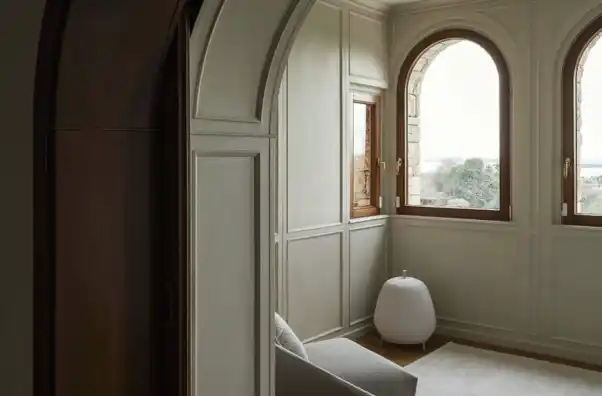
Architectural identity does not reside in isolated details but in the relationship between spaces, proportions and material presence. Texture, scale and the rhythm of openings contribute to a sense of continuity that cannot easily be replicated.
Timeless interiors frequently emerge through reduction rather than addition. Instead of pursuing novelty, they rely on quiet gestures capable of creating coherence between different layers of history.
The most enduring projects do not seek to erase traces of time. They acknowledge them and allow contemporary life to unfold around them.
This philosophy increasingly reflects a broader cultural shift. As interest in renovation grows, architecture is moving away from the idea of replacement and towards the idea of adaptation. This approach aligns with the principles of adaptive reuse. Existing buildings are no longer seen as limitations, but as opportunities to create spaces with greater depth and authenticity.
Case Study: SNO Villa, Lake Garda
Situated in Soiano del Lago, overlooking Lake Garda, the SNO Villa represents an example of this search for continuity. Developed by Archventil for an international family, the project demonstrates how a historic residence can be adapted to contemporary living without losing its sense of place.
Spread across three levels following the natural slope of the site, the villa maintains a strong dialogue with the surrounding landscape. Rather than imposing a radically different architectural language, the intervention works through consistency, allowing spatial organisation, materiality and atmosphere to establish a sense of harmony.
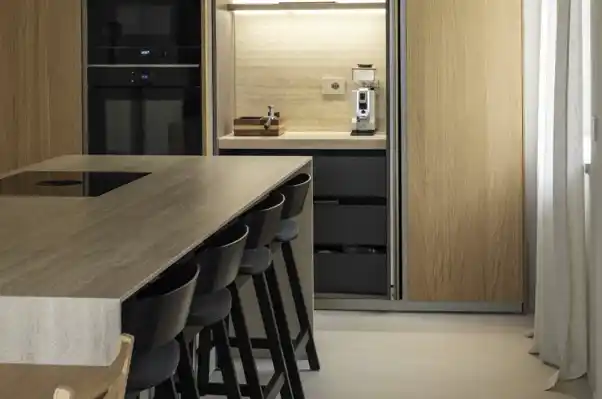
Communal spaces are conceived as places of gathering and everyday rituals. The kitchen, organised around a central island, becomes a focal point for family life, while the distribution of functions across different levels creates a gradual transition between more private and shared environments.
Throughout the house, continuity is reinforced through a restrained material palette. Neutral surfaces, natural textures and warm tones contribute to an atmosphere that feels both contemporary and timeless.
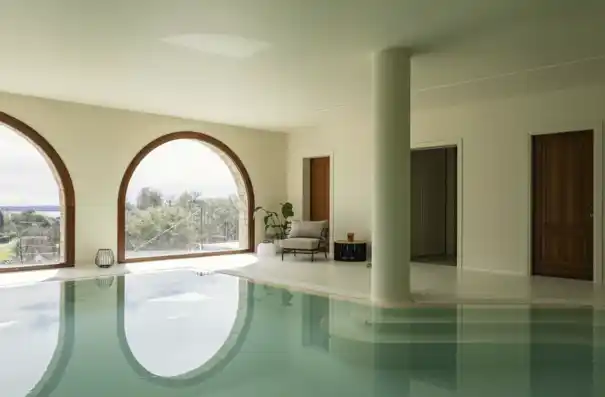
The relationship with light plays an equally important role. Large openings frame views towards the landscape and establish a continuous exchange between interior and exterior. Rather than dominating the setting, the architecture acts as a lens through which the surrounding environment becomes part of the experience of inhabitation.
The presence of exposed timber, soft finishes and carefully calibrated colours creates spaces that favour calm and permanence over visual spectacle.
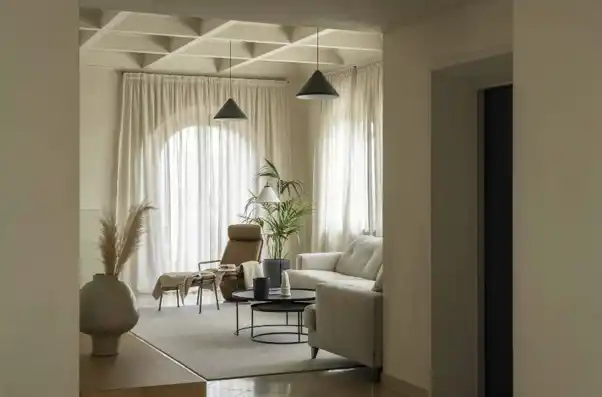
In several areas, existing architectural elements are preserved and reinterpreted through contemporary interventions. The result is neither entirely historical nor entirely new. Instead, the project occupies a more interesting position between memory and present-day life.
Perhaps the most remarkable quality of the villa lies in its sense of tranquillity. There is no attempt to impress through excess. Proportions, textures and natural light become the primary tools through which comfort and identity are expressed.
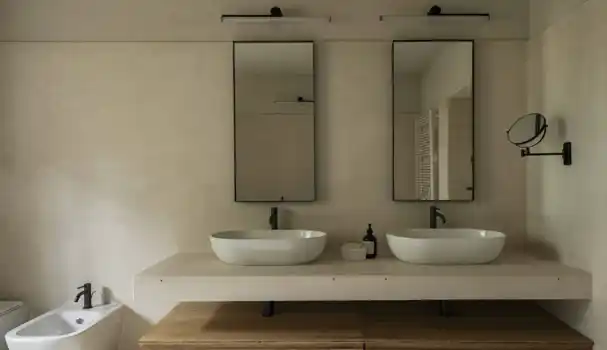
The dialogue between architecture and landscape reaches its fullest expression in the wellness areas, where generous openings frame the surrounding scenery and reinforce a feeling of continuity with nature.
Rather than functioning as isolated rooms, these spaces become extensions of the wider environment, strengthening the relationship between the house and its setting.
Timeless Design and Longevity
Architectural longevity is often associated with material durability, but permanence also depends upon something less tangible. Atmosphere, proportion and the ability of a space to accommodate changing patterns of life are equally important.
Projects that age gracefully rarely depend on trends. Their value lies in coherence rather than novelty.
Natural materials acquire character over time. Surfaces evolve through use. Spaces adapt to new needs without losing their essential qualities. In this sense, longevity becomes less a question of preservation and more a question of resilience.
Contemporary residential architecture increasingly recognises that quality is not measured through visual impact alone, but through the ability of buildings to remain meaningful over decades. Broader discussions around residential architecture and the evolution of domestic spaces can also be found across a range of projects featured by e-architect.
Looking Forward
As the balance between conservation and adaptation becomes increasingly important, historic homes offer valuable lessons for contemporary design.
They remind us that architecture does not need to choose between past and present. Meaningful spaces emerge when both are allowed to coexist.
The future of residential architecture may ultimately depend less on creating entirely new forms and more on understanding how existing buildings can continue to evolve. In extending their lives with intelligence and sensitivity, architects are not merely preserving structures. They are preserving relationships between people, places and the rituals that give meaning to everyday life.
Images courtesy of Archventil.
Comments on this guide to reimagining historic homes for modern living article are welcome.
Property Design
Contemporary Property Designs – recent architectural selection:
++
Home Art Canvas Prints
Home Wall Arts Canvas Prints
Large Wall Arts Canvas Prints Ideas
Metal wall art: perks and things to consider
How to choose the right art for your walls
Comments / photos for the Designing for Continuity: Reimagining Historic Homes for Modern Living help guide page welcome