How to Achieve Dark Sky Friendly Outdoor Lighting
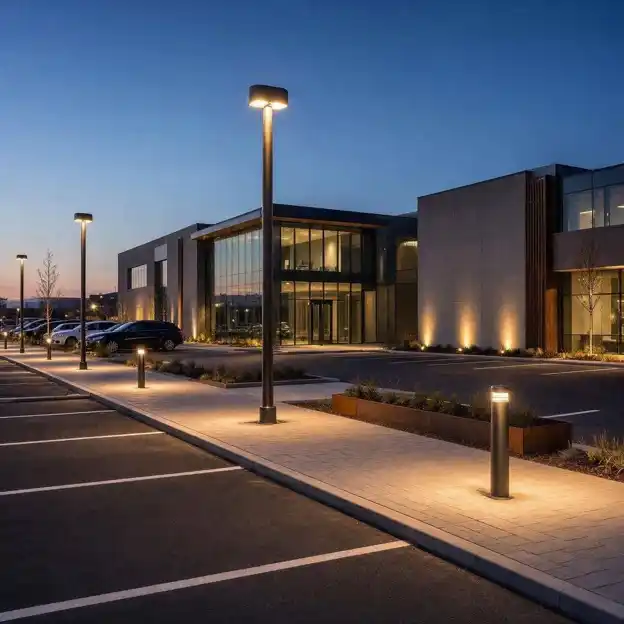
(Source: Bing)
Dark sky friendly outdoor lighting is not about using less light. It is about using the right light in the right place at the right time.
If a site needs illumination, then it should be controlled. Either lighting is specified with intention, or glare, light trespass, and wasted energy become long-term problems. The process for getting it right is straightforward when performance drives every decision.
A 2023 global study found night skies brightening about 10 percent annually, reminding project teams that small lighting choices scale quickly across entire communities.
Start With A Nighttime Audit
Before replacing fixtures, evaluate what is already installed. Daytime inspections rarely reveal glare, uplight, or contrast issues.
Walk the property after dark and assess lighting from pedestrian, driver, and property-line viewpoints. Document pole height, mounting orientation, lens clarity, color temperature, and distribution type.
If a fixture throws light above horizontal, then it contributes to skyglow. If occupants describe a space as “too bright,” then glare may be the issue rather than insufficient illumination. If shadows feel harsh, then distribution patterns may be uneven.
An audit clarifies whether retrofitting shields and optics is sufficient or whether full replacement with modern, precision-engineered luminaires is the better long-term investment.
Specify 2700K To 3000K And Full Cutoff Optics
Color temperature influences visual comfort, contrast, and environmental impact. For most commercial exterior applications, 2700K to 3000K provides clear visibility while limiting blue-rich output.
If a specification defaults to 4000K for perceived brightness, then reconsider the goal. Higher CCT often increases glare perception, even when measured light levels remain constant. Warmer LEDs can meet required foot-candle targets while improving nighttime comfort.
Optical control is equally critical. Look for:
- Full-cutoff luminaires that eliminate uplight
- Defined BUG ratings to manage backlight and glare
- Shielding accessories near property lines
- Precise distribution patterns matched to pole height
Neither warm CCT nor shielding alone solves light pollution. Together, they keep illumination task-focused rather than scattered across adjacent properties or into the sky.
When evaluating fixtures, filter by CCT range, distribution type, shielding availability, lumen package, and IP rating so performance guides selection. Organized product categories such as Commercial & Residential Indoor and Outdoor Lighting allow teams to compare luminaires by measurable specification criteria, which streamlines research during design development and bidding.
Match Distribution To Site Function
Every exterior zone has a purpose. Parking lots, pedestrian pathways, loading areas, and building perimeters require different photometric strategies.
If poles are too tall for the selected optic, then light spreads beyond intended boundaries. If poles are too short with high-output fixtures, then hot spots and harsh contrast develop.
Either distribution patterns are selected based on spacing calculations, or the site experiences uneven coverage. Type III and Type IV distributions often suit roadways and parking areas, whereas narrower distributions support pathways and accent zones.
Lighting plans should align pole spacing, mounting height, and optic selection as a coordinated system rather than isolated decisions.
Integrate Adaptive Controls And Curfews
Even a well-aimed luminaire wastes energy if it operates at full output all night.
If traffic drops after a certain hour, then output can drop accordingly. Either schedule dimming through networked controls or use motion-responsive drivers so lighting adapts to real conditions.
Adaptive systems not only reduce operating costs but also extend fixture life by reducing driver strain. Additionally, programmable controls provide flexibility if local codes evolve to require lower nighttime output or defined curfews.
Performance lighting today is not static. It is responsive.
Build Compliance Into The Bid Specification
Clarity in the bid package prevents substitutions that compromise lighting goals.
Specifications for dark sky friendly outdoor lighting typically include:
- Maximum 3000K CCT
- Full-cutoff optics
- Defined BUG limits
- Dimming capability with programmable schedules
- Photometric reports and IES files
If these elements are written explicitly, then compliance becomes measurable rather than subjective.
Referencing recognized illumination standards ensures safety benchmarks are met without over-lighting. The objective is neither excessive brightness nor insufficient coverage. It is controlled, efficient illumination aligned with actual site needs.
Verify After Installation
Installation marks the beginning of performance verification.
After commissioning, measure horizontal and vertical illuminance levels. Evaluate glare from pedestrian viewpoints. Inspect property lines for spill light.
If glare appears at eye level, then shielding or minor aiming adjustments may resolve it. If light trespass extends beyond intended boundaries, then output levels may require calibration.
Lighting systems improve when they are measured and fine-tuned. Small refinements across multiple fixtures produce meaningful reductions in overall skyglow.
Practical Performance, Not Philosophy
Dark sky friendly outdoor lighting succeeds when optics, color temperature, distribution, and controls operate as one coordinated system.
When audits are detailed and specifications are clearly defined, projects gain predictable results instead of surprises. Exterior lighting can enhance safety, lower energy costs, and reduce unwanted spill.
Progress comes from steady, intentional choices that elevate performance across the entire site and surrounding community.
Comments on this guide to How to achieve dark sky friendly outdoor lighting article are welcome.
Lighting Articles
Lighting Posts
Commercial outdoor lighting for public spaces
How to plan your outdoor lighting design
How Lighting Influences Mood and Productivity
++
Building Articles
Residential Architecture
Comments / photos for the How to achieve dark sky friendly outdoor lighting advice page welcome.