How Glass Changed the Way We Design Modern Bathrooms
6 July 2026
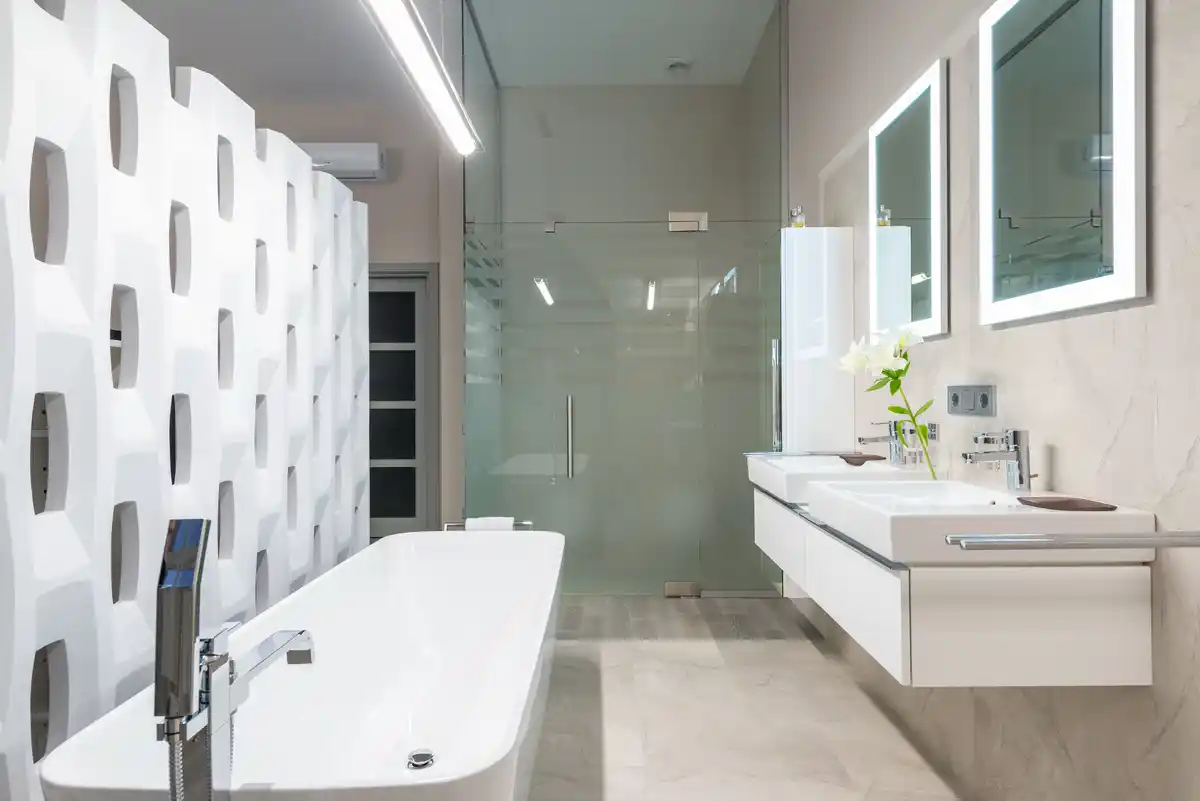
Bathrooms didn’t used to be design spaces in the way we think of them now. They were just bathrooms. Functional. A bit cold, usually. Tile, tub, toilet, done. If someone cared about style, it showed up in the kitchen or maybe the living room where guests actually noticed things.
That shifted quietly. People started expecting more from everyday rooms. And somewhere in that shift, glass became a big deal — it started changing how bathrooms behaved visually.
A lot of designers now bring in specialist glass companies like Shower Door Prices — especially when they want showers and partitions that don’t visually chop the room into pieces. Because once you remove that heaviness, the whole space starts acting differently. More open. Less boxed in.
It’s not magic. It’s just less obstruction. But it feels like something changed more than it actually did.
From Heavy Frames to Almost Nothing
Older bathrooms had a lot of obstacles, visually speaking.
Framed shower doors, for example. Thick metal borders. Tracks at the bottom that collected grime no matter how careful you were. Before that, shower curtains — which, honestly, were never really elegant, they just existed. They hang there, they billow, they stick to your leg sometimes. Everyone accepted it because there wasn’t much else.
Then frameless glass showed up and slowly became normal.
At first it looked a bit too bare. People weren’t used to it. A shower that doesn’t announce itself feels slightly unfinished the first time you see it. Then your brain adjusts, and suddenly the old framed versions start looking kind of heavy. Clunky, even.
Now it’s almost the opposite.
Homeowners tend to want glass that disappears as much as possible. Not literally invisible, obviously, but visually quiet. Thin edges, minimal hardware, nothing drawing attention unless you’re actually cleaning it and then you notice every fingerprint at once.
There’s also just a broader design shift here — everything has been moving toward simpler lines. Less visual noise. Bathrooms especially. You can see it in tile choices, fixtures, even lighting.
Glass Makes Small Bathrooms Behave Differently
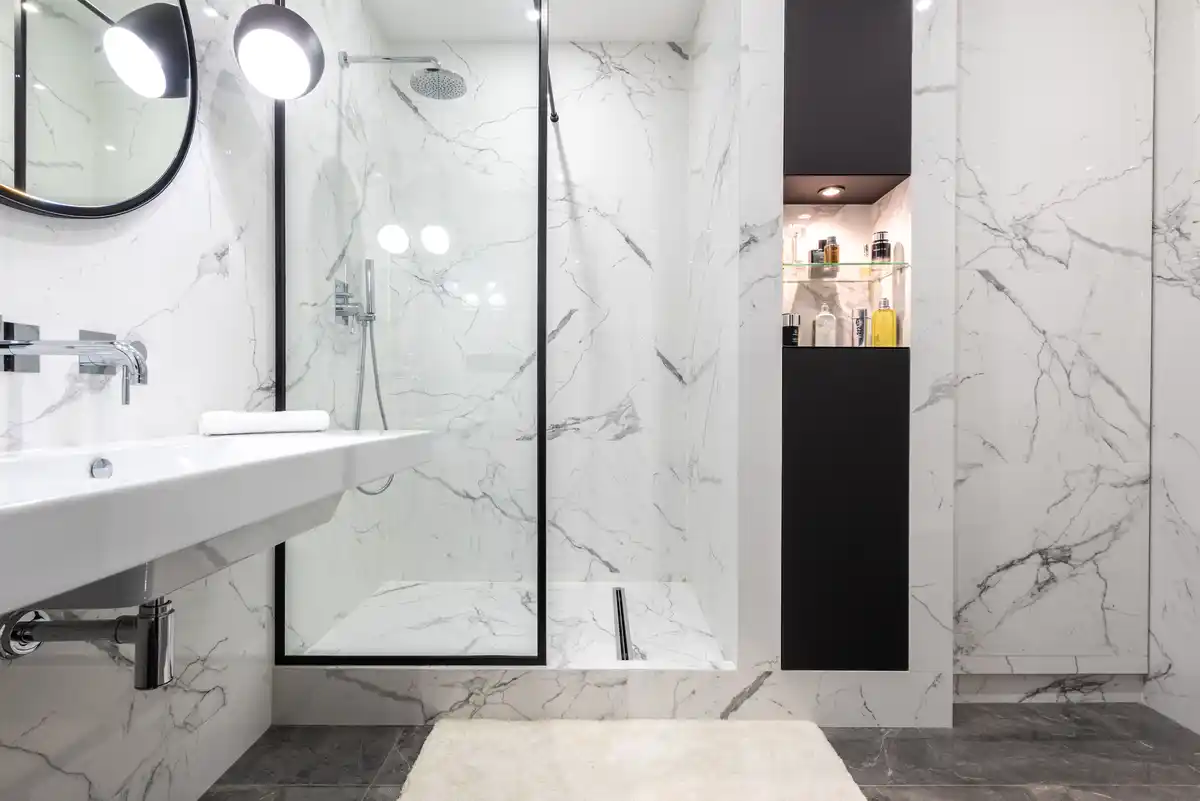
There’s a thing that happens with glass that’s hard to explain to someone who hasn’t seen it in person — you remove a visual barrier, and suddenly the room feels like it expanded a bit. Not physically. Just perception. The eye stops bumping into obstacles.
A solid wall or opaque shower curtain cuts the room in half, visually. Glass doesn’t. Or at least it doesn’t do it in the same aggressive way. You can still see through it, so the space reads as one continuous thing. Even in bigger bathrooms this matters, but in small ones it’s almost mandatory.
There are those tight bathrooms in older apartments where just swapping a curtain for clear glass makes the whole place feel like it exhaled. Not bigger, exactly. Just less tense.
Light plays into this too. Natural light especially. If there’s a window anywhere in the bathroom, glass helps it travel further. It stops light from getting trapped behind opaque surfaces.
And sure, it reduces clutter visually. Not actual clutter — that’s still up to the homeowner — but the feeling of clutter. Too many interruptions in sightlines makes a room feel busy even when it’s not.
Modern Glass Isn’t Just About Looks
There’s sometimes a misunderstanding that glass in bathrooms is purely aesthetic. Like it’s just there to look clean in photos. That’s not really true anymore.
Modern shower glass is engineered. Tempered glass is the standard in most installations, and it’s designed specifically to handle impact and heat changes better than regular glass — that matters in a room where water, heat, and constant use are basically daily conditions.
Maintenance is another practical angle. People assume glass means constant cleaning, and yes, you do notice water spots. That part is real. But compared to older framed systems — where grime builds up in tracks and corners you basically ignore until one day you’re horrified — frameless glass is simpler in a different way.
Fewer hiding places. Less buildup in structural gaps. Still needs care — just less annoying care, if that makes sense.
Durability is a big reason it’s stayed popular. Glass doesn’t warp, it doesn’t rust, and it doesn’t really age in the same way metal frames or curtains do. It just remains the same doing its job.
The Spa Influence Which Isn’t Going Away
At some point, bathrooms stopped being purely functional and started borrowing ideas from spas. Not luxury spas necessarily — even small ones. Calm spaces. Neutral colors. Soft lighting. Minimal visual interruption. And people liked that feeling enough that it stuck.
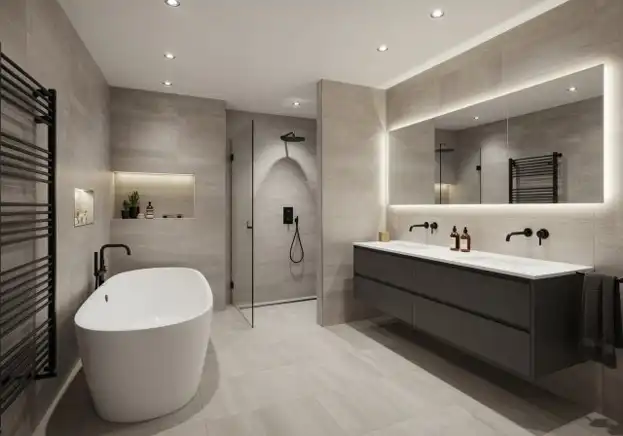
Walk-in showers are probably the clearest example. Frameless glass, an open entry. Sometimes a slight slope in the floor, linear drain, very understated.
Then you see floating vanities, which visually lift the floor space a bit. Large tiles to reduce grout lines — people really hate grout lines once they start noticing them. Natural materials showing up more often again — wood tones, stone textures, matte finishes instead of glossy everything.
Glass doesn’t try to be the feature — it just lets everything else stay visible. Even hardware has gotten quieter over time. Smaller profiles. Less shine. More restraint overall. Bathrooms now are designed less like “rooms with fixtures” and more like continuous environments. Glass helps keep that continuity intact.
Glass Shows Up Everywhere Now
It’s not just showers anymore.
Mirrors are an obvious one — and they’ve always been part of bathrooms — but now they’re often larger, more intentional, sometimes wall-wide depending on the space.
Glass partitions are more common in bigger bathrooms, especially when separating shower areas from vanities without building full walls. Sometimes it’s about zoning without closing things off.
There’s also privacy glass, which is interesting because it tries to balance two opposing ideas: openness and separation. Not always perfectly, but it works in certain layouts.
And then decorative glass details — shelves, panels, small architectural touches. Not always noticed at first glance.
The thing is, once glass starts appearing in multiple places in a bathroom, the room begins to feel more unified. Even if you can’t immediately explain why. It’s just consistent. That’s probably the right word.
Conclusion
Glass changed bathrooms mostly by removing weight. Not physical weight — visual weight.
Frameless shower enclosures, larger panels, cleaner lines — all of that replaced older systems that divided bathrooms into smaller pieces. What we got instead are spaces that feel brighter and less interrupted, even when the actual size of the room hasn’t changed at all.
It also turned out to be practical, which probably helped more than anything. Durable, moisture-resistant, relatively easy to maintain if you stay on top of it. Not perfect, but workable in everyday life.
And now it’s just part of how bathrooms are built. Not a trend exactly anymore. More like baseline expectation. Bathrooms feel different now because they’re not fighting their own layout as much — they’re allowed to stay open. A bit calmer. A bit simpler. And glass is one of the main reasons for that.
Comments on this guide to Bathroom Renovation Ideas That Add Comfort, Style, and Value to Your Home article are welcome.
Home Bathroom
Recently added building articles:
Bathroom Renovation Ideas for Home
Shared bathroom spaces in urban residential
Creating a functional and stylish bathroom layout

+++
Property Design
Contemporary Property Designs – recent architectural selection from e-architect below:
Comments / photos for the How to choose bathroom fixtures guide page welcome.