
Xinyue Hope Shen landscape architectural design practice
7 July 2025
Xinyue Hope Shen’s New Practice Redefines AI Infrastructure as Civic Landscape
Beyond the Concrete – The New Era of AI transforms the hidden systems of data centers into public, ecological, and experiential space

photograph courtesy of Xinyue Hope Shen
As artificial intelligence becomes increasingly embedded in everyday life, the physical infrastructure that supports it remains largely invisible. Data centers, the backbone of AI systems, consume substantial amounts of land, energy, water, and materials, yet they are typically designed as sealed, highly secure facilities isolated from the public realm. This disconnect raises one of the most pressing spatial challenges facing the United States and the world in the AI era: how can the physical infrastructure underpinning artificial intelligence coexist sustainably with cities, ecological systems, and local communities?

photo courtesy of Xinyue Hope Shen
Landscape architectural designer Xinyue Hope Shen’s work often explores how environmental systems can embody cultural meaning, evoke emotional resonance, and generate public value. Building upon this design philosophy, she addresses the pressing challenges posed by the rapid expansion of AI infrastructure through her project, Beyond the Concrete – The New Era of AI, which innovatively reconceptualizes the data center as a transparent civic landscape, seamlessly integrating technological infrastructure with ecological systems, public space, and environmental education.
Data Center Overview:
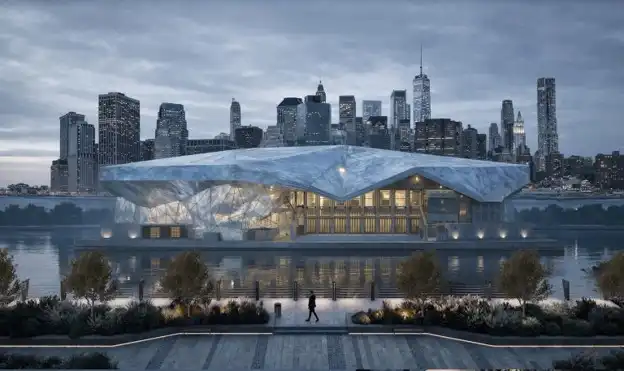
Image courtesy of Xinyue Hope Shen
Set within the context of Manhattan, the project examines the physical reality behind digital intelligence: heat, energy use, water demand, mechanical systems, land occupation, and urban separation.
Data Center Facade:
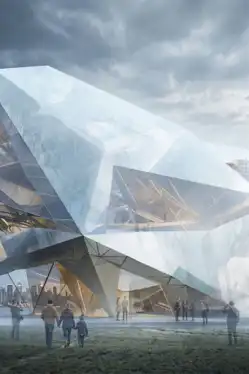
image courtesy of Xinyue Hope Shen
From Concrete Infrastructure to Civic Interface
The title “Beyond the Concrete” reflects the project’s attempt to move past the typical image of infrastructure: heavy, closed, technical, and distant from everyday life. For Xinyue, the data center is not only a building that stores and processes information. It is also a physical presence in the city, shaped by land, heat, water, energy, materials, and the communities around it.
Xinyue Hope Shen’s Beyond the Concrete -The New Era of AI introduces a new landscape language for technological infrastructure: one that makes the hidden systems of AI visible, spatial, and publicly legible. Instead of treating the data center as a sealed industrial box surrounded by blank walls and security fences, Shen reimagines it as a civic landscape where cooling systems, heat reuse, data flows, planted buffers, and public movement are organized into one integrated experience.
Data Center Model:
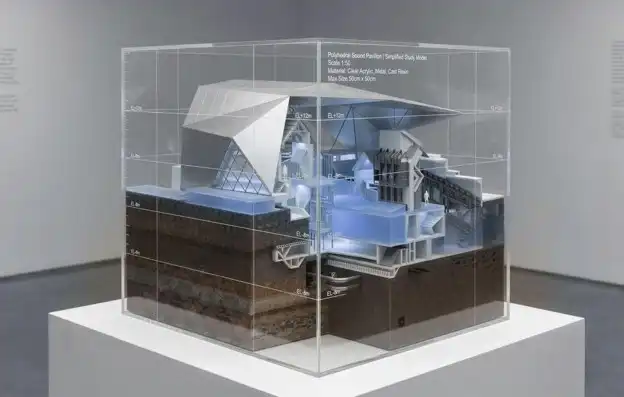
image courtesy of Xinyue Hope Shen
This design language is based on “infrastructural transparency.” Technical systems are not concealed as background utilities; they become spatial elements that shape how visitors move, learn, and sense the site. One example is the transformation of the typical service corridor into a cooling promenade. In conventional data centers, mechanical zones are inaccessible and purely functional. In Xinyue’s proposal, shaded walkways, planting, mist, ventilation, and visible cooling infrastructure are combined so visitors can feel shifts in air, temperature, and humidity while understanding how the facility manages heat. The result is both performative and educational.
A second example is the heat-reuse garden. Rather than treating waste heat as an invisible byproduct, the project turns it into a landscape experience. Excess thermal energy is conceptually redirected to support seasonal planting, warm gathering areas, and interpretive spaces that explain energy exchange. This makes the abstract environmental cost of AI tangible to the public.
Compared with pre-existing data center designs, which often isolate infrastructure from surrounding communities, Shen’s proposal creates a more open and socially responsible model. Its superiority lies not only in aesthetics, but in its ability to combine security, ecology, climate awareness, and public education. The project has influenced the field by reframing data infrastructure as a civic and ecological typology, encouraging designers to think beyond enclosure and efficiency toward visibility, public engagement, and environmental accountability.
Architecture Exhibition Photo:
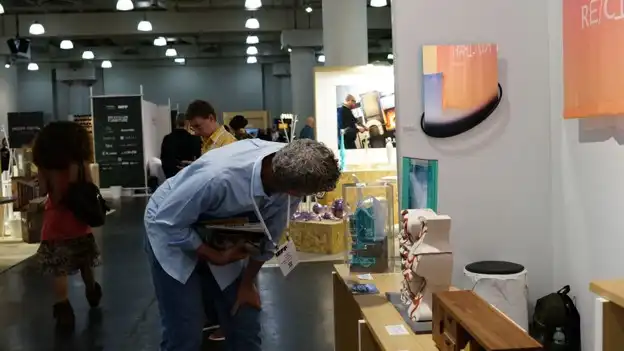
photo courtesy of Xinyue Hope Shen
By transforming the traditionally hidden data center into a civic and ecological interface, Xinyue Hope Shen significantly expands the role of landscape architecture in the AI era, demonstrating that future infrastructure must not only operate efficiently but also communicate, educate, and actively participate in the environmental and cultural life of cities. Through this reframing, her project establishes a new design framework for technological infrastructure that extends landscape architecture beyond environmental mitigation toward public communication, spatial education, and cultural interpretation. By challenging the conventional model of enclosed, security-driven data centers and proposing a more transparent, educational, and environmentally responsible alternative, the project fosters greater public understanding of digital infrastructure and advances environmental stewardship.
At a broader societal level, the project promotes a more socially integrated model of technological development and aligns with U.S. priorities in sustainable infrastructure, climate resilience, STEM education, and responsible innovation. In doing so, it contributes to long-term economic competitiveness and sustainability while offering a forward-looking framework for how critical digital infrastructure can be more transparently and responsibly integrated into the built environment.
Exhibition Photo:
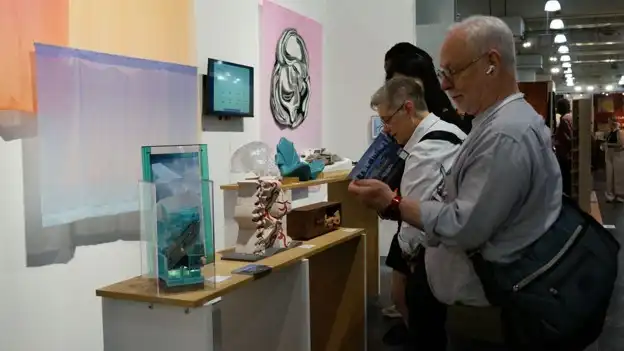
image courtesy of Xinyue Hope Shen
Presented during the NYCxDESIGN Festival 2026, Beyond the Concrete contributed to a broader design discourse on material innovation, technological infrastructure, sustainability, and social impact. Through its exhibition context and subsequent public attention, the project gained recognition as a critical investigation into the physical footprint of artificial intelligence and the future of data-driven infrastructure. Its significance was further affirmed through receiving both the 2026 MUSE Design Gold Award in Architectural Design – Data Centers / IT Infrastructures and the 2026 MUSE Creative Gold Award in Experiential & Immersive – Exhibition Experience, honors that underscore its value as both an innovative architectural proposal and a compelling immersive public work that advances contemporary dialogue on technology and the built environment.
Comments on this guide to Xinyue Hope Shen landscape architectural design practice article are welcome.
Sustainable Architecture Design
Architectural Design Posts
Jinhui He, Integrating technology and sustainability
Role of regional climate in architectural design
Resilient Cities Architecture Design
++
Building Articles
Comments / photos for the Xinyue Hope Shen landscape architectural design practice page welcome


