What Defines Trustworthy Hospitality Architecture?
22 June 2026
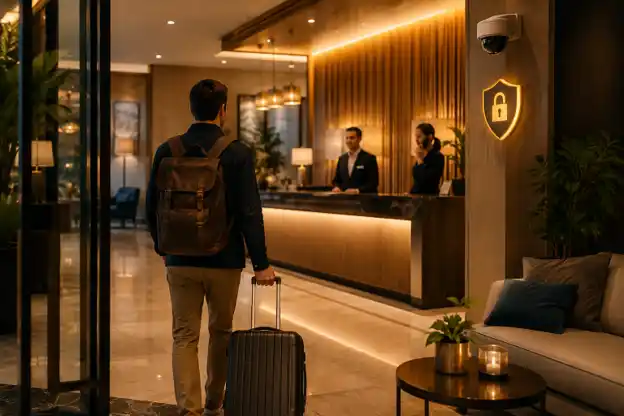
Image Source: AI-Generated
Ever walked into a hotel and just… paused for a second?
Not because it was flashy. But because something felt steady. Grounded. Like the space already knew what you needed before you did.
There’s a quote that sticks: “Design is not just what it looks like. It’s how it works.” — Steve Jobs. And in hospitality, that “how it works” part is everything. A beautiful lobby can still feel off if navigation is confusing or if the space quietly makes you second-guess things.
So yes, what actually builds trust in hospitality architecture? It’s not one big gesture. It’s layers. Subtle ones. Some obvious, some almost invisible. Let’s get into it.
Trust Starts With Clarity, Not Performance
You can feel it immediately when a space is overdesigned for attention.
Tall ceilings. Sharp angles. Mood lighting that looks great in photos but leaves guests guessing where to go. It’s impressive… but not always comforting.
Trust starts when things stop asking questions.
Where’s reception? Clear. Where do you walk next? Obvious. No hesitation, no micro-confusion stacking up in your head after a long journey.
There’s a reason behavioral researchers often talk about “cognitive load” in built environments. The more mental effort a space demands, the less safe it tends to feel.
Funny how that works.
Even booking systems reflect the same logic. People lean toward platforms that reduce uncertainty rather than add layers of doubt.
That’s part of why tools like RedWeek’s verified and protected rental platform matter to travelers—they verify listings and add protective checks so guests aren’t walking into unknowns blindly. Architecture does the same thing physically: it removes guesswork before it starts.
Still, that part gets overlooked.
The Quiet Signals That Build or Break Trust
This is where things get subtle. You don’t consciously analyze these details. You just feel them stacking up… or falling apart.
That said, here’s what guests consistently pick up on.
1. Lighting That Doesn’t Fight You
Harsh lighting feels like interrogation. Too dim feels like uncertainty.
The sweet spot is almost invisible—natural tones, warm edges, visibility where it matters.
A study by the U.S. General Services Administration found that access to daylight and well-balanced artificial lighting improves perceived comfort and orientation in public buildings.
Not surprising, really.
You walk into a hotel lobby with soft daylight spilling through glass panels, and your shoulders drop a little. You don’t even think about it. You just… breathe differently.
2. Maintenance That Feels Ongoing, Not Reactive
Ever seen a hotel that looks fine from a distance, but up close… something’s off?
A chipped corner here. A flickering hallway bulb there. Nothing dramatic. Still — it adds up.
Cornell University’s School of Hotel Administration has repeatedly shown that physical condition strongly influences guest satisfaction scores across hospitality properties. Guests link maintenance with reliability. Almost instinctively.
There’s a moment where you think: if they care about this, they probably care about everything else too. Maybe that’s human nature.
3. Navigation That Feels Like Second Nature
You shouldn’t need instructions to move through a hotel.
Paths should pull you forward. Elevators should appear where you expect them. Corridors shouldn’t feel like detours.
Some of the most trusted hospitality spaces almost disappear in this sense. You move without friction. That’s it. It’s strange… the less you notice the architecture, the more you trust it.
4. Safety You Can Feel Without Seeing
Security isn’t always about visible guards or barriers.
It’s sightlines, effective lighting, entrances that don’t feel hidden or confusing, and exits that don’t make you pause and wonder.
So when ramps, lifts, and pathways feel integrated rather than bolted on later, trust rises. And so does safety…or the feeling of it.
Final Thoughts: Why Trust Outlasts Trends
Design trends move fast—almost aggressively so. One year it’s minimalism, next year it’s warm textures, then something else takes over social feeds.
But trust doesn’t chase aesthetics.
It sticks to fundamentals: clarity, comfort, maintenance, safety. The stuff you barely notice when it’s done right. And definitely notice when it isn’t. A hotel can look dated and still feel reliable. Or look brand new and feel slightly off. That gap? That’s where trust lives.
And it doesn’t fade easily.
Comments on this guide to Emerging Data Annotation Trends Powering Smarter AI article are welcome.
Artificial Intelligence
AI Architectural Design
AI-powered architectural design
How generative AI transforms property discovery
Integrating humans with AI in structural design
+++
Property Articles
Contemporary Property Articles – architectural selection below:
Comments / photos for the Emerging data annotation trends powering smarter AI advice page welcome.