
Designing Scottish Homes for Energy Independence: Solar, Battery Storage and the Post-Grant Economics
4 June 2026
A growing number of Scottish homeowners are no longer asking how to add solar panels to a finished house. They are asking how to design a home, new build or deep retrofit, around generating and storing its own power. That is a different brief, and it puts energy storage in front of the architect as a design input rather than an afterthought for the electrician.
Two things drove the shift. The energy price cap climbed, making grid reliance more expensive, and the Scottish grant landscape changed, removing the subsidy that once carried the decision. The result is a self-funded market that thinks harder about return, and a design conversation that increasingly starts with the battery rather than the panel.
Why battery storage is now central to the Scottish solar case
Solar without storage has a timing problem. Panels generate most of their power in the middle of the day, while a typical household uses most of its electricity in the morning and the evening. Without somewhere to put the midday surplus, that power is exported to the grid for a low rate, then bought back a few hours later at a much higher one.
The numbers make the point. Surplus exported under the Smart Export Guarantee earns roughly 12 to 15 pence a unit, while electricity imported in the evening costs around 26 pence under the current cap. A battery closes that gap by storing the day’s generation for use after dark, and in doing so it lifts the share of its own solar a home actually uses from somewhere around 35 to 40 percent to roughly 70 to 80 percent. In a self-funded market, that swing is where most of the return now sits, which is why battery storage for your solar panels has become the part of the system that makes the economics work rather than an optional extra.
Designing storage into the home
A battery is a physical object that needs a sensible home, and that is a design decision. It wants a location with ventilation, reasonable temperature stability and maintenance access, which in practice often means a utility room, a garage or a plant space rather than a hot loft or an exposed external wall.
Planned early, this is straightforward. The inverter and battery sit where they belong, cable runs are short and concealed, and the electrical infrastructure is sized for the system from the outset. Retrofitted late, it becomes a compromise, with equipment squeezed into whatever space survived the rest of the project and cables chased into finished surfaces. For an architect, the move is to treat storage like any other piece of building services and give it room on the drawing rather than leaving it to be solved on site.
Solar, battery and a heat pump as one system
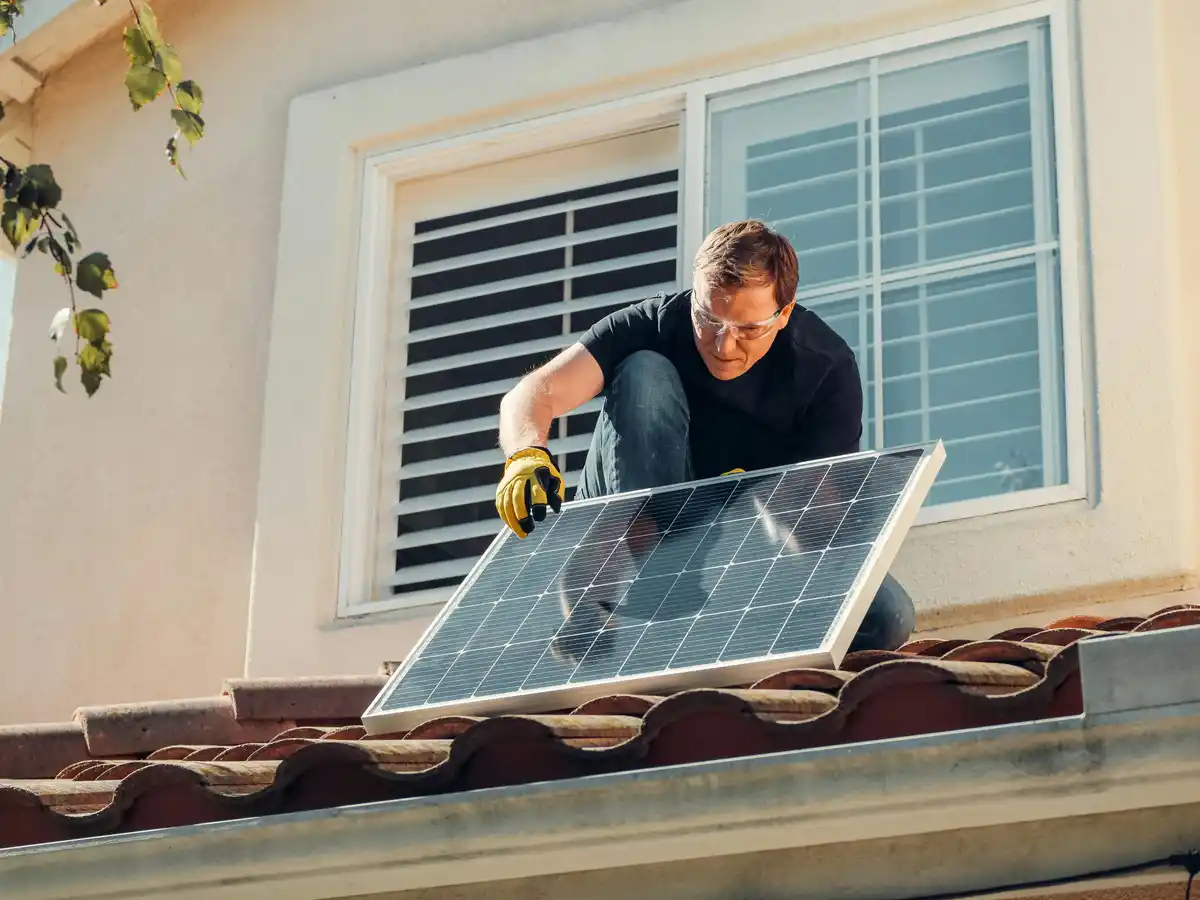
In Scotland the strongest case rarely stops at solar and a battery. With a heat pump in the mix, the three work as a single system, and the design should reflect that. The heat pump shifts a home’s heating load onto electricity, the panels generate it, and the battery stores cheap or self-generated power to run the heat pump when the panels are not producing.
That integration is a design problem as much as an engineering one. The combined electrical load is higher than for lighting and appliances alone, so the system has to be sized for it, and the controls and tariff strategy matter as much as the hardware. A home set up to charge its battery on a low overnight rate and run the heat pump from stored power behaves very differently, on the bill, from one where each element was specified in isolation. Designing the home around that interaction is what produces the low running costs people are actually after.

Aesthetics and integration
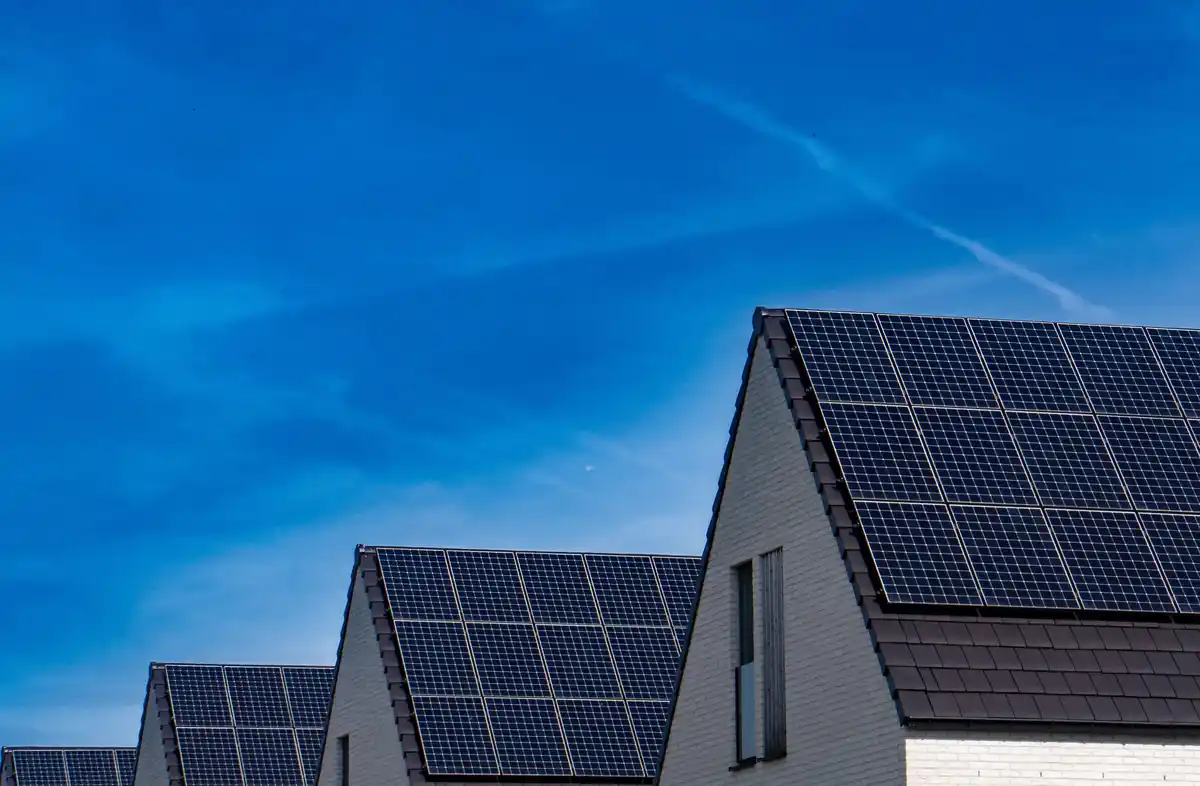
Energy independence does not have to mean visible hardware bolted across a roof and a wall. In-roof solar, recessed so the panels sit flush with the roof line, reads far more cleanly on a considered elevation than a mounted array, and is often the right answer where the building’s appearance carries weight. The battery and inverter, given a designed location, become part of the plant rather than an intrusion.
This is where a design-led approach separates itself. When the array layout, the storage location and the cable routes are resolved on paper alongside the rest of the building, the finished result looks intentional. When they are added afterwards, they tend to look added afterwards. For period properties and architecturally sensitive new builds alike, that distinction is worth protecting at the design stage.

The post-grant economics and the 0% VAT window
The financial backdrop in Scotland is specific and worth stating plainly. Home Energy Scotland closed its grant and loan support for standard solar to new applications in 2024, so most owner-occupiers now self-fund both the panels and the battery. The grant support that remains is ringfenced for clean heating, with up to £7,500 available toward a heat pump, which is part of why the heat pump tends to be the funded entry point and the solar and battery the self-funded layer built around it.
The one relief that applies across the board is 0% VAT on solar and battery storage, which runs until 31 March 2027 before reverting to 5 percent. On a whole-house system that difference is meaningful, which gives projects completing inside that window a real cost advantage and makes timing part of the design programme. With no grant to lean on, the return is driven by how much grid electricity the system displaces, and that is a function of design: the right array for the roof, the right battery for the household, and a heat pump sized and controlled to run on stored power.
Storage is a design decision before it is a purchase. The Scottish homes that perform best, on comfort and on running cost, are the ones where the panels, the battery and the heating were designed as one system from the start rather than assembled from separate decisions made at different times.
Comments on this guide to Scottish Homes Solar and Battery Storage article are welcome.
Solar Panels Articles
Solar Panels Posts
Before Installing Solar Panels
++
Building Articles
Residential Architecture
Comments / photos for the Scottish Homes Solar and Battery Storage advice guide page welcome.


