How to Navigate the Residential Site Plan Process for Permits in the USA and Why the Provider You Choose Matters
13 June 2026
The site plan is one of the most important documents for any residential construction or renovation project, particularly in the initial stages of development.
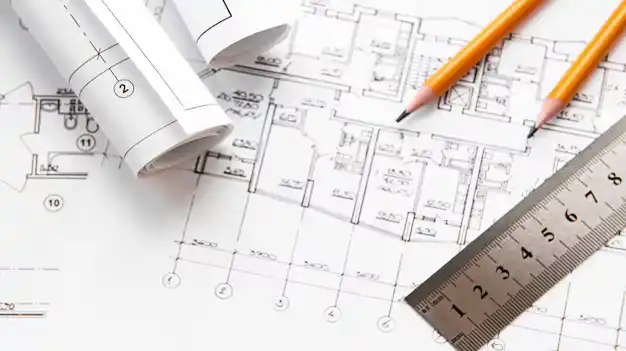
A site plan does not show the interior of a building; instead, it provides information that addresses a very important question: How is this building located on its site and is this positioning in keeping with all applicable regulations? Having insight into the key elements of a residential site plan, along with knowing where and how to get it from a reliable source, is vital information for homeowners, investors and developers seeking permits in the USA, and directly influences project timeframe and approval results.
What a Residential Site Plan Shows
Residential Site Plan is a plot plan prepared to permit size (overhead) of a single parcel. It illustrates the proposed or existing structure within the specific geographic location defined by the property boundaries (as determined by the legal description and survey), all setbacks from the property boundaries, the driveways and their connection to the public right of way, utility easements and service connections, impervious surface coverage, natural topographic features that impact drainage, and any existing structures or accessory buildings on the property. In theory that list of issues seems easy to navigate, but in actuality, it’s not.
There are half a dozen setback requirements, including the front setback, side setbacks (front yard versus rear yard), rear yard setbacks, and, at times, additional setbacks from easement or flood zone boundaries. A structure that meets the front setback requirement of 20 feet could be in violation of the by-law because of the presence of a recorded access easement that traverses the front third of the lot. Creating a residential site plan for permit in USA doesn’t concern only the most apparent constraints, it takes into account all of the above.
Why Jurisdictions Require Site Plans
Local planning and building departments need site plans for residential permit applications because compliance with the land use cannot be determined by interior drawings. Under single-family zoning, a municipality must ensure that a proposed addition does not exceed the amount of coverage allowed on the lot. A coastal jurisdiction must ensure that new development is not in the coastal development zone. A jurisdiction with regulations for grading on hills must verify that proposed grading will not exceed limits and will not cause increased runoff to adjacent properties.
In practical terms, the site plan is reviewed by multiple departments in a typical permit application. The planning department checks zoning compliance and design standards. The engineering or public works department checks drainage and grading. The building department checks setbacks and lot coverage. In many jurisdictions, the utility department reviews the utility connection details shown on the plan. Each reviewer has a specific mandate and specific technical criteria. A site plan that satisfies all reviewers simultaneously requires knowledge of each department’s requirements not just the building code.
The Difference a Trusted Provider Makes
The phrase “trusted site plan provider in USA” is more than a marketing claim it describes a specific operational track record. A trusted provider has produced permit-approved site plans across multiple jurisdictions, has navigated correction cycles, and has learned what different plan checkers actually need versus what the code minimally requires. That experiential knowledge is impossible to replicate from a code book or an online template.
Consider what happens when a site plan contains a dimensional error. If the error is caught during the drafting review process, it costs nothing to correct. If it is caught by the plan checker, it triggers a correction letter, a revision cycle, and a resubmittal adding two to six weeks to the permit timeline in most jurisdictions. If it is not caught until the foundation is poured, correcting it may require demolition. A trusted site plan provider in USA has internal quality control processes specifically designed to catch dimensional errors, setback miscalculations, and missing notations before the drawings leave the office.
Common Mistakes in Permit Site Plans and How Professionals Avoid Them
The most common reason residential site plans fail initial plan check is incomplete information not necessarily incorrect information. A site plan that shows the building footprint but omits the driveway will receive a correction. A site plan that shows setback dimensions but fails to identify which property line is the front will receive a correction. A site plan that shows existing impervious surface but does not calculate total lot coverage as a percentage will receive a correction in any jurisdiction that enforces lot coverage limits.
Professional drafting firms that regularly produce residential site plans for permit in USA maintain project checklists aligned to specific jurisdiction requirements. They know that County A requires a north arrow and scale bar in the lower right corner of the sheet. They know that City B requires existing trees over a certain calliper to be shown and labelled. They know that a coastal commission pre-approval letter must be referenced in the drawing notes if the parcel falls within the coastal zone. These details are invisible to someone preparing a first-time permit application and they are second nature to an experienced provider.
What to Provide and What to Expect
For a residential permit project, you’ll need to give the application service with the property address and assessor parcel number, a copy of the recorded survey or legal description, the project description (new construction/grading) and jurisdiction requirements, if applicable. The provider should be able to research the zoning, setback, and plan check checklist on his or her own, but having the provider have them research what is applicable to you and provide it along with the rest of the work will help speed up the process.
Standard Residential Site Plan will typically be ready in 5-10 business days, with quicker turnaround times possible for simple projects. Don’t be surprised if the provider asks clarification about the project scope, as a provider who doesn’t ask any questions is probably using a template for a project rather than creating a project-specific document. Of course, you will be handed a drawing set with your property address, scale bar, north arrow, all necessary setbacks marked with dimensions and a notes section that points to the relevant zoning ordinance. These are the minimum. A reputable provider is the one that provides them without any request.
Comments on this guide Residential site plan permits process USA for Homeowners article are welcome.
Home Floor Plan

House Floor Plans and Designs
Top 5 flooring trends for 2026
++
Home Articles
Residential Architecture
Comments / photos for the How to navigate the USA residential site plan process for permits – why the provider you choose matters advice guide page welcome.