Next Gen Data Center Infrastructure
11 June 2026

Architectural Blueprints for the Silicon Era: Optimizing Spatial Design for Next Gen Data Center Infrastructure
For decades commercial architecture evaluated spatial layouts through human centric metrics: occupant comfort natural lighting patterns, conversational flow and structural egress. However the exponential boom in industrial scale cloud computing synthetic neural network training and high density enterprise architecture has forced a radical paradigm shift. Today some of the most complex structural design challenges are not being solved for human inhabitants, but for silicon chips.
Modern data centers have evolved past the point of being mere industrial warehouses packed with generic server racks. They are hyper complex dynamic thermodynamic ecosystems where structural architectural design directly determines computational throughput, mechanical reliability and structural lifespan. When a facility deploys high density enterprise infrastructure, every spatial calculation from structural ceiling heights to sub floor zoning layout matrices directly impacts real world hardware efficiency. Bridging structural spatial architecture with server rack physics is no longer optional it is the fundamental baseline of modern industrial design.
The Thermodynamics of Volume Ceiling Heights and Airflow Physics
The foundational cross sectional challenge of designing an enterprise data center lies in fluid dynamics. When thousands of multi socket server processors, enterprise storage arrays, and networking switches run concurrently, they transform clean electricity into pure thermal kinetic energy. If this heat is not structurally isolated and routed out of the facility, local ambient temperatures can spike exponentially within minutes, causing server throttling or catastrophic hardware failure.
This is where spatial architectural scale plays its first critical role. Traditional commercial designs often optimize cost by minimizing floor to ceiling clear heights. In hyper scale data center design, this approach is disastrous. Advanced infrastructure layouts require significant vertical volume to accommodate the physical separation of cold supply air and hot exhaust streams. Architects must design high clear height envelopes to accommodate an expansive overhead ceiling plenum system.
By leveraging natural convective air currents hot exhaust air can naturally rise into a dedicated ceiling void. This relies on the thermodynamic principle where the total pressure differential (ΔP) drives the migration of air masses. A larger overhead spatial buffer reduces mechanical resistance on return air systems. This spatial volume acts as a natural buffer ensuring that hot air is drawn out cleanly into air handling units without creating turbulent high velocity cross currents at the server level, which would otherwise destabilize delicate cooling loops.
Thermal Containment Envelopes Hot and Cold Aisle Spatial Zoning
At the floor level, spatial floor plan layout design must strictly enforce the physical division between cool intake air and superheated equipment exhaust. The industry standard model relies on alternating rows of IT Hardware cabinets, known structurally as Hot Aisle / Cold Aisle configuration. However, achieving maximum thermodynamic efficiency requires physical structural boundaries rather than simple physical separation.
Architects incorporate rigid physical containment structures directly into the building’s floor grid footprint. In a Cold Aisle Containment (CAC) setup the aisle between server intakes is sealed using ceiling panels and heavy duty sliding doors at row egress points. This design forces cold air from the raised floor tiles to pass through the hardware chassis preventing it from bypassing the servers and escaping into the wider room layout.
Conversely, Hot Aisle Containment (HAC) seals the exhaust zone funnelling the high temperature air directly into the overhead plenum space. This architectural structure completely eliminates air mixing. By preventing air mixing, the cooling system receives air at a consistent, elevated temperature which significantly optimizes the thermodynamic efficiency of the facility’s central chilling units.

Structural Load Mitigation Accommodating Next Gen High Density Hardware
Beyond fluid dynamics, data center architecture must solve intense structural load distribution challenges. Standard commercial office buildings are structurally designed to support uniform live loads of roughly 2.4 to 4.8 kN/m². In stark contrast, an enterprise data center floor layout must reliably support structural weights exceeding 12 to 15 kN/m² across massive contiguous zones.
This extreme structural demand is driven by the sheer density of modern hardware infrastructure. Enterprise storage enclosures packed with high capacity solid state drives high density server nodes, and robust power distribution units (PDUs) concentrate massive weights into a compact physical footprint. Furthermore, modern high density hardware requires heavy liquid cooling loops adding substantial fluid weight to the structural frames.
Architects must incorporate thick, steel reinforced structural concrete slab foundations into the base building design. This is typically paired with heavy duty structural raised floor pedestals capable of resisting both static structural weight and dynamic rolling loads when heavy server racks are rolled out during system upgrades. Neglecting these load distribution profiles can lead to floor deformation, structural tile shifting, and micro fractures in structural concrete elements over time.
The Evolution of Infrastructure Liquid Cooling and Spatial Floor Plan Layout Adjustments
As advanced computing clusters push power densities beyond 30 to 50 kW per individual server cabinet, traditional air cooling approaches reach their physical limits. The industry is rapidly pivoting toward direct to chip liquid cooling and immersion cooling architectures. This transition fundamentally changes internal architectural requirements.
Liquid cooling requires dedicated physical space for fluid distribution manifolds, secondary cooling distribution units (CDUs), and complex under floor or overhead coolant pipe runs. The architectural floor plan must accommodate clear utility corridors to separate water glycol delivery networks from primary electrical line tracks.
Furthermore, because liquid cooling loops operate with a higher thermal density, the spatial footprint required for large external air handling units can be downsized. This allows architects to reallocate spatial layouts toward greater raw white space floor area inside the facility. However, this shift increases the structural floor weight requirements, requiring close coordination between mechanical engineers and structural architects from day one of the concept design phase.
Conclusion The Architecture of Pure Function
The modern data center stands as a testament to the architecture of pure function. Every line drawn on a blueprint, from structural clear heights to rigid aisle containment layouts, directly influences the operational efficiency and reliability of global computing platforms. By designing spatial layouts that respect thermodynamic boundaries and support the massive weight of advanced enterprise hardware architects are doing more than just designing industrial buildings. They are building the physical structural foundation of the digital world.
Comments on this guide to Optimizing Spatial Design for Next Gen Data Center Infrastructure article are welcome.
Building Design and Construction
Building Construction Posts
Your job costing data is probably wrong

Integrating humans with AI in structural design
AI data centers infrastructure challenges

Chicago Serverfarm CH1 Data Center building
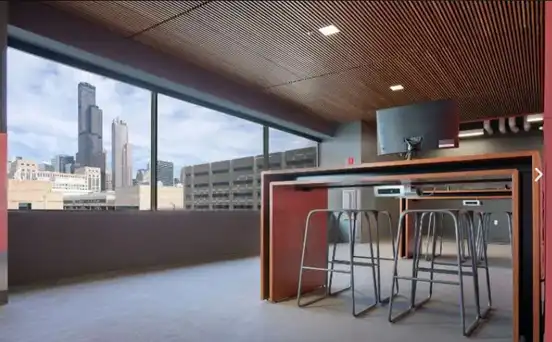
image : Serverfarm
++
Buildings
Architecture Articles
Comments / photos for the Next gen data center infrastructure spatial design page welcome.